
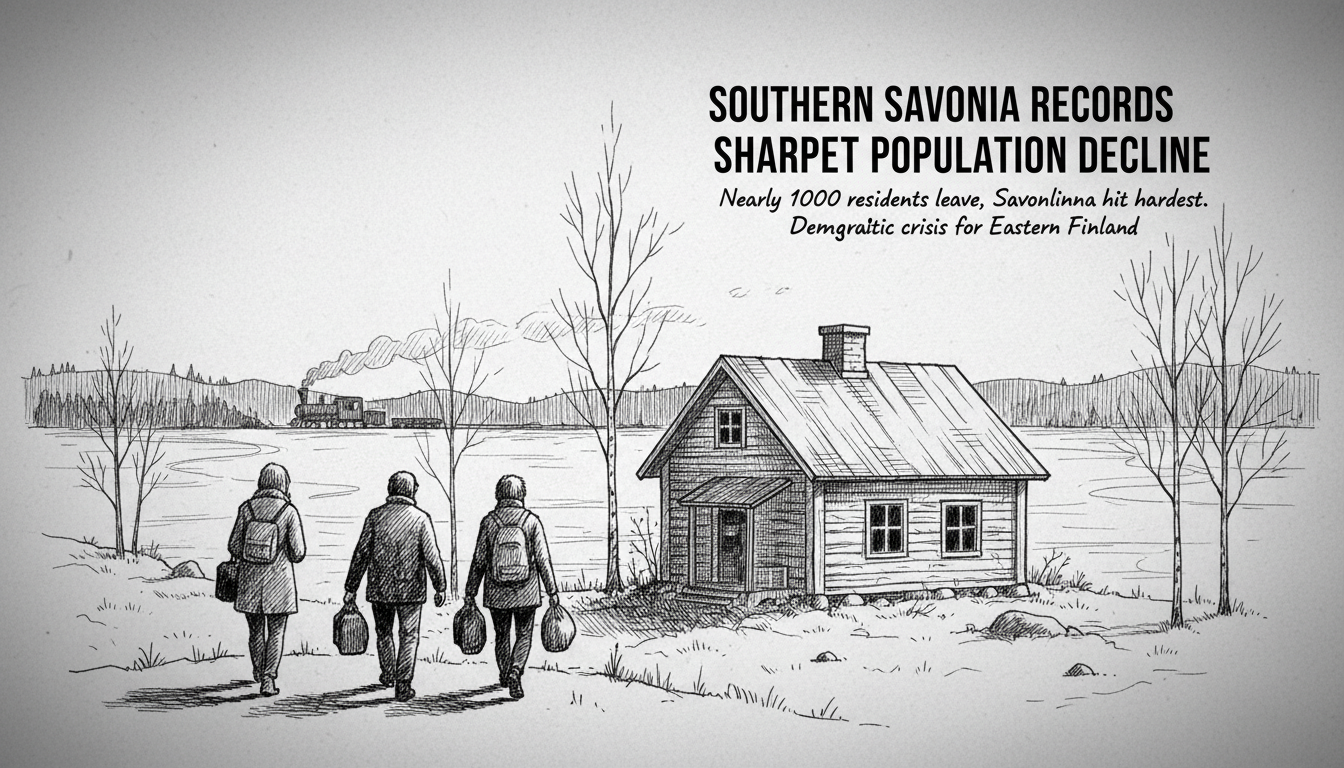
Southern Savonia faces Finland's most severe population decline this year, with nearly one thousand residents leaving the region between January and October. Recent demographic data reveals the province lost 949 inhabitants during this period, marking the largest numerical and proportional decrease nationwide. The population dropped by 0.73 percent, significantly outpacing the second-highest regional decline in Kymenlaakso at 0.49 percent. This continuing trend highlights structural challenges in Finland's eastern regions where urban migration patterns intensify regional disparities.
Savonlinna experiences particularly acute population loss with 359 residents departing, representing the majority of Mikkeli sub-region's total decrease of 391 people. Mikkeli itself recorded 235 fewer residents by October's end compared to year-start figures. Southern Savonia's preliminary population now stands at 128,427 residents, reflecting a concerning acceleration from last year's net loss of 538 people. The region's demographic crisis stems from both negative natural population change and diminished migration gains.
Internal migration patterns show dramatic contraction from previous years. While Southern Savonia maintains positive net migration of 187 people, this figure represents a substantial drop from last year's 811-person surplus. Only five municipalities recorded positive migration: Pieksämäki (+121), Mäntyharju (+84), Mikkeli (+80), Rantasalmi (+40), and Enonkoski (+5). Savonlinna suffered the largest outflow with 74 residents leaving. These migration shifts reflect broader Nordic patterns where mid-sized regional centers struggle against metropolitan attraction.
Natural population change presents equally alarming statistics with 1,133 more deaths than births recorded during the reporting period. The region registered 592 births against 1,725 deaths, worsening from the previous year's deficit of 1,094 people. Southern Savonia now ranks third-worst nationally for natural population decline, indicating systemic challenges beyond migration patterns. This demographic reality directly impacts municipal finances, service provision, and political representation in the Eduskunta.
Finland's national population reached 5,655,715 by October's end, but regional disparities continue widening. The government faces mounting pressure to address Eastern Finland's demographic challenges through regional development policies and EU cohesion funding. Without intervention, these trends threaten essential services in rural municipalities and could trigger electoral boundary reforms. The situation demands comprehensive policy responses combining economic development, digital infrastructure investment, and innovative public service delivery models for sparsely populated areas.