
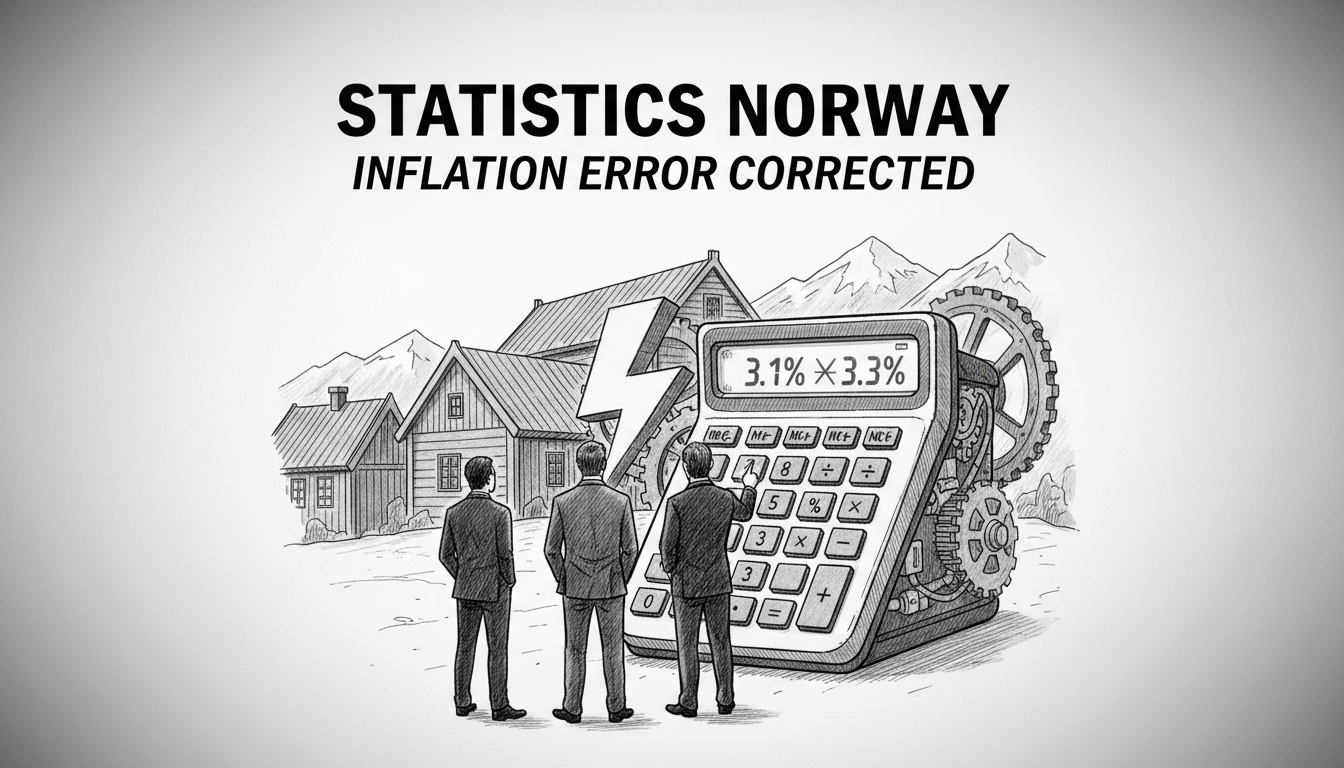
Statistics Norway has discovered and corrected a calculation error in the Consumer Price Index for October. The statistical agency announced it made mistakes in calculating electricity subsidy impacts.
The correction changes the published inflation rate. Officials now confirm price growth measured 3.1 percent rather than the initially reported 3.3 percent. The agency published the incorrect figures on November 10.
Norwegian news media first reported the statistical error. The problem stemmed from miscalculations of the Norway Price electricity support scheme. This government program helps households with high energy costs.
Statistics Norway emphasized the broader inflation picture remains unchanged. September and earlier monthly figures are accurate and will not be revised. Only the October data required correction.
The Consumer Price Index tracks price changes for goods and services purchased by households. It serves as Norway's primary inflation measurement. Central banks and policymakers use CPI data for economic decisions.
This marks the second major statistical correction from Norwegian authorities in recent months. In August, employment figures required revision due to processing errors. Such mistakes can impact economic policy and public trust.
Norway's inflation situation reflects broader Nordic economic trends. Like neighboring Sweden and Denmark, Norway faces persistent price pressures despite aggressive interest rate hikes. Energy costs remain a key driver across the region.
International readers should understand Norway's unique economic position. The country combines Nordic welfare policies with substantial oil and gas revenues. This creates complex inflation dynamics different from other European nations.
The correction matters for several reasons. Investors monitor Norwegian inflation for central bank policy signals. Expats living in Norway see how price changes affect living costs. Policymakers need accurate data for budget planning.
What happens next? Statistics Norway will review its calculation methods to prevent similar errors. The agency maintains this was an isolated mistake rather than a systemic problem. They promise enhanced quality controls for future data releases.
Norwegian inflation remains above the central bank's 2 percent target. Accurate measurement becomes crucial as policymakers consider future interest rate decisions. Even small statistical errors can influence major economic choices.