
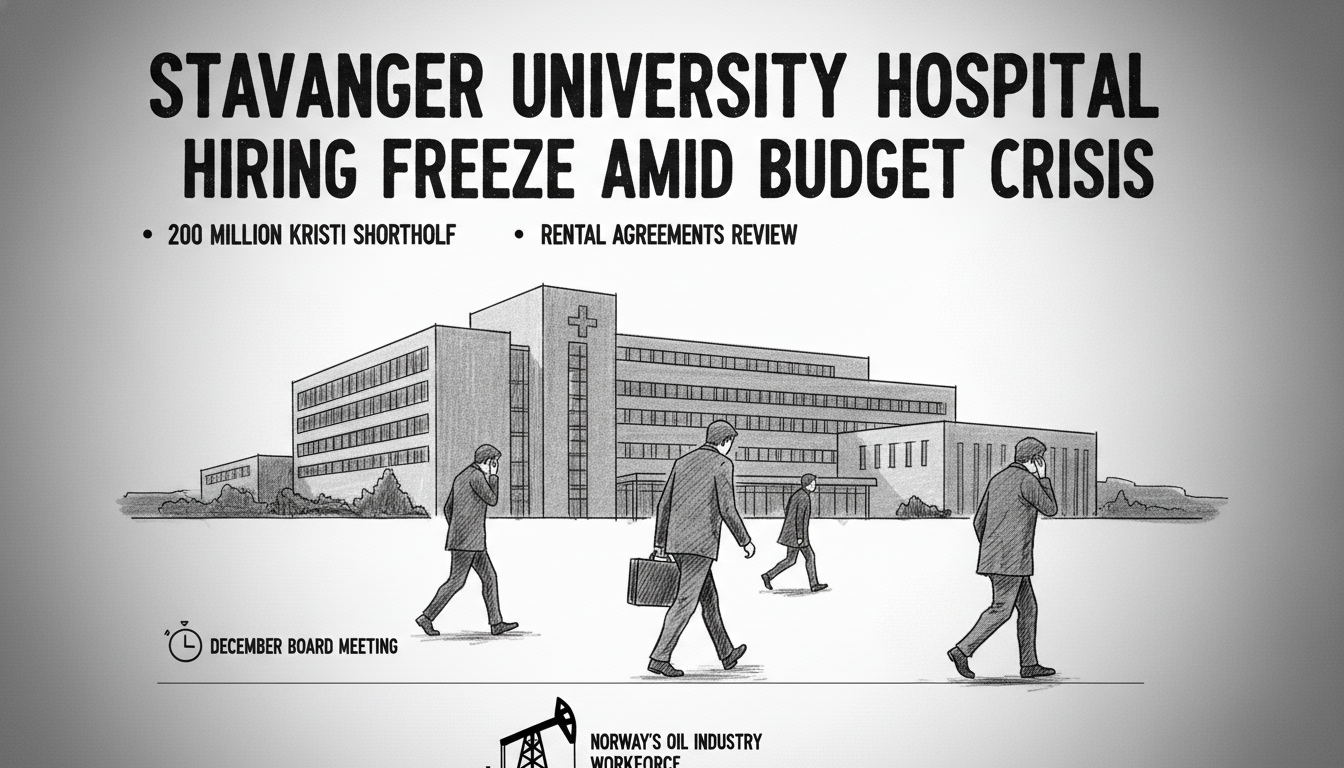
Stavanger University Hospital is considering a complete hiring freeze to address a severe budget deficit. The hospital's administration confirmed the measure in a recent statement. The institution faces a budget shortfall approaching 200 million Norwegian kroner for the coming fiscal year. Salaries account for the largest portion of this overspending. The hospital's board will formally discuss and potentially approve the hiring freeze at its meeting on December 15.
Administrative Director Helle Schøyen described the situation as very serious. She stated that extraordinary measures are completely necessary. The hospital is exploring multiple avenues to reduce costs. One major focus is the review of all rental agreements for its dispersed office spaces. These leased facilities, spread across the Rogaland region, cost approximately 118 million kroner annually. Officials will assess whether some of these leases can be terminated.
There is also a plan to consolidate operations. The administration will examine if functions can be moved to vacant premises at Våland or achieve better utilization of space at the Ullandhaug campus. The hospital is currently preparing for a major relocation into a new building. This preparatory work, combined with reduced regular activity, is expected to improve financial figures for November. Yet the underlying structural deficit remains a pressing concern.
This financial strain at one of Norway's major regional hospitals highlights broader pressures within the Norwegian public healthcare system. Norway funds its universal healthcare through high tax revenues, particularly from sectors like the oil and gas industry centered in Stavanger. When a key institution in an economically vital region faces such a deficit, it signals potential systemic challenges. These include rising labor costs, an aging population requiring more care, and the high expense of maintaining modern medical infrastructure.
The situation poses difficult questions about regional service provision. Stavanger is the hub for Norway's crucial offshore energy sector. A fully functional hospital is essential for the workforce in this demanding industry. Any reduction in staffing or service capacity could have knock-on effects for the oil and gas industry's operational safety and employee welfare. The government often emphasizes the importance of strong public services outside Oslo to support decentralized economic growth.
What happens next will be closely watched. The board's decision in December will set the immediate course. A hiring freeze can stabilize budgets in the short term but risks increasing burnout among existing staff and potentially affecting patient care quality. Long-term solutions may require difficult political decisions about funding allocations between regions or even national healthcare reforms. The outcome at Stavanger University Hospital could become a case study for other Norwegian hospitals facing similar financial headwinds.