
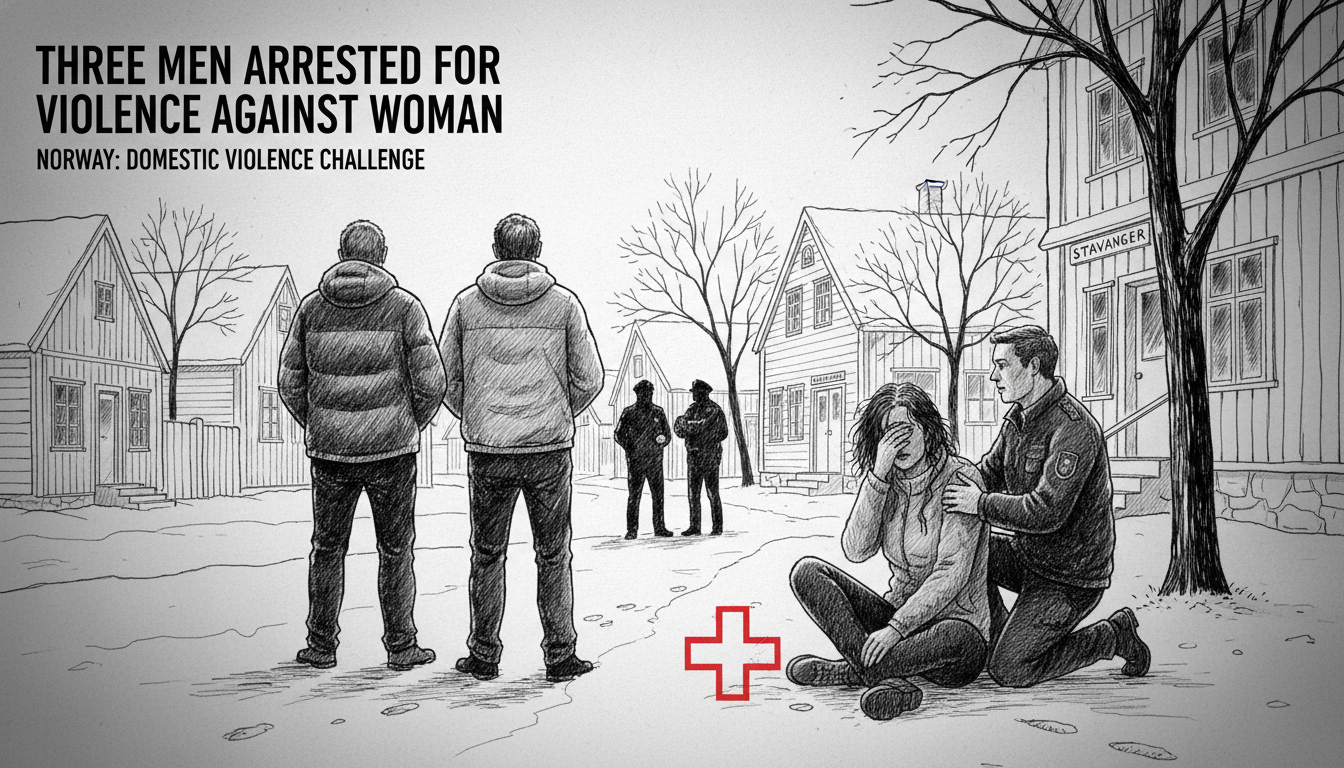
Police in Stavanger arrested three men early Sunday morning following a violent assault against a woman in her Tasta neighborhood residence. The incident occurred just before 6 AM, with officers responding promptly to emergency calls. The victim, a woman in her twenties, required medical treatment at the emergency clinic for facial injuries sustained during the attack. Authorities confirmed the suspects fled the scene immediately after the violence but were apprehended shortly afterward. The detained individuals include two men in their twenties and one man in his forties. Stavanger police continue their investigation into the circumstances surrounding this domestic violence case.
Violent crimes in Norway's fourth-largest city remain relatively uncommon compared to international urban centers. Stavanger, known primarily as Norway's oil capital, maintains generally low crime statistics despite its industrial significance. The city's Tasta district, where this incident occurred, represents a typical suburban residential area with mixed housing and family-oriented communities. This assault marks a concerning departure from the area's normally peaceful character.
Norway's legal system treats domestic violence cases with particular seriousness under recent legislative reforms. The country has implemented stronger protections for victims and harsher penalties for perpetrators over the past decade. Norwegian law mandates immediate police response to domestic violence reports and provides comprehensive support services for victims. The swift apprehension in this case demonstrates effective coordination between emergency services and law enforcement.
Stavanger's position as the administrative center for Norway's offshore oil industry brings unique social dynamics to the region. The city experiences fluctuating populations tied to oil sector employment cycles, which can impact community stability. Local authorities have previously noted correlations between economic pressures in the energy sector and domestic incidents, though no direct connection exists in this specific case. The Norwegian government maintains specialized support systems for families affected by the demanding schedules and remote work common in offshore industries.
This incident occurs amid broader national discussions about resource allocation for domestic violence prevention. While Norway maintains relatively low rates of violent crime overall, recent years have seen increased focus on early intervention programs and victim support services. The country's approach combines legal consequences for perpetrators with comprehensive social services for affected families. Local organizations in Rogaland county provide counseling, emergency housing, and legal assistance for domestic violence victims.
Police procedures in such cases typically involve immediate medical assessment, evidence collection, and victim statement recording. Norwegian law permits temporary restraining orders and immediate removal of perpetrators from shared residences. The judicial process for domestic violence offenses prioritizes victim safety while ensuring due process for the accused. Convictions can result in imprisonment, mandatory counseling, and permanent restrictions on contact with victims.
Stavanger's community services include the Crisis Center for Rogaland, which offers emergency shelter and support for violence victims. The municipality also operates specialized units for domestic violence prevention and child protection services for families affected by such incidents. These resources form part of Norway's comprehensive social welfare system, which aims to address both immediate safety concerns and long-term recovery needs.
The Norwegian model for addressing domestic violence combines proactive prevention with responsive intervention. National statistics indicate gradual improvements in reporting rates and victim support utilization over recent years. However, authorities acknowledge that underreporting remains a challenge, particularly in close-knit communities where social pressures might discourage victims from seeking help. This case's public nature may encourage other victims to come forward, though privacy protections remain paramount in Norwegian legal proceedings.