
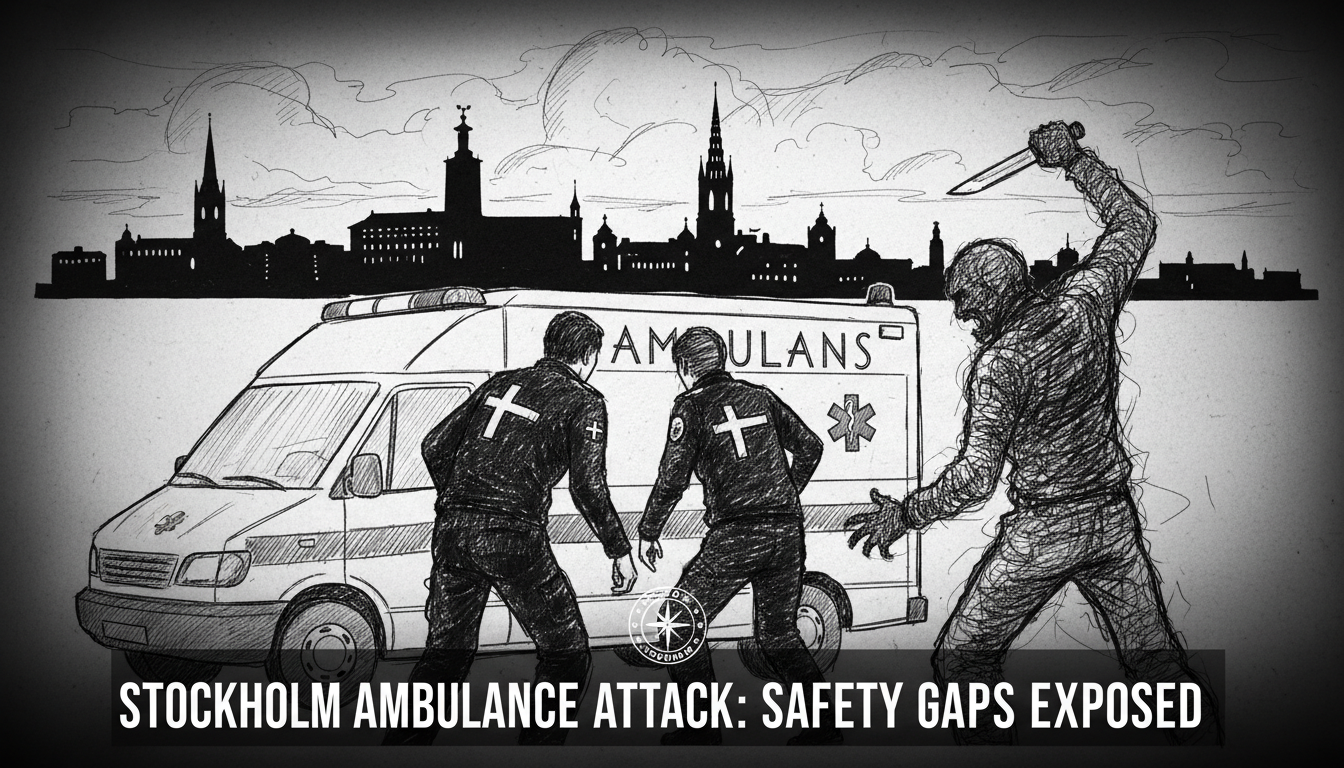
A quiet residential street in Stockholm became a scene of terror for two ambulance workers. Their routine call turned into a desperate fight for survival. This attack has sparked a fierce debate about safety for Sweden's first responders.
Helena Löfgren and her colleague arrived at a man's apartment after a low-priority alert. The call concerned a person with suicidal thoughts but no concrete plans. They discussed whether police backup was needed. Based on the information from emergency dispatchers, they proceeded alone.
"We talk about whether police are needed," the colleague explained in court. "We assessed that the dispatcher had already made that judgment by talking to him. We always talk about our safety when we head out."
Critical information was missing. The man had attacked another ambulance worker with a baseball bat just three days earlier. Had they known, they would never have approached without police. The colleague described their standard caution. She kept one foot against the door when they knocked, a technique to prevent it from being flung open.
The man initially backed away, so they opened the door themselves. What happened next unfolded in seconds.
"We open the door and say hello," the witness stated. "He says nothing. Instead, he takes a step forward. When he does that, he also has a knife in his hand, in his right hand. When we see the knife come forward, we both start to scream."
The man held the knife at chest height, directing it toward Helena. The colleague screamed "out out" and fled down the staircase. She believed her partner was right behind her. Reaching the ambulance outside, she turned to see Helena collapsed in the grass, severely injured.
With help from bystanders, she began life-saving measures until police and another ambulance arrived. A police officer gave an emotional testimony. She described the man coming to the doorway multiple times, holding two knives. He reportedly said he hoped the woman he attacked was dead.
When asked why, the 26-year-old man allegedly replied, "Because I have wanted to kill someone." He was arrested hours later after negotiations.
This incident is not isolated. It highlights a growing concern in Swedish society about violence against public sector workers. Paramedics, nurses, and social workers increasingly face aggression. The case raises hard questions about risk assessment protocols between emergency services. How much information is shared between police and ambulance dispatchers? When is a 'mental health call' actually a violent threat?
For international observers, this story reflects broader tensions. Sweden's famously open society grapples with complex integration challenges and strained public services. The safety of those who run toward danger, not away from it, is now a central topic. Stockholm's neighborhoods, from the inner city to the suburbs, rely on these brave individuals. Their security can no longer be an afterthought.
The court case continues. The outcome will be closely watched by emergency workers across the Nordic region. Their demand is simple. They need the tools and information to do their jobs without fearing for their lives.