
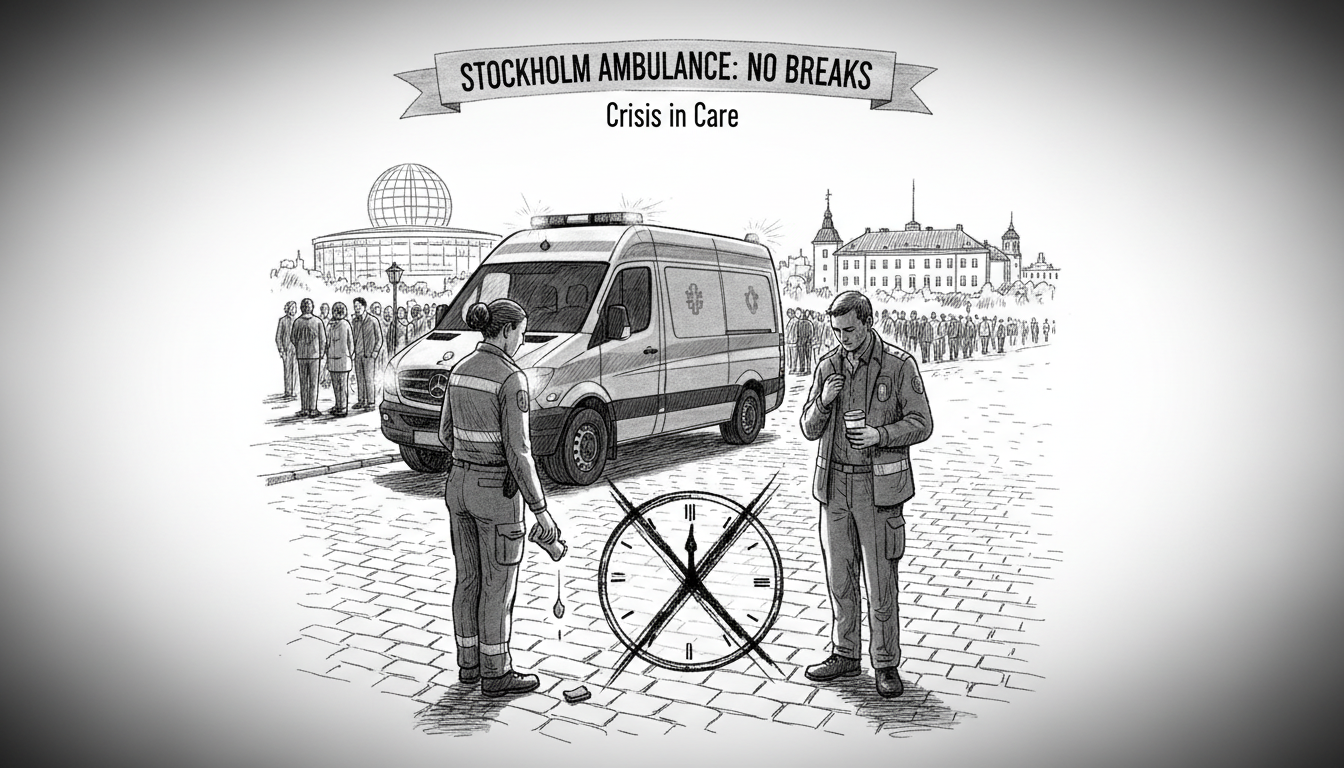
A stark text message went out to all ambulance staff in Stockholm during lunchtime. It ordered them to pause their scheduled meal breaks. The reason was a waiting time of over three hours for lower-priority calls. This incident highlights a growing strain on Sweden's emergency services. It raises questions about the balance between worker welfare and public demand.
Ambulance nurse Emil Skoglund says this is not the first time. He points to the dispatch system as part of the problem. 'We are supposed to only be dispatched to the most urgent cases,' he said. 'But on Sunday, we were sent to people who did not need urgent medical care.' His comments reveal a tension on the front lines.
Jani Sundqvist, head of the company running the region's ambulance service, acknowledged the issue. 'Sunday's event shows we need a holistic responsibility to make necessary decisions early,' Sundqvist said in a statement. The region has announced a review of the incident. The goal is to ensure proper procedures are in place to prevent a repeat.
Fredrik Jonsson, chief physician at the national emergency dispatch center, offered a different perspective. 'There will always be peaks and situations with a mismatch between demand and need,' he noted. Currently, this national center prioritizes and directs all ambulance calls in Sweden. However, this responsibility is set to be transferred to the Stockholm region itself in the coming years. This planned shift adds another layer of complexity to the current challenges.
For international readers, this story touches on a core aspect of Swedish society. The country prides itself on a robust welfare state and strong worker protections. The image of emergency personnel being denied basic breaks clashes with that ideal. It speaks to broader pressures on public systems, from healthcare to housing. Stockholm, a city of vibrant neighborhoods like Södermalm and Vasastan, relies on these services functioning smoothly for all residents.
What does this mean for people living in or visiting Stockholm? It signals that even Sweden's renowned systems can reach a breaking point. High demand, potentially driven by an growing and aging population, tests the infrastructure. The incident is a reminder that the social contract requires constant maintenance. The promised review is a first step, but the underlying issue of resource allocation remains. The coming years, as control shifts to the regional level, will be a critical test for Stockholm's emergency response.