
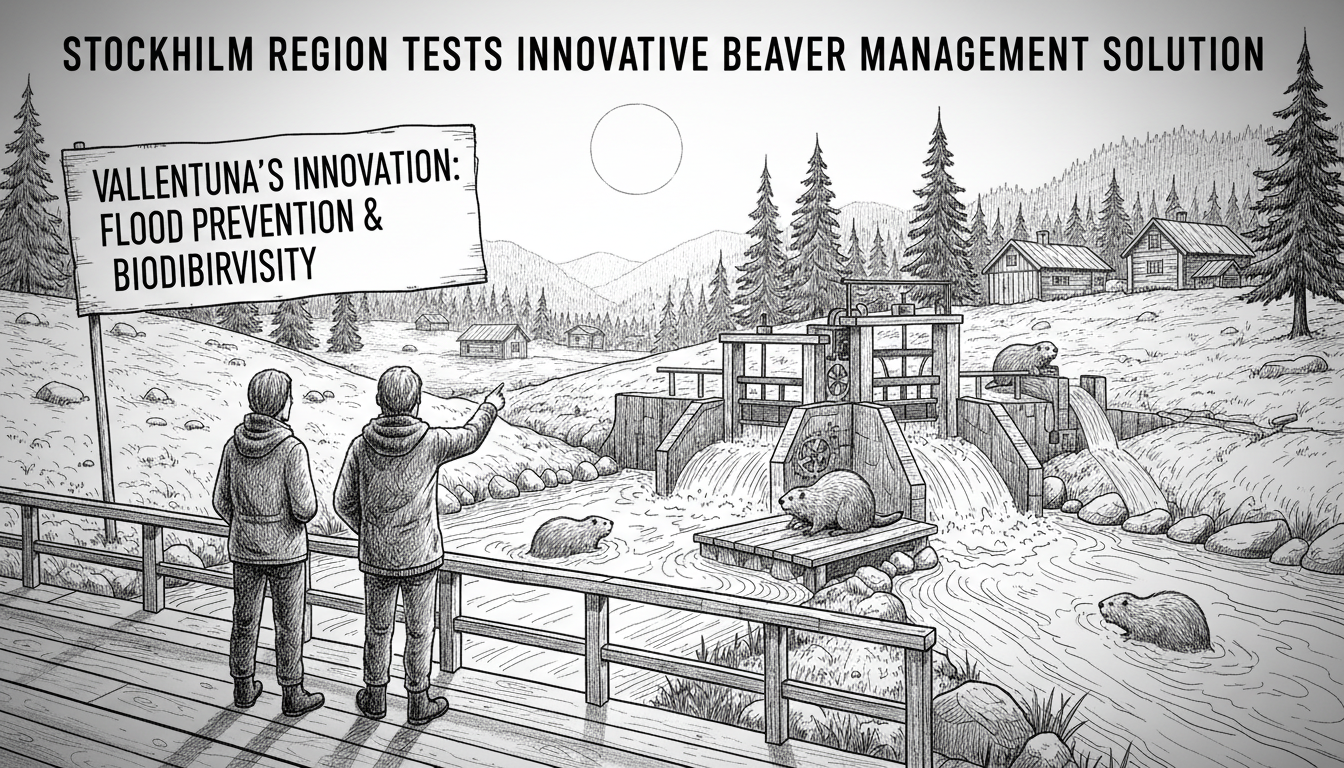
The Swedish government faces growing challenges balancing wildlife protection with infrastructure management as beaver populations expand across Stockholm's municipalities. In Vallentuna municipality, local authorities have implemented a novel approach to address flooding concerns caused by beaver dams along the Ormstaån waterway. The solution involves installing specialized water control structures that maintain ecological balance while protecting nearby roads and buildings from potential flooding damage.
Ann Wahlström, a conservation specialist, observed widespread evidence of beaver activity throughout the region. She noted visible tree markings and dam construction at multiple locations, indicating a thriving local beaver population. These animals, often called nature's engineers, create valuable habitats for bats, birds, insects, and otters through their environmental modifications.
Dawid Rojek-Szumanski, land strategy coordinator for Vallentuna municipality, explained the economic and ecological reasoning behind their approach. Removing beaver dams and organizing hunting parties represents substantial ongoing expenses for local governments. The new water control installations offer a cost-effective alternative that preserves both municipal infrastructure and local biodiversity.
This municipal initiative reflects broader Riksdag decisions supporting sustainable wildlife management across Sweden. The Swedish Parliament has increasingly emphasized nature-based solutions in environmental policy, recognizing their long-term benefits over traditional intervention methods. Stockholm politics frequently grapples with balancing urban development pressures against ecological preservation requirements.
The beaver management strategy demonstrates how local implementation of government policy in Sweden can achieve multiple objectives simultaneously. Municipal authorities protect public infrastructure from flooding risks while maintaining important wetland ecosystems. This approach aligns with national conservation goals while addressing practical local concerns.
Vallentuna's experience offers valuable insights for other municipalities facing similar challenges. As beaver populations continue expanding throughout the Stockholm region, cost-effective management solutions become increasingly important for local budgets. The success of these water control structures could influence wildlife management approaches across multiple government districts.
Historical context shows that beaver populations were nearly extinct in Sweden during the nineteenth century before successful reintroduction programs. Current population growth reflects decades of conservation efforts, creating new challenges for municipal planners. The Swedish government must continually adapt its environmental policies to address these evolving human-wildlife interactions.
This case illustrates how local innovation can inform national policy discussions occurring within the Riksdag building and government offices at Rosenbad. As climate change increases flooding risks across Scandinavia, nature-based solutions gain importance in regional planning. Vallentuna's approach demonstrates practical implementation of sustainable development principles central to contemporary Swedish environmental policy.