
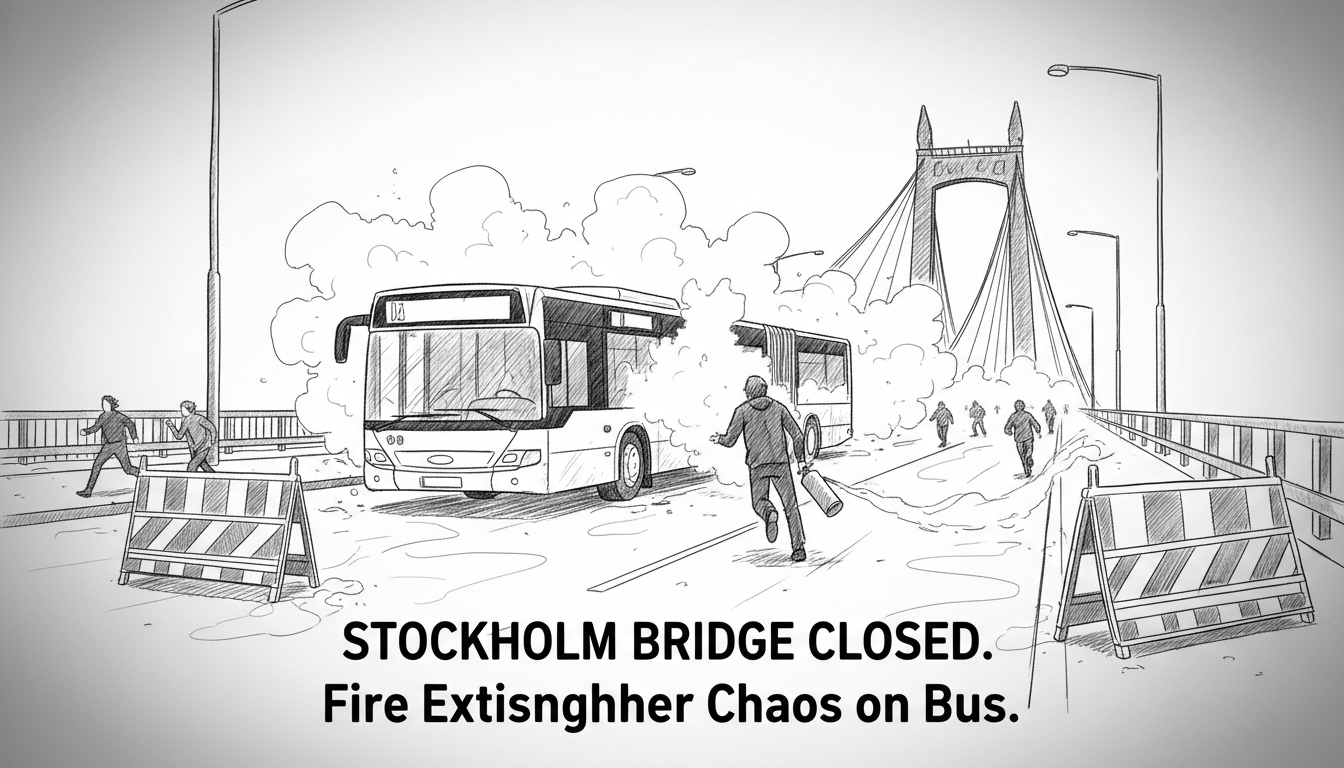
A Monday morning commute in Stockholm turned chaotic when someone discharged a fire extinguisher on a city bus. The incident happened on the Skansbron bridge, a key route connecting the Södermalm and Gamla Stan districts. Emergency services evacuated the bus and completely closed the bridge to all traffic.
A rescue service operator, Marie Nordahl, clarified the situation. She said there was no fire, just someone who activated the extinguisher on their own. The alarm came in around 8:30 AM, causing major disruptions during the morning rush hour.
This kind of disruptive prank is not just a traffic headache. It reflects a broader tension in Swedish society. Stockholm is a city that prides itself on order and collective responsibility, a concept known as 'folkhemmet'. Acts like this deliberately break that social contract. They waste public resources and shake the trust that makes daily life function smoothly.
For international readers, it's important to understand the context. Swedish public transport, especially in Stockholm, is generally safe, clean, and reliable. An event like this stands out precisely because it is so unusual. The immediate closure of a major bridge shows how seriously authorities take any potential threat to public safety, even a false alarm.
What happens next? The bridge will reopen once authorities confirm it is safe. Police will likely review camera footage from the bus to identify the person responsible. Such actions can lead to charges for public mischief or endangerment. For commuters, it meant a morning of unexpected delays and alternative routes through the historic heart of the city.
These incidents, while rare, spark conversations about respect for shared spaces. They happen against a backdrop of ongoing debates about integration and social cohesion in Sweden. It's a reminder that the smooth functioning of Swedish society relies on everyone playing by the same rules. When someone chooses not to, the entire system feels the ripple effects, from delayed workers to strained emergency services.
The story is more than a traffic update. It's a small window into the challenges of maintaining a high-trust society. It shows how quickly a single act can disrupt the rhythm of a major European capital. For residents and visitors alike, it underscores the value placed on safety and public order in Swedish daily life.