
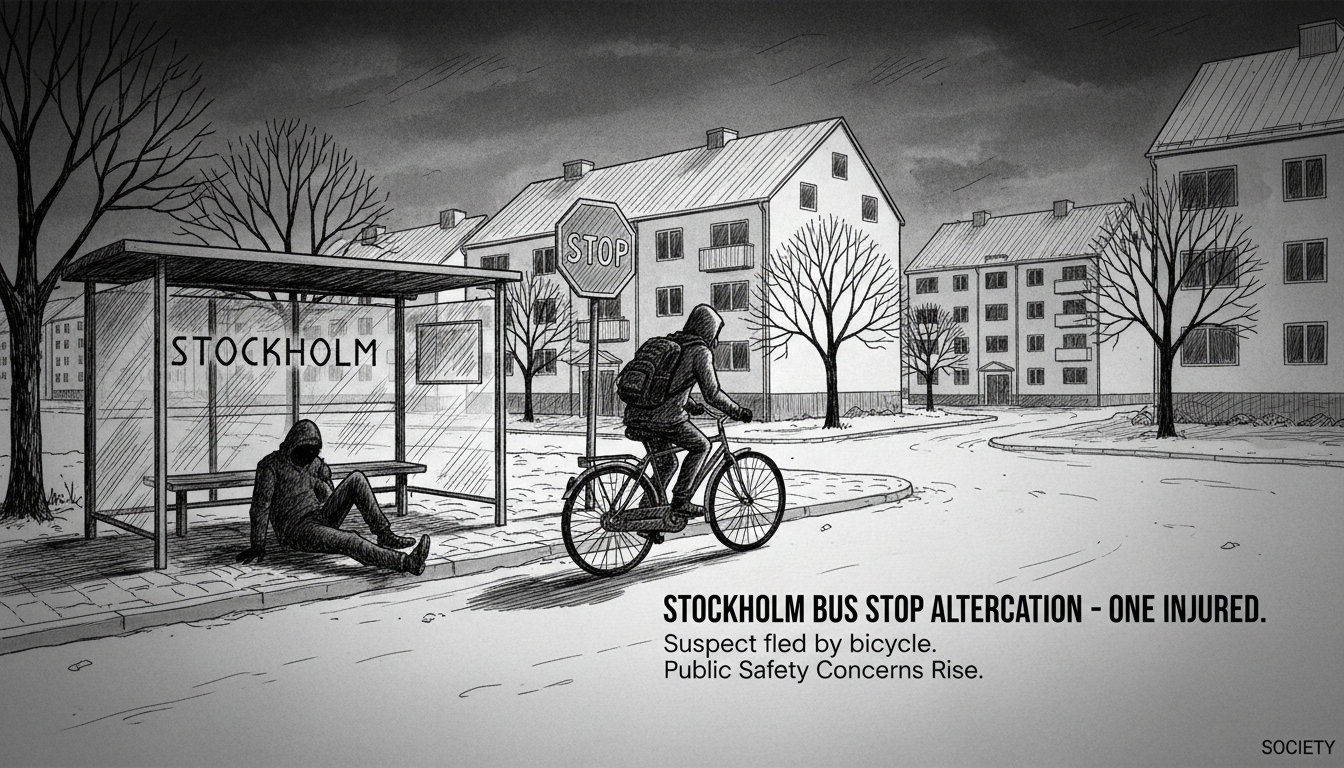
A quiet afternoon in Stockholm's Billinge neighborhood turned violent when police responded to reports of a physical altercation at a local bus stop. Witnesses described seeing two men engaged in a heated dispute that escalated into physical violence.
Police spokesperson Evelina Olsson confirmed the incident in an official statement. "We received multiple calls about a fight between two men at this bus stop," she said. Officers arrived to find a 35-year-old man with injuries requiring hospital transport by ambulance.
The injured man reportedly sustained wounds from some type of weapon or object used during the assault. "We conducted interviews with him at the scene," Olsson noted. "He remained conscious and able to communicate throughout."
According to preliminary investigations, the suspected perpetrator fled the area by bicycle. No arrests have been made as police continue their search. The exact cause of the dispute remains unclear, though authorities believe it stemmed from some form of personal disagreement.
This incident highlights broader questions about public safety in Stockholm's residential neighborhoods. While Sweden maintains relatively low violent crime rates compared to many countries, occasional public altercations remind residents that urban safety requires constant attention. The Billinge area, typically known for its quiet residential character, now joins other Stockholm neighborhoods grappling with how to maintain peaceful public spaces.
International readers might find context in Sweden's approach to community policing. Swedish authorities typically emphasize de-escalation and community engagement over aggressive policing. This philosophy faces practical challenges when responding to spontaneous violent incidents in public areas.
For expats and newcomers to Swedish society, understanding local dynamics around public behavior proves important. Swedish social norms strongly value personal space and conflict avoidance in public settings. Incidents like this bus stop altercation represent exceptions rather than the typical Swedish public experience.
The practical implications for Stockholm residents include increased police presence in the area and potential adjustments to public transportation security. Local officials often respond to such incidents with renewed focus on neighborhood watch programs and community safety initiatives.
What happens next depends largely on police identification of the suspect and the victim's recovery. Swedish legal proceedings typically move deliberately, with emphasis on thorough investigation rather than rapid arrests. The community will likely see continued police activity in the area as the investigation progresses.