
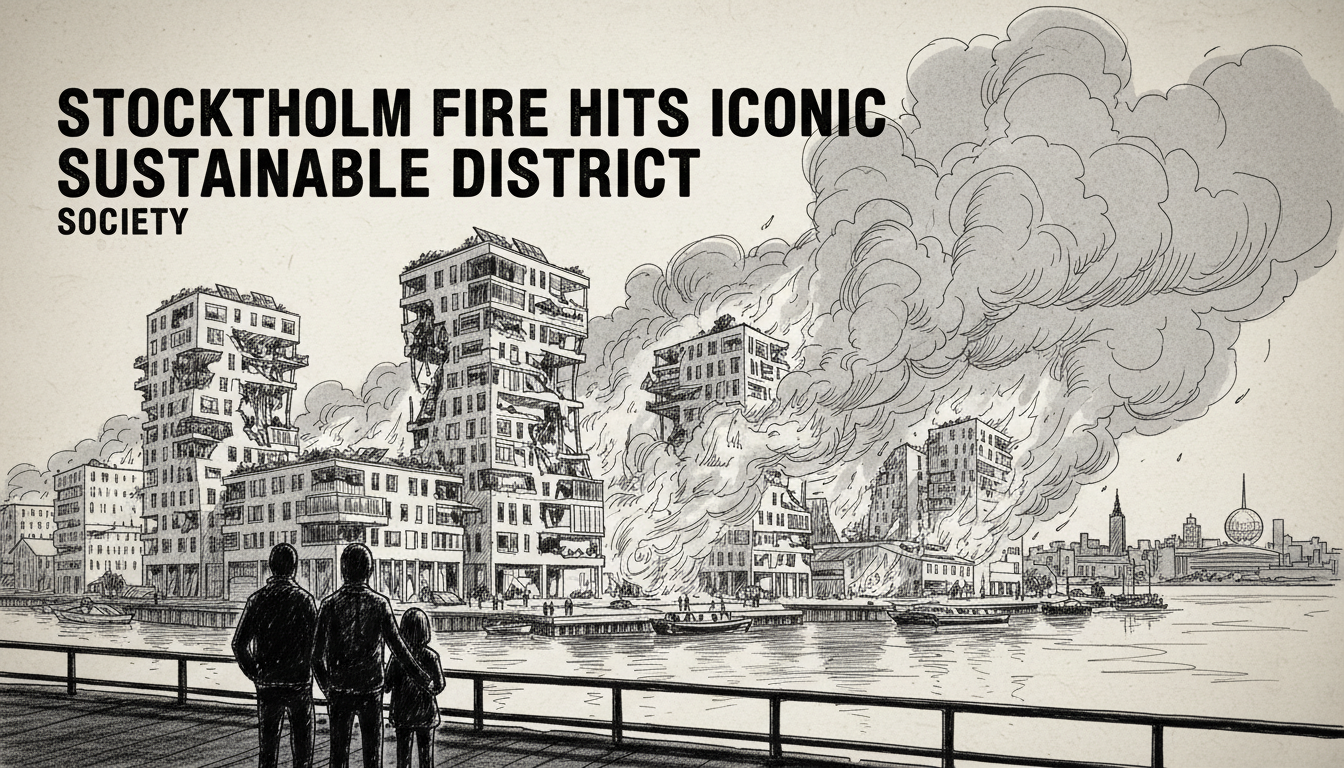
Stockholm fire crews responded to a kitchen blaze in Hammarby Sjöstad Saturday, an incident that tested the famed sustainability district's safety. The alarm came just before 11:30 AM after callers reported smoke from a roof and balcony. The fire, now extinguished, led to one person receiving medical care and disrupted a typically tranquil weekend in this model Stockholm neighborhood.
“We are on site and have determined that a fire burned in a kitchen. That part of the fire is out, and we are checking for potential spread and conducting follow-up checks,” said Kim Hellberg, command officer at the Rescue Central Mitt. Police assisted at the scene, and car traffic near the fire site was blocked off.
The swift response highlighted the city's emergency protocols. Yet, the event sent a ripple of concern through a community proud of its modern, safe design. Residents gathered at a safe distance, watching as smoke dissipated over the canal-side apartments.
A Community Built on Innovation
Hammarby Sjöstad is more than just a Stockholm district. It’s a global symbol of sustainable urban living. Developed on former industrial docklands in Södermalm, its transformation began over two decades ago. The area was planned to house around 11,000 apartments for over 30,000 residents. Its 'Hammarby Model' integrates waste, water, and energy systems to minimize environmental impact. Walking its paths, you see solar panels, waste chutes for recycling, and a striking modern aesthetic.
“It’s a quiet, family-friendly place,” said Erik Lund, a local resident walking his dog near the cordon. “You don’t expect something like this. It makes you think about safety even in the newest buildings.” This sentiment reflects a subtle tension between innovative design and everyday risk. The district's environmental focus is world-renowned, but Saturday's fire was a plain reminder of universal hazards.
Emergency Response and Aftermath
The coordinated effort between rescue services and police was efficient. Containing the fire to a single kitchen unit prevented a larger disaster. The individual transferred to medical care had injuries assessed as non-life-threatening, a relief for neighbors. The extent of property damage remains unknown as investigators work.
For Stockholm's fire services, calls to modern, high-density areas like Hammarby Sjöstad present specific challenges. Narrow streets and dense living require precise tactics. The successful containment shows their adaptation to the city's changing architecture. However, every incident provides data for improving future responses in similar urban environments.
The Sustainability Paradox
This fire presents an interesting paradox for urban planners. Hammarby Sjöstad is studied worldwide as a model for reducing carbon footprints and creating livable spaces. Yet, this incident shifts focus from environmental sustainability to immediate building safety and resident security. Are these goals in conflict? Experts suggest they must be integrated.
“True sustainability encompasses social and safety dimensions, not just environmental ones,” says Anna Bergström, an urban planning researcher at KTH Royal Institute of Technology. “A district like Hammarby Sjöstad is designed with fantastic ecological systems. But safety protocols, construction materials, and evacuation plans are equally vital parts of a resilient community. An event like this is a real-world test of that complete design philosophy.”
Her analysis is crucial. It moves the conversation beyond the fire itself to a broader discussion about modern urban living. The district’s airtight, energy-efficient buildings require sophisticated fire ventilation systems. Its dense layout needs clear emergency access. Saturday’s fire, while limited, serves as a live drill for these systems.
Life in a Model Neighborhood
Beyond the blueprints and models, Hammarby Sjöstad is a vibrant community. On a Saturday, the paths along Hammarby Sjö are usually filled with joggers and families. The local squares buzz with people enjoying fika at cafes. The fire disrupted this rhythm, if only for a few hours. It brought people out of their apartments, creating impromptu gatherings where conversations turned to safety checks and insurance.
This human aspect is often missing from case studies about the area. Residents live with the tangible benefits of the sustainable design—lower energy bills, clean surroundings, a strong sense of civic pride. But they also live with the normal worries of any city dweller. “We think about recycling and composting,” said another resident, who gave her name as Li. “Today, we’re also thinking about our smoke alarms and what’s in our kitchen drawers.”
Looking Ahead: Implications for Urban Design
The incident’s long-term impact will likely be minimal on the district’s reputation. However, it offers a lesson for Stockholm and other cities building sustainable futures. The integration of safety must be as innovative as the integration of energy recovery. As cities convert old industrial zones into residential havens, the Hammarby model will be copied. This event adds a critical chapter to that story: the need for all-encompassing planning.
Will building codes for sustainable developments be reviewed? Probably not for a single kitchen fire. But it reinforces the ongoing work of Stockholm’s emergency services and planning boards. It reminds architects that human factors are as important as environmental metrics. The goal is not just to live green, but to live safely.
As the scene cleared on Saturday afternoon, normalcy began to return to Hammarby Sjöstrand. The police tape came down. Traffic resumed. The buzz of weekend life returned, perhaps with a slightly more attentive ear for sirens. The district, a testament to looking forward, was reminded that preparedness for the unexpected is a foundation of any truly sustainable society. The ultimate test of a model neighborhood isn't just how it handles waste, but how it handles crisis.