
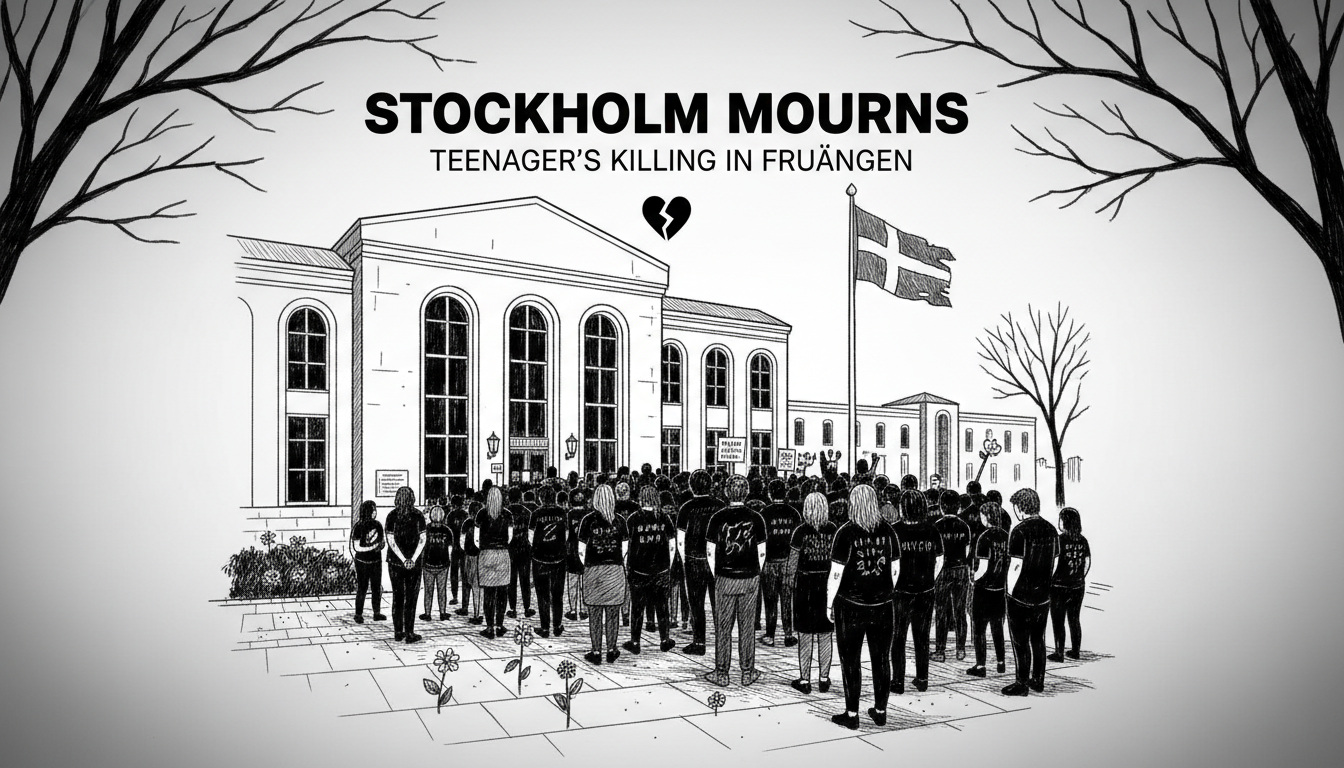
A packed courtroom in Stockholm tells a silent story of grief. It is the first day of the trial for the killing of a 16-year-old boy known as Rio. The case has shaken the quiet southern suburb of Fruängen. Officials describe the shooting as a pure execution. The victim had no prior police record. Prosecutors say they have found no clear motive for his death.
When the court guard tried to open the doors, he had to call for backup. So many people wanted a seat that a queue system formed. Almost everyone wore black t-shirts. They bore the words 'Long Live Rio' and a picture of the teenage boy. The room filled completely. Several of his friends had to wait outside in the hallway.
This tragedy touches on deep concerns in Swedish society. It highlights the random nature of some violent acts. Fruängen is not typically associated with gang crime. It is a residential area known for families and green spaces. The lack of a known motive makes the event more frightening for local residents. People wonder how such violence could reach their doorstep.
Sweden has faced challenges with youth violence in recent years. This case feels different to many. The victim was not involved with criminal groups, according to authorities. His death seems tragically random. This shifts the public conversation. It moves from gang conflicts to general safety for all young people.
The community response has been powerful. The sea of memorial t-shirts shows collective mourning. It is a common Swedish expression of solidarity in loss. This public display in a formal court setting is notable. It blends personal grief with a demand for public justice.
What does this mean for Stockholm and Sweden? The trial will seek legal answers. The community seeks deeper ones about safety and belonging. For international observers, it shows a Sweden grappling with complex social changes. The nation's strong social fabric is being tested by incidents that defy easy explanation. The outcome of this case will be watched closely. It may influence discussions on crime prevention and youth support far beyond the Fruängen neighborhood.
Honest commentary is necessary here. The shock stems from the violation of a perceived social contract. Swedes often pride themselves on a safe, orderly society. An unmotivated killing of a teenager in a calm suburb breaks that trust. It forces a uncomfortable conversation. The community's visible unity is a strength, but it also underscores the profound fear and loss they feel. The system now must deliver not just a verdict, but a sense of restored security, which is a much taller order.