
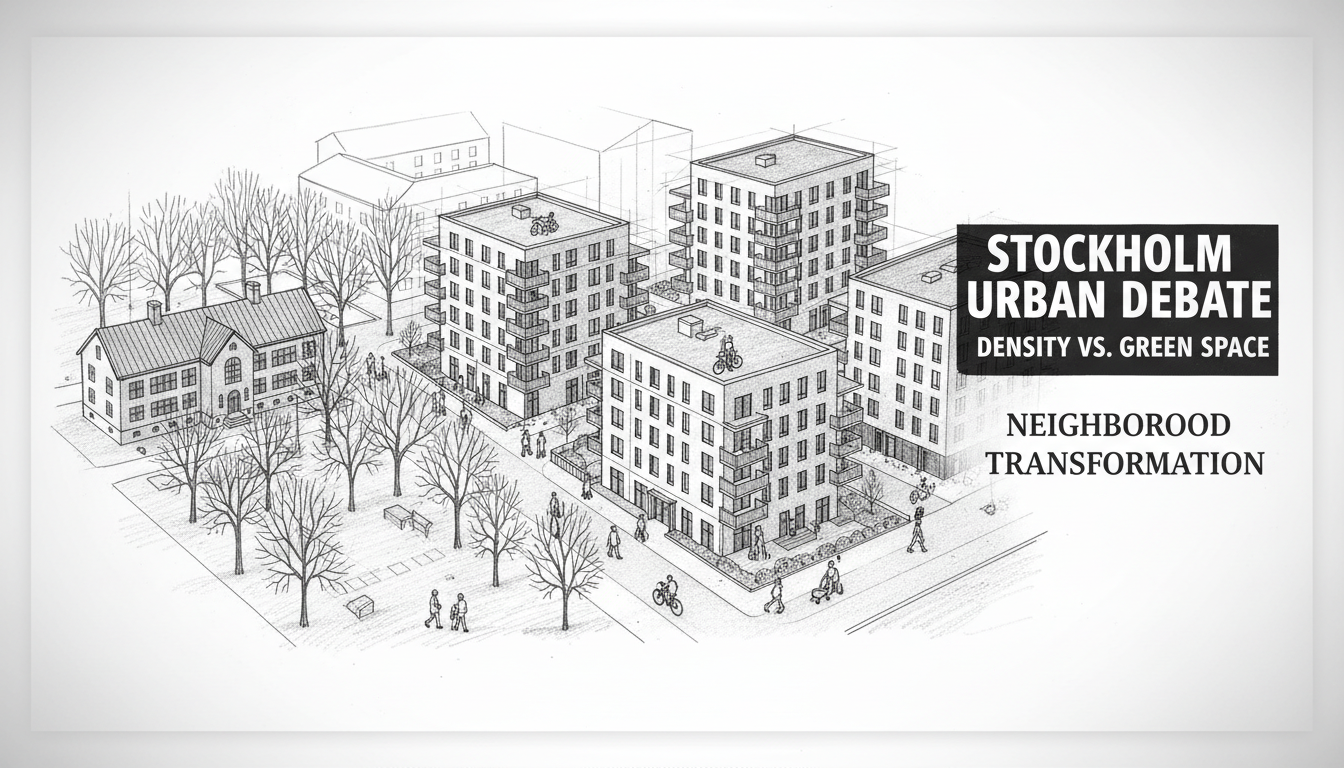
Stockholm's urban landscape continues evolving as city planners propose replacing a former schoolyard with 130 new apartments. The open space near Hagabion, once Victoria School's playground, may soon host a seven-story residential building. This development plan has gained support from the city's political leadership.
Johannes Hulter, chair of the city planning committee, expressed strong approval for the project. He stated the proposal aligns perfectly with current urban development strategies. The plan involves removing existing parking spaces and creating housing in a central neighborhood.
This transformation reflects broader Swedish society trends in urban planning. Cities nationwide increasingly prioritize housing density over parking and unused spaces. The approach addresses Sweden's ongoing housing shortage while promoting sustainable city living.
For international observers, this demonstrates Sweden's commitment to urban infill development. Rather than expanding city boundaries, Swedish municipalities often redevelop underutilized urban spaces. This strategy preserves green belts while increasing housing supply within existing infrastructure.
Stockholm events today frequently involve such urban development debates. The city balances historical preservation with modern housing needs. This particular project in a central neighborhood shows how Swedish culture values both community spaces and practical housing solutions.
Local residents often have mixed reactions to such developments. Some welcome new neighbors and vibrant street life. Others mourn lost green spaces and increased density. These tensions reflect the complex nature of urban transformation in growing cities.
Sweden immigration news often connects to housing discussions. New residents need places to live, fueling demand for urban apartments. Development projects like this one help accommodate Stockholm's growing population while maintaining the city's character.
The proposed building's seven-story height represents typical Stockholm construction. City regulations often limit building heights to preserve sunlight and views. This careful balance defines Swedish lifestyle priorities that value both community needs and individual comfort.
What happens next for this development? The proposal must navigate public consultation and regulatory approvals. Local residents will have opportunities to voice opinions. The final decision will shape the neighborhood's character for decades.
Urban development in Swedish cities follows careful planning processes. Multiple stakeholders contribute perspectives before projects proceed. This democratic approach to city building reflects broader Swedish societal values around community participation.
As Stockholm continues evolving, such transformations will remain common. The city's growth requires creative solutions to housing challenges. This particular project represents just one piece of Stockholm's ongoing urban development story.