
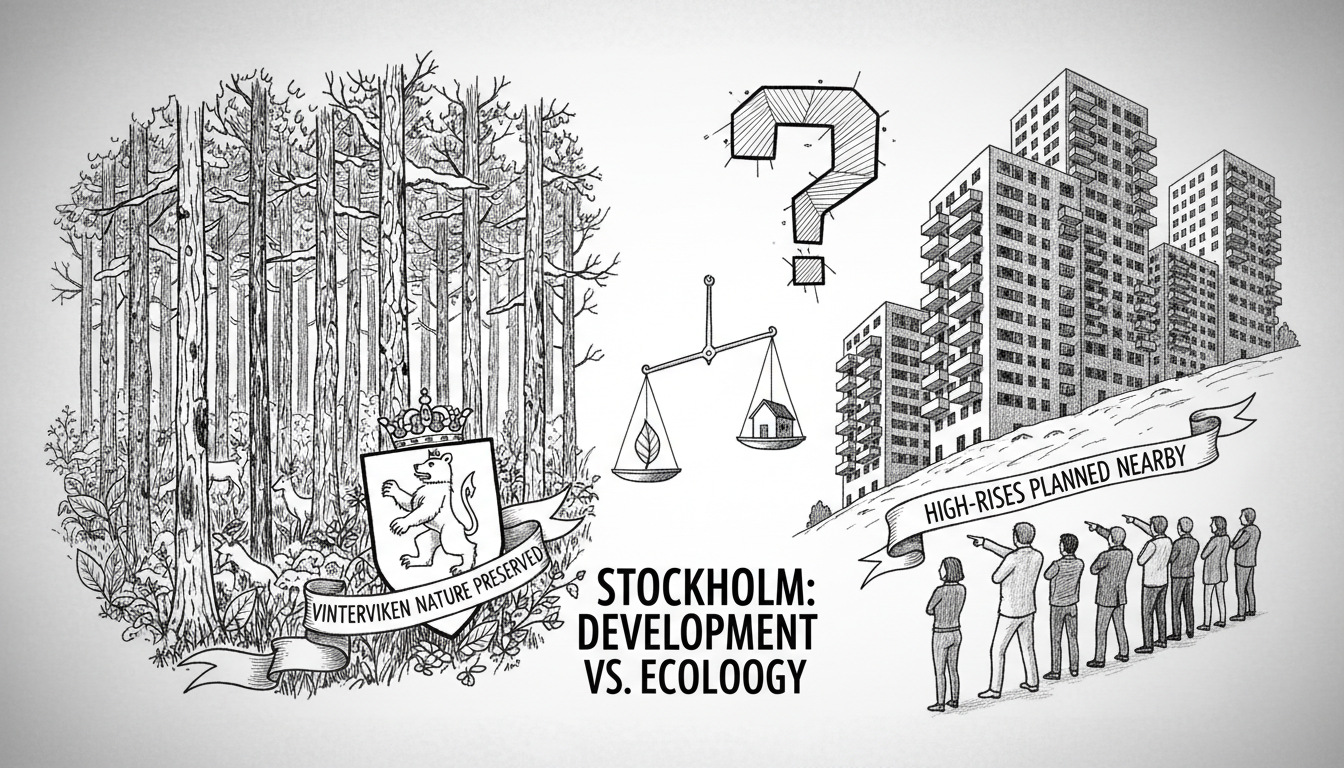
Stockholm will grant Vinterviken's natural area biotope protection status in November. This decision safeguards parts of the area containing ancient oaks and pine trees. The protection aims to preserve habitats for bats and amphibians.
Local residents in Gröndal criticize what they call the city's contradictory approach. One side of Fågelsångsberget hill receives protection while the other side faces construction of four high-rise buildings.
Tia Jumbe, a Gröndal resident, said both sides of the hill contain equally valuable nature. "Both slopes were assessed as equally worthy of protection and contain the same red-listed species," Jumbe explained. "Yet only the southern side gets protection while the northern side faces development."
The biotope protection forms part of Stockholm's mission to preserve natural areas within the inner city. City officials must balance this goal against urban development needs.
Gundula Kolb, a city planning strategist, acknowledged the entire hill's high natural values. "When establishing nature protections, we must weigh other societal interests," Kolb stated. "The need for more housing represents one such consideration."
The situation highlights Stockholm's ongoing struggle between preservation and expansion. City planners face increasing pressure to accommodate growth while maintaining green spaces that define the Swedish capital's character.