
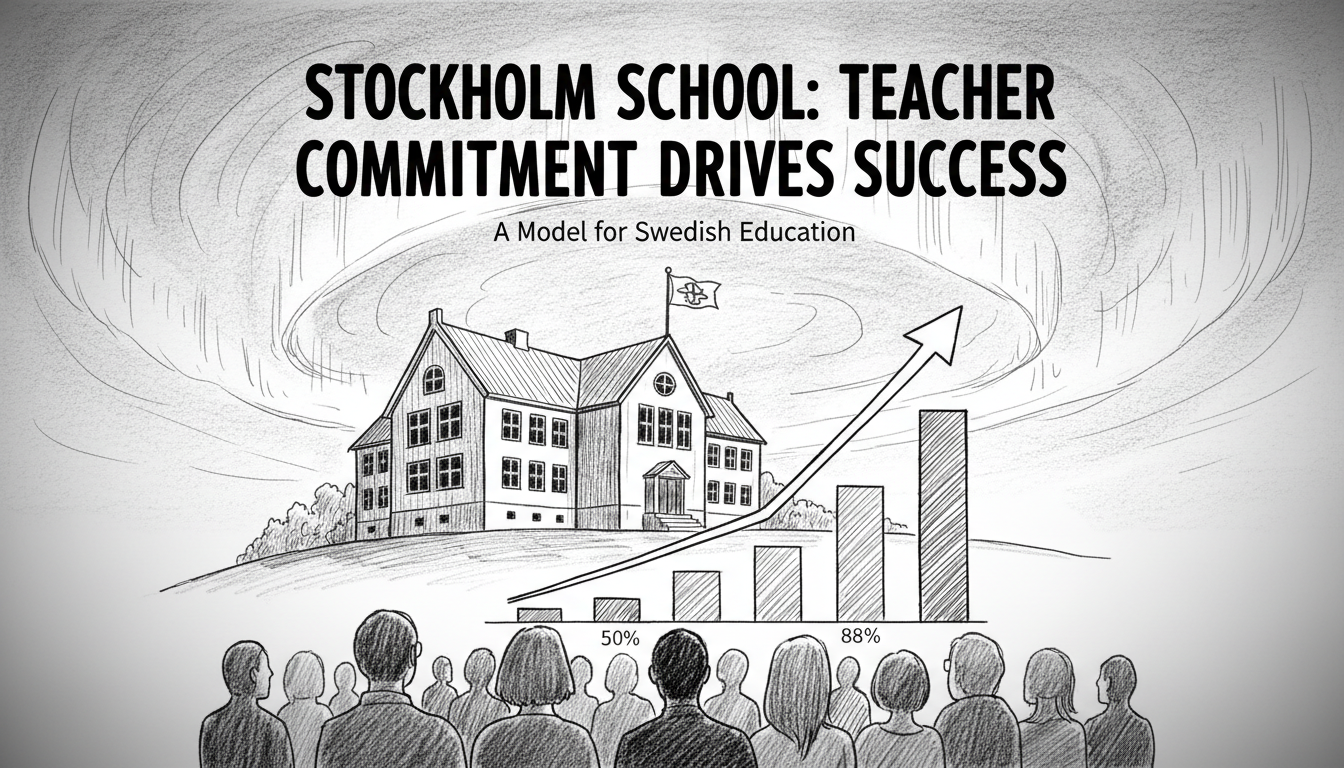
Hjulstaskolan in Stockholm has transformed its educational outcomes dramatically. Five years ago, only half of students graduated with qualifications for upper secondary school. Last year, that number reached 88 percent. This remarkable turnaround shows what dedicated educators can achieve in Swedish schools.
Meriem Boukris, a mathematics and science teacher at the school, explained their approach. She said teachers need readiness for change and genuine belief in their students. This philosophy has driven the school's success in one of Stockholm's diverse neighborhoods.
Sweden's education system faces ongoing challenges with integration and performance gaps. Schools in areas with high immigrant populations often struggle more. Hjulstaskolan's story provides a blueprint for addressing these issues through teacher quality and commitment.
International readers might wonder how this connects to broader Swedish society trends. Education quality remains a hot topic as Sweden balances its traditional values with modern diversity. The country continues working to ensure all students receive equal opportunities regardless of background.
What makes this Stockholm school's approach different? Teachers built trust through consistent support and high expectations. They focused on individual student needs rather than one-size-fits-all teaching methods. This human-centered approach resonates with Swedish cultural values of equality and personal development.
School transformations like this matter beyond test scores. They strengthen community bonds in neighborhoods experiencing rapid demographic changes. Successful schools become anchors that bring together families from different cultural backgrounds.
The practical implications for Stockholm residents are clear. Quality education attracts families to neighborhoods and supports long-term community stability. As Sweden continues navigating immigration and integration, schools like Hjulstaskolan demonstrate what works.
This story reflects broader Swedish lifestyle priorities where education quality remains crucial for social mobility. The focus on teacher quality over structural changes shows a pragmatic approach to educational improvement. Other Swedish schools will likely study this model for their own communities.
Honest analysis suggests teacher commitment alone cannot solve all educational challenges. Adequate funding, parental involvement, and community support all play roles. Still, Hjulstaskolan proves that dedicated educators can make dramatic differences even with limited resources.