
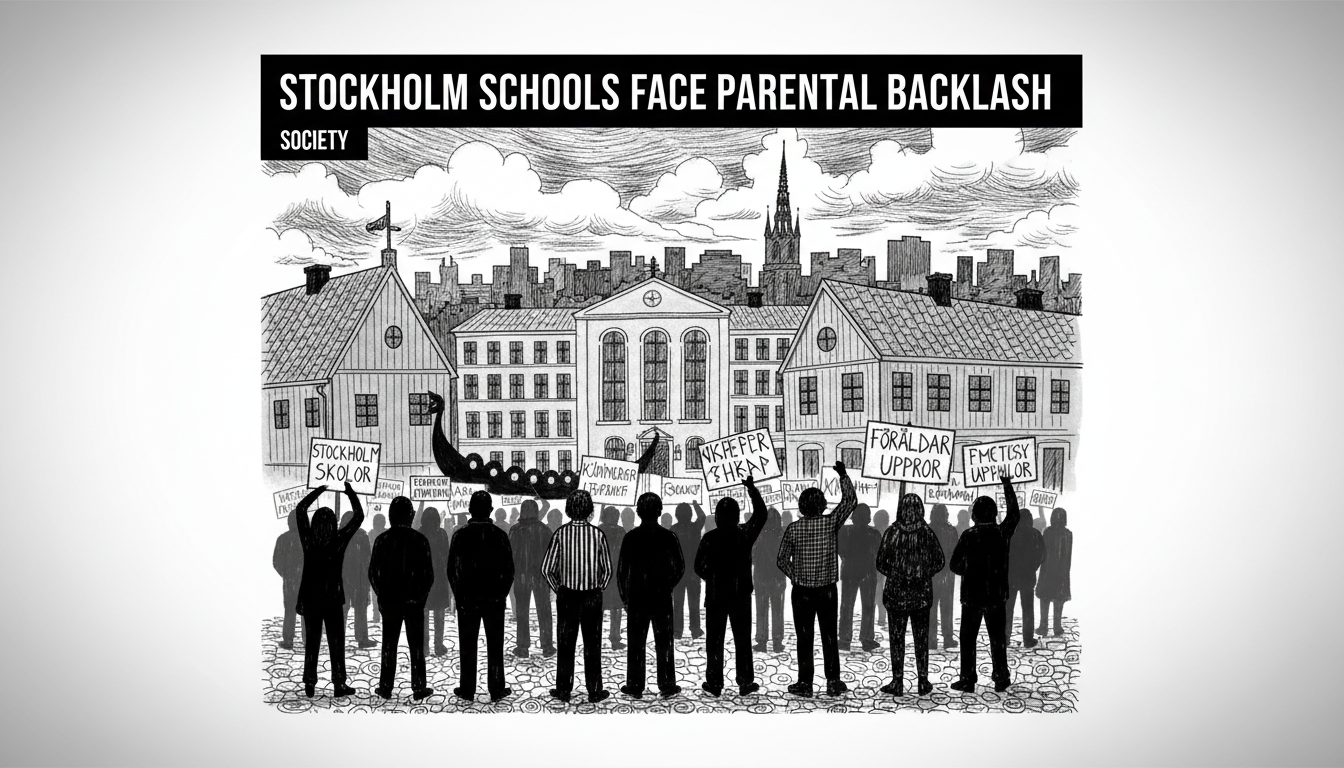
Stockholm's schools are at the center of a debate over safety and stability this week. In the southern district of Farsta, officials aim to make routes to school safer for walking and cycling. Meanwhile, in the northern municipality of Sundbyberg, a summer preschool closure has sparked anger among parents. These local conflicts highlight broader pressures on Sweden's cherished public education and childcare systems.
A Push for Safer Streets in Farsta
The initiative in Farsta focuses on getting more children to walk or cycle. The goal is to reduce the number of parents driving their kids to school. This is a common objective in Swedish urban planning. It promotes children's independence, reduces traffic, and supports a healthier lifestyle. For many families in this leafy southern Stockholm district, it's a welcome idea.
"My son is eight and wants to bike to school with his friends," says Karin Lund, a mother of two living near Farsta Strand. "But the final stretch along that busy road makes me too nervous. If they create a proper, protected path, it would change our whole morning routine."
Municipal projects like this often involve adding speed bumps, widening sidewalks, and creating designated bike lanes. They are part of a long-term vision for child-friendly cities. Yet, implementation can be slow. It requires funding, planning approvals, and often temporary disruption. Stockholm County's steady population growth adds urgency. More residents mean more cars competing for space with pedestrians and cyclists.
The Preschool Closure Causing Conflict
North of the city, a different educational drama is unfolding. Sundbyberg Municipality has decided to close a preschool this summer. A handful of parents are criticizing how the process was handled. They report that children's groups were shuffled and that familiar pedagogues were replaced. In a system built on trust and consistency, these changes feel disruptive.
Sweden's municipalities are legally obligated to provide preschool places. This makes any closure a sensitive political issue. For working parents, reliable childcare is non-negotiable. Disruption can mean scrambling for new arrangements or taking unexpected leave. The closure in Sundbyberg, a densely populated area experiencing rapid growth, seems counterintuitive to some.
"The trust between parents and the preschool is broken," says father Markus Ek, whose four-year-old attends the facility. "Stability is everything at this age. The way this was communicated, with sudden changes to staff and groups, has caused real anxiety for both kids and parents."
Understanding the Swedish Model
To grasp why these local issues resonate, one must understand the Swedish model. Education and childcare are largely publicly funded and managed by 290 municipalities. Swedes pay high taxes with the expectation of high-quality, accessible public services. This creates a strong social contract. When that service feels compromised, public reaction is swift and vocal.
In 2022, Sweden spent approximately 6.7% of its GDP on education. This investment is a point of national pride. The system emphasizes equality, child-centric learning, and fostering independence from a young age. The Farsta project aligns perfectly with the latter goal. The Sundbyberg closure, however, challenges the promise of stability and accessibility.
"Municipalities are constantly balancing budgets, demographic shifts, and quality standards," explains education policy analyst Lena Forsgren. "Sometimes, consolidating resources from a smaller preschool into a larger unit makes financial and operational sense for the municipality. But for the individual child and parent, it can feel like a profound loss of their immediate community."
The Human Impact of Policy Decisions
Beyond budgets and statistics, these stories are about daily life. A safer bike path in Farsta means more children enjoying the simple freedom of a morning ride. It means parents feeling confident in their community's infrastructure. It reduces the stressful morning car queue that pollutes the air and clutters streets.
The preschool closure has a different human impact. For a young child, their preschool is a second home. Familiar teachers and friends provide security. Disrupting that environment can have tangible effects on their well-being and development. Child development specialists consistently emphasize the importance of stable attachments in early childhood.
"For young children, consistency is key to feeling safe and being able to learn and explore," says child psychologist Elin Mårtensson. "A major change in their care environment, especially if poorly managed, can trigger insecurity. How adults handle the transition is absolutely critical."
A Tale of Two Municipal Challenges
These two cases present a contrast in municipal challenges. Farsta's project is proactive. It's about building something better for the future, investing in infrastructure to improve long-term quality of life. It's a unifying goal most residents can support, even if the process has hiccups.
Sundbyberg's situation is reactive, likely involving difficult trade-offs. It may stem from needing to renovate a building, redistribute places more efficiently, or manage staff shortages. The communication missteps reported by parents often exacerbate the pain of such decisions. They erode the vital trust between citizens and local government.
Both stories, however, share a common thread. They revolve around the core promise of the Swedish welfare state: to provide safe, reliable, high-quality public services for families. When that promise is perceived as being kept, as in building safer streets, it reinforces social cohesion. When it's perceived as broken, as in a poorly communicated closure, it fuels discontent.
Looking Ahead for Stockholm Families
As Stockholm continues to grow, these tensions will likely persist. Urban planners will push for smarter, safer, and greener cities. Municipal accountants will scrutinize budgets. Parents will continue to advocate fiercely for their children's immediate environments.
The success of projects like Farsta's will depend on thoughtful design and community consultation. The resolution of conflicts like Sundbyberg's will hinge on transparent communication and showing genuine care for the children affected. The Swedish system is robust, but it is not immune to strain.
Will the quest for efficient municipal management sometimes clash with the individual need for stability? Can Swedish cities successfully redesign themselves around people, not cars? The answers will be written in neighborhoods across Stockholm, one bike path and one preschool policy at a time.