
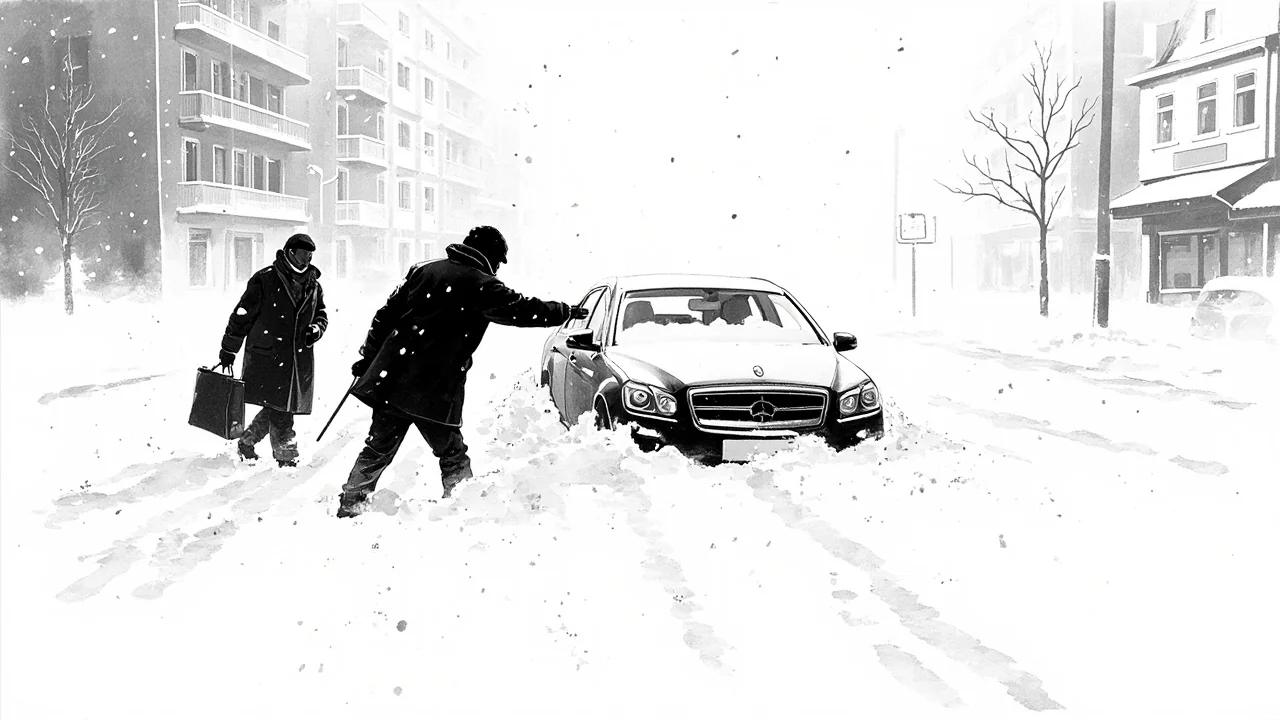
Swedish winter transport chaos sparked a wave of community aid in Stockholm's suburbs this week. As bus services ground to a halt in southern districts like Östberga, residents turned to Facebook and simple kindness to get each other home.
Ichrak Brunge posted a simple plea in her local Facebook group. 'Let us help each other,' she wrote. Her call came after she, her husband, and others were left stranded at a bus stop. No information appeared in the official transit app. 'A guy who had walked from Årsta and seen buses stuck on the road informed us that no buses would make it up to Östberga,' Brunge explained. 'So my husband had to dig out our car.'
They didn't just drive home. They became an impromptu shuttle service. 'Then we stopped at every bus stop to tell people the bus traffic was canceled,' she said. Her post quickly turned into a coordination point. Neighbors with four-wheel drive vehicles offered spare seats. Those who needed to reach the city center or the Gullmarsplan transit hub connected with those who had space.
The Isolation of a Single Bus Line
This incident highlights a known vulnerability in Stockholm's suburbs. Östberga, a suburb south of Stockholm, lacks rail-based public transport. For years, it has relied on just one primary bus line, the 134. A second line, the 168, which connects Östberga to Gullmarsplan, is scheduled to return only in 2026. When heavy snow hits, these areas are often the first to be cut off. Buses struggle with the steep hills leading into the neighborhood. The cancellation of services, sometimes without real-time updates in the SL app, leaves residents in the lurch.
'You feel forgotten when this happens,' says Lars Pettersson, a long-time resident of nearby Högdalen. 'The main city streets are cleared quickly. But out here, we wait. The social media groups become our lifeline.' This digital neighborliness is a modern twist on the Swedish concept of 'dugnad' – communal work for the common good. It's a practical response to a shared problem.
From Digital Plea to Street-Level Solution
The response to Brunge's post was not organized by officials. It was organic. People shared their destinations and their available car seats. They offered to pick up groceries for the elderly. For a few hours, the community mapping its own transit network. This grassroots system filled a gap left by formal infrastructure. It raises questions about the resilience of public transport in outer suburbs during extreme weather, which is becoming more frequent.
'What we see is a fantastic community spirit,' says Mikael Johansson, a urban sociologist. 'But it also exposes a planning problem. These neighborhoods are heavily dependent on a single mode of transport. When it fails, there is no redundancy. The community's adaptation is admirable, but it shouldn't be a permanent necessity.' He notes that immigrant-dense suburbs like Östberga often show strong informal support networks. These networks activate during crises.
A Cultural Resilience
This event is a small snapshot of a larger Swedish reality. Harsh winters test systems and social bonds. The official advice is often to 'be prepared' and 'stay home.' Yet, people need to get to work, healthcare appointments, and schools. The story in Östberga is less about chaos and more about quiet adaptation. It reflects a Swedish tendency to solve problems practically, without fuss. It's a blend of modern digital tools and old-fashioned neighborly trust.
However, the solution is not without risk or inequality. Not everyone has a car, or a car suitable for snow. Not everyone is part of the local Facebook group. The elderly and new arrivals may be left behind. The spontaneous car pools also operate in a gray zone regarding insurance and liability. This community action is a temporary fix, not a systemic one.
Looking Beyond the Snow Drifts
The promised return of bus line 168 in 2026 will help. But residents and experts ask if it's enough. Is the long-term plan sufficient for growing suburbs facing a changing climate? The incident prompts a discussion about investment in infrastructure resilience. Should there be contingency plans that involve community organizations when official transport fails? Could the city support these informal networks with better communication or even temporary, weather-proof shuttle services?
For now, the people of Östberga and surrounding areas will likely continue to rely on each other. As the snow eventually melts, the memory of the week strangers shared car rides will remain. It underscores a truth about life in Sweden's suburbs. Community often fills the gaps where services end. The question for planners is whether that should be the expected solution. As one commenter on Brunge's post wrote: 'Thank you for the ride. But we shouldn't have to do this.'
The story ends not with a grand policy announcement, but with the sound of car doors closing and engines starting. It's the sound of a community taking care of its own, hoping that next winter, the buses will come.