
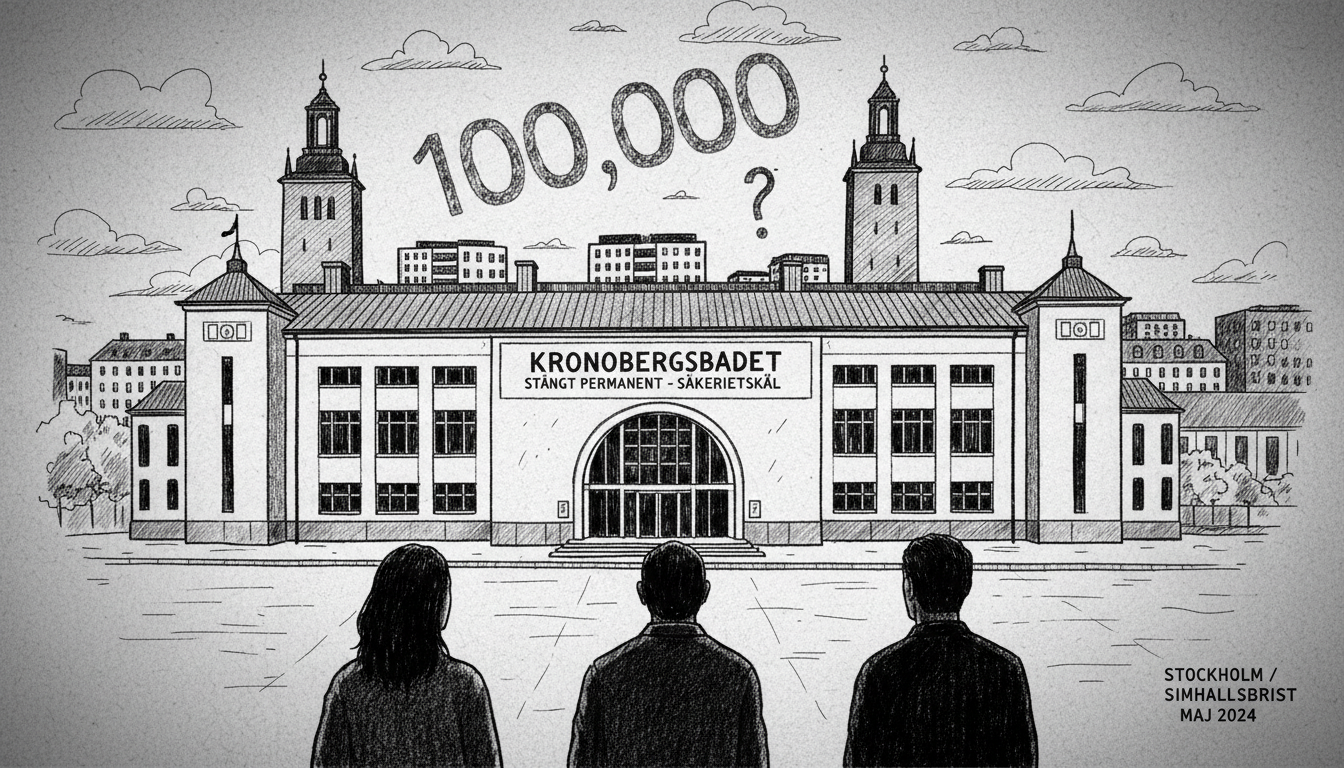
The Swedish government faces mounting criticism over the impending closure of Kronobergsbadet swimming facility in central Stockholm. Police authorities confirmed the shutdown would proceed in late May but declined to provide specific security justifications. This decision affects four active swimming associations and approximately 100,000 annual visitors who utilized the popular facility.
Interim security chief Stefan Milton expressed regret about the limited information sharing in official correspondence with municipal authorities. He acknowledged the desire for greater transparency while maintaining the necessity of the security-based closure. The police communication emphasized their inability to elaborate further on operational security matters.
Maria-Elsa Salvo of the Social Democrats voiced strong opposition to the complete closure. She urged police and municipal officials to preserve swimming education programs she described as vital for community safety. Her intervention highlights the political dimensions of infrastructure decisions affecting Stockholm residents.
Regular users expressed profound disappointment about losing their community hub. Lena Lidbeck, who attended water aerobics four times weekly, questioned the logic of closing the pool while adjacent passport services remain operational. Fitness swimmer Lisbeth Haglund emphasized the facility's role in providing positive youth activities and crime prevention.
Stockholm's chronic swimming facility shortage compounds the problem. Population growth has dramatically outpaced sports infrastructure development over recent decades. The city's calculations indicate needing four to five additional pools beyond currently planned developments to meet 2026 demand.
Municipal development plans include upgrades to Vanadisbadet and Eriksdalsbadet facilities. New construction projects are scheduled for Skarpnäck, Loudden, Årstafältet, and Frihamnen districts. These projects face substantial completion timelines that won't address immediate capacity shortfalls.
Parents like Lisa Lindqvist, whose three children train at Kronobergsbadet, worry about practical logistics. She noted that excessive travel distances could prevent children from maintaining their swimming activities. This reflects broader accessibility concerns affecting family routines across Stockholm.
The Riksdag has historically underfunded recreational infrastructure despite urban growth. Current government policy prioritizes security considerations while struggling to balance public service provision. This case demonstrates the tension between security protocols and community needs in urban planning decisions.
Stockholm politics increasingly confronts these infrastructure dilemmas as population density grows. The Kronobergsbadet situation represents a microcosm of larger challenges facing Swedish municipalities. Balancing security, recreation, and urban development requires careful coordination between multiple government levels.
Government policy Sweden currently emphasizes security measures but must address their impact on public services. The Swedish Parliament may need to reconsider funding allocations for recreational facilities given rising urban populations. Future Riksdag decisions will determine how Sweden manages these competing priorities.