
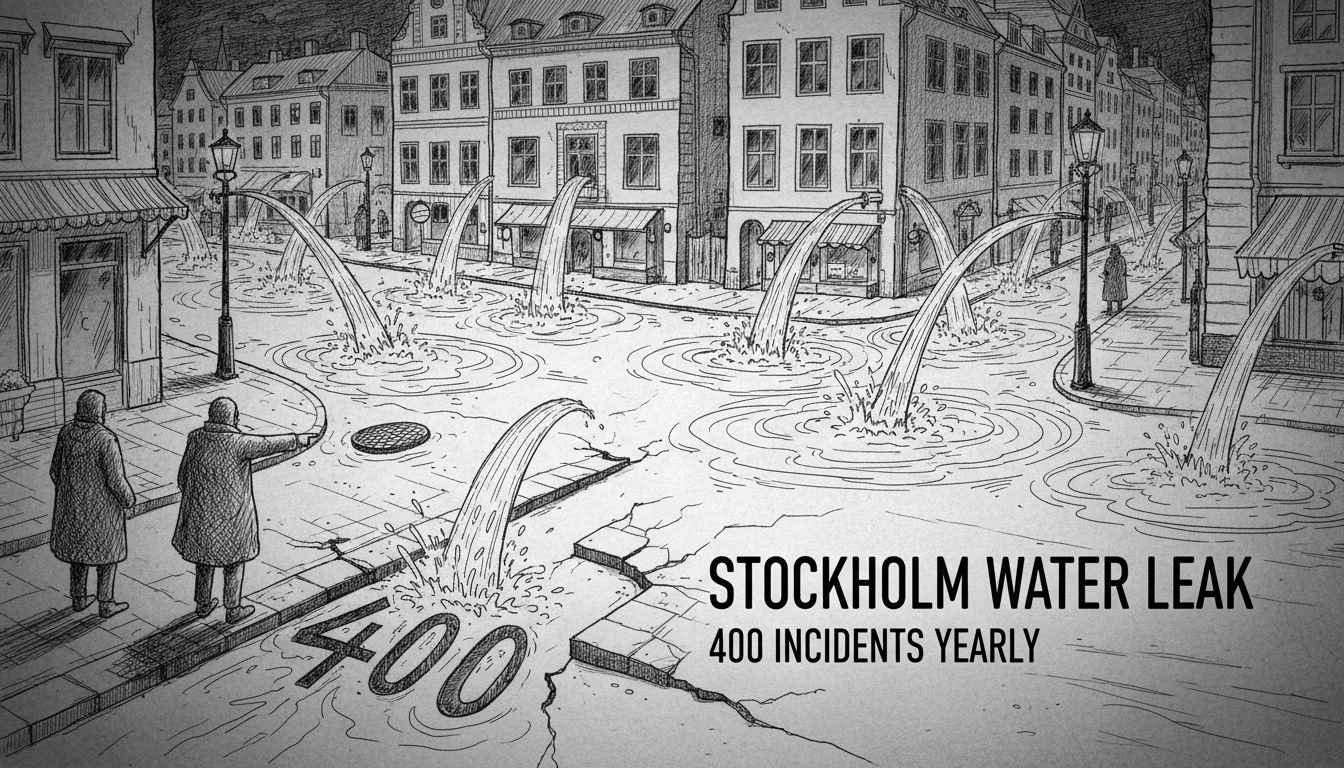
Stockholm's water infrastructure suffers approximately 400 leaks every year, and a new one sent brown water flowing down Holmögaddsvägen in Kärrtorp today. Residents of this southern Stockholm district woke to an unexpected stream, with some fearing it was sewage. Stockholm Vatten och Avfall (Svoa) quickly confirmed it was a drinking water pipe leak, discolored by dirt in the ground. 'Everyone in the area has drinking water,' said Svoa press officer Alexandra Fleetwood. 'It might be rust-colored, but that's harmless and will clear if you run the tap.'
Repairs were projected to be completed within the day, though no specific timeframe was given at lunchtime. Fleetwood noted that an extra flush of the pipes could be arranged once the fix was in. For the people on Holmögaddsvägen, it was a messy but fortunately temporary disruption to a snowy January morning.
A Glitch in the System
This incident is far from unique in the Swedish capital. The 400 annual leaks represent a constant, low-grade challenge for the municipally owned utility. Winter is the peak season for such failures. 'Water leaks happen to a greater extent during winter when it's cold,' Fleetwood explained. The freeze-thaw cycles put stress on older pipes, a reality in many of Stockholm's established neighborhoods like Kärrtorp.
While the water remained safe, the visual of brown water is unsettling. It highlights the fragile, often invisible network beneath our feet. In a city famed for its clean waterways and environmental consciousness, a burst pipe is a stark reminder of aging foundations. The response was swift, but the question lingers: how many more winters can these pipes handle?
The Bones of the City
Stockholm Vatten och Avfall manages a vast system serving hundreds of thousands of residents. Much of the infrastructure in older inner-city districts and suburbs dates back decades. Kärrtorp, developed significantly in the mid-20th century, is part of this aging landscape. Investment in maintenance is continuous, but it's a race against time and the elements.
I spoke to local café owner, Mikael Berg, on Bagarmossens väg, not far from the leak. 'You don't think about it until it happens on your street,' he said, wiping down counters. 'We rely on everything working perfectly. For fika culture, for daily life—water is just there. A leak like this makes you realize it's not a given.' His sentiment echoes a broader Swedish trust in public systems, a trust that is usually well-placed but occasionally tested.
Expert Perspective: The Cost of Cold
To understand the bigger picture, I reached out to infrastructure analyst Erik Lundström, who has studied urban water systems across the Nordics. 'Stockholm is not alone in this,' Lundström said. 'Most European cities with historic cores face similar issues. The statistical norm of 400 leaks per year is a symptom. The root cause is the natural wear of materials combined with extreme seasonal temperature swings we have here.'
He emphasized that while the number might sound high, it reflects a system under active monitoring. 'The key metric is not the number of leaks, but the speed and efficiency of the response. Stockholm Vatten och Avfall has a strong track record there. However, the long-term solution is accelerated, strategic replacement of the most vulnerable pipe sections, which requires significant municipal funding.'
Lundström pointed out that climate change could exacerbate the problem. Milder, wetter winters followed by sharp cold snaps create more ground movement, increasing pipe stress. 'The infrastructure built for the 20th century's climate is now facing the 21st century's weather,' he noted.
Life in a City of Islands
Stockholm is built on 14 islands, connected by bridges and tunnels. Its relationship with water is fundamental, from the grand Strandvägen to the humble suburban garden. A water leak in Kärrtorp disrupts the daily rhythm. It affects school runs on slippery streets, plans for after-work swims at nearby Eriksdalsbadet, and the simple comfort of a hot drink at home.
Such events also spark community conversation. On local social media groups, residents shared photos and updates, turning a nuisance into a moment of collective problem-solving. This pragmatic, communal response is very Swedish. There's no panic, just a practical focus on when the repair crew will arrive and reminders to run the tap until the water runs clear.
Looking Ahead: Drips and Dollars
The Kärrtorp leak will be fixed, likely within hours as promised. But the incident serves as a microcosm of a national challenge. Sweden prides itself on functional infrastructure, yet maintenance backlogs are a debated topic in city hall. Every leak represents water loss, repair costs, and community inconvenience.
For Stockholm Vatten och Avfall, the work is never done. The company balances immediate response with long-term planning. The goal is to ensure that the city's drinking water—some of the cleanest in the world—flows unimpeded, whether to a modern apartment in Södermalm or a villa in Bromma.
As the afternoon light fades over the snow-covered streets of Kärrtorp, the repair crews pack up. The water is back to normal, the street is cleaned, and life resumes. But the memory of the brown water on Holmögaddsvägen lingers, a quiet prompt to appreciate the complex, often unseen systems that make urban life in Sweden possible. How will Stockholm choose to invest in the veins that keep its heart beating?