
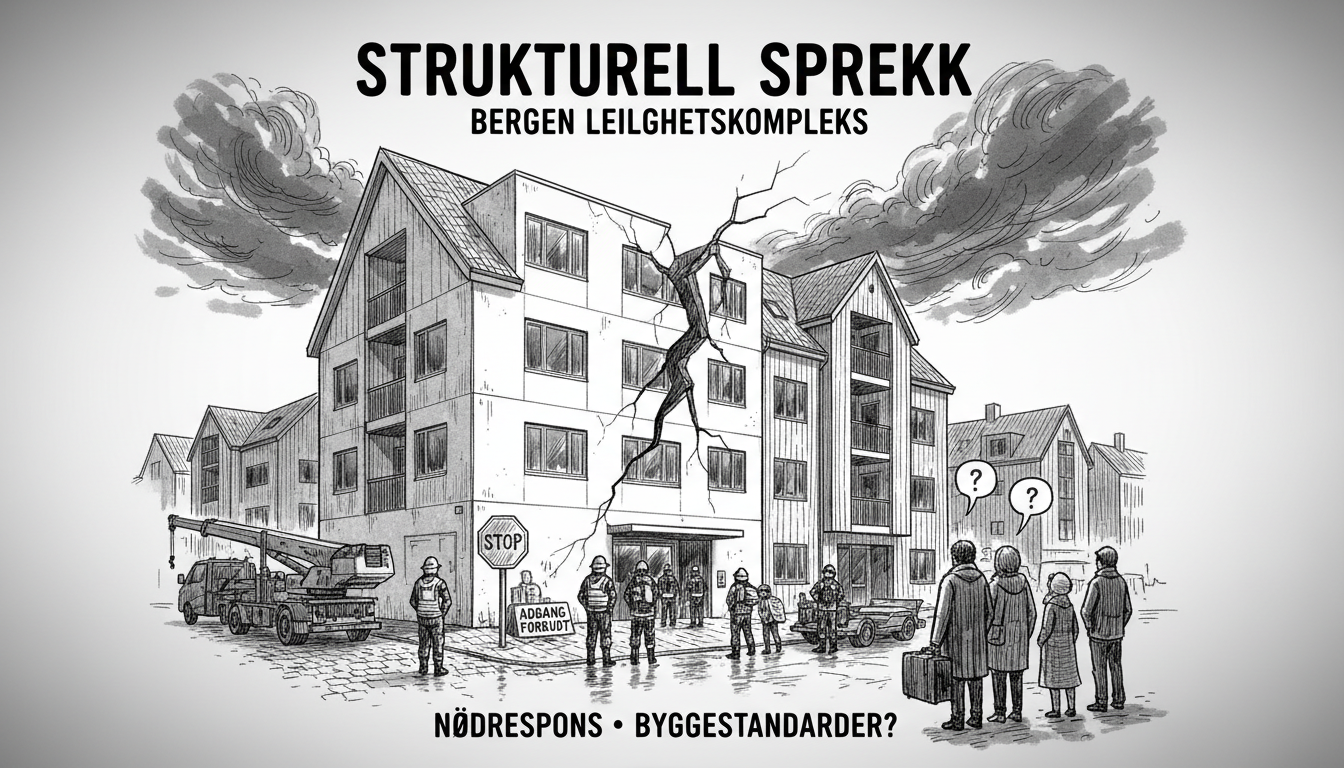
A serious structural crack discovered in a large apartment building in the Loddefjord district of Bergen triggered a major emergency response, raising immediate concerns for the safety of 56 residents. The crack, first spotted by residents in the building's garage on Friday, was reported to be visible across multiple floors, including in bathroom areas, and clearly marked the building's exterior facade. Emergency services, including police and fire crews, were dispatched to the scene on Monday evening to assess the potential danger.
Vaktleder Jostein Steinsland-Hauge from the emergency services coordination center confirmed the situation. He said officials received alarming reports from residents about a crack stretching up several stories. For several hours, the possibility of a full evacuation hung over the complex. Steinsland-Hauge noted the crack was concerning but stated it remained uncertain if it posed a direct threat to the building's structural integrity.
This incident highlights critical questions about building standards and inspection regimes in Norway's rapidly developing urban areas. Bergen, a city built on challenging terrain, has a historical awareness of construction risks. The swift involvement of the building owner, a structural engineer, and a geotechnical specialist points to the serious protocols followed. After their on-site assessment around 8:15 PM, they concluded the building was safe for residents to remain. A spokesperson later confirmed the experts saw no need for evacuation, and emergency services concluded their operations by 9:00 PM.
While the immediate crisis was averted, the event exposes underlying vulnerabilities. Norway's strict building codes, governed by the Planning and Building Act (Plan- og bygningsloven), are designed to prevent such issues. Yet, visible cracks propagating through multiple floors in a relatively modern complex suggest a possible failure in initial construction, ground settlement, or materials. The location in Loddefjord, an area of significant residential expansion, will likely prompt scrutiny from municipal building authorities in Bergen.
For international observers, this is a reminder that even nations with exemplary safety records face infrastructure challenges. The response demonstrates a competent, multi-agency system, but the cause remains unknown. Residents will now rely on the building owner's engineers to diagnose the fault and execute permanent repairs. This event may influence local political discussions on municipal oversight and developer accountability, ensuring Norway's housing boom does not compromise its renowned safety standards.