
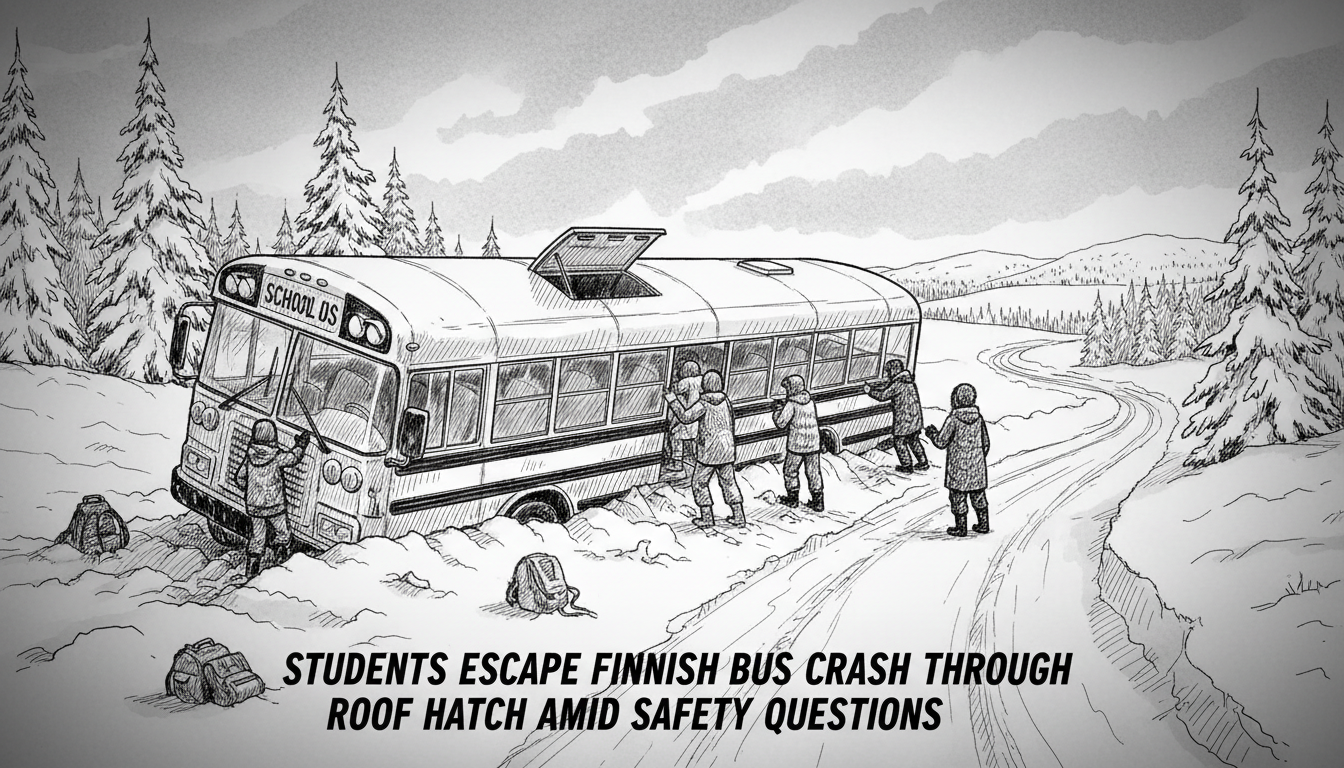
A school bus carrying 37 students and a driver slid off an icy road in Konginkangas, Finland, on Monday morning. The bus rolled onto its left side on the slippery Liimattalantie road. Students reported they had difficulty standing on the road even while walking after the accident. Many escaped the overturned vehicle through a roof emergency hatch.
School principal Mika Lehtonen spoke with the students involved. He confirmed that not all passengers were wearing seatbelts at the time of the incident. The bus was traveling slowly when it left the road and tipped over. Some students fell from their seats and landed on others during the roll.
Lehtonen stated that injuries appear minor so far. He reported bruises and scratches but no serious harm. The students were traveling to Suolahti Unified School and the Northern Central Finland Vocational College. Emergency services responded to the scene near the Central Finnish municipality.
This incident raises immediate questions about winter road safety and passenger security protocols. Finland has strict winter tire regulations and extensive road maintenance systems. Yet local roads in rural areas can remain hazardous during rapid temperature changes. The absence of universal seatbelt use on school transport warrants examination.
Finnish law mandates seatbelt use in vehicles equipped with them. School buses fall under specific transport regulations that prioritize safety. The National Traffic Safety Agency investigates all serious transport incidents. Their findings typically influence policy discussions in the Eduskunta, Finland's parliament.
Similar winter accidents have occurred before on regional roads during transitional seasons. Each prompts reviews of driver training, vehicle safety features, and route risk assessments. The Ministry of Transport and Communications maintains statistics showing reduced serious accidents over decades due to safety investments.
For international readers, Finland's extreme winter conditions require specialized infrastructure and preparedness. This context makes any transport incident a matter of public and political interest. Safety is a cornerstone of Nordic social policy, making compliance with regulations a visible priority.
The broader implication touches on EU-wide road safety directives. Finland often exceeds minimum EU standards for vehicle safety and winter road maintenance. This incident may renew debate about updating those standards for changing climate patterns across Northern Europe.
Local authorities will review the specific road conditions on Liimattalantie. Municipal road maintenance budgets face constant pressure, especially in less populated areas. The coming investigation will determine whether black ice or other factors caused the bus to lose traction.
Parents and school administrators now await the official traffic safety report. That document will detail the sequence of events and any contributing factors. It will also recommend preventive measures for future winter transport operations in the region.