
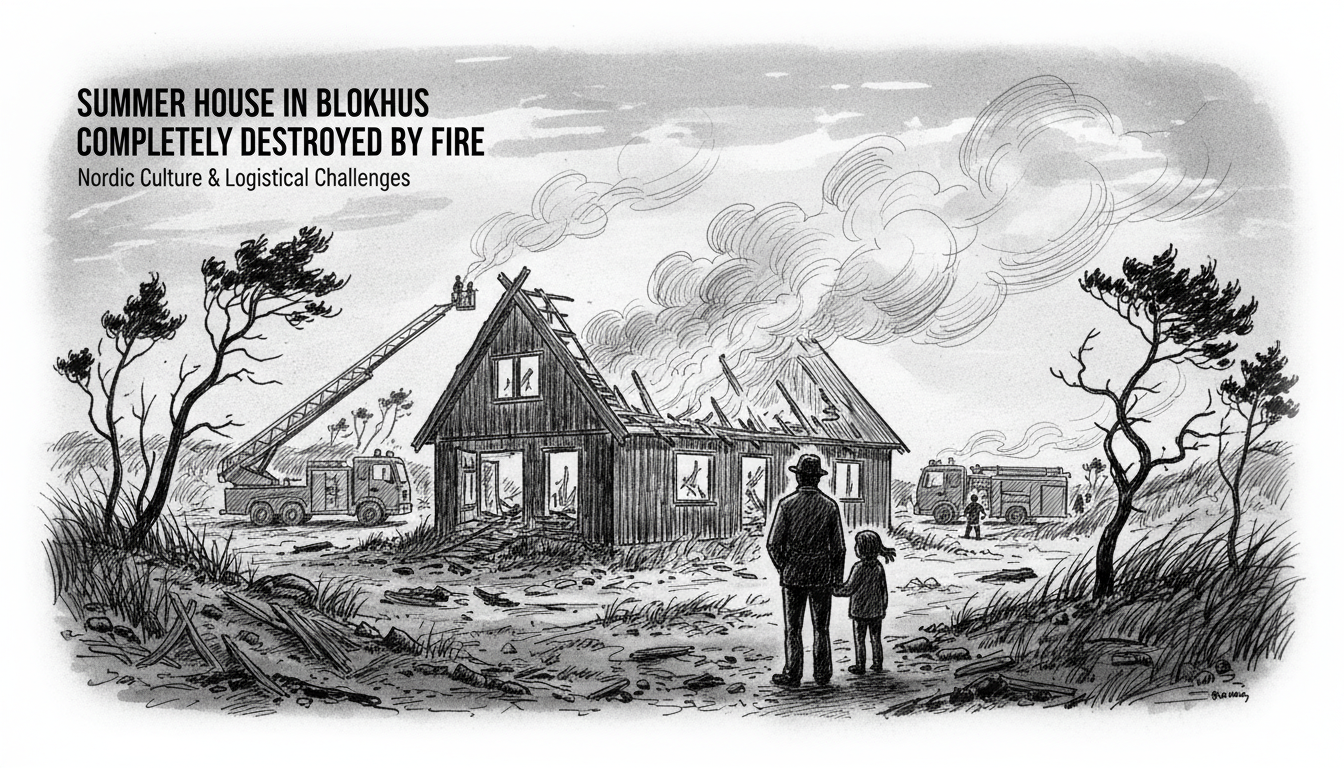
A summer house in the coastal town of Blokhus burned to the ground overnight, leaving only a charred shell. The fire broke out on Taarnfalkevej in the Jammerbugt Municipality. Emergency services received the first alarm at 3:14 AM. Flames were already shooting through the roof when the first patrol arrived. The owner, who does not live in the region, was contacted by police. No one had been present at the property for a long time. Firefighters from the station in Pandrup battled the blaze for hours. They were finishing the final extinguishing work by 5:40 AM. The main building was completely destroyed. An annex on the property sustained minor fire damage but remains standing. Authorities confirmed there was no danger of the fire spreading to neighboring summer houses. Police have no immediate suspicion of criminal activity. The cause of the fire remains unknown. The site has been cordoned off for a technical investigation.
This incident highlights a broader, often overlooked, aspect of Danish society and its welfare model. Denmark's extensive network of summer houses, or 'sommerhuse', represents a unique cultural and economic institution. Over 200,000 such properties dot the coastline and countryside. They are central to the Danish concept of 'hygge' and family life. Many are owned by families for generations. The loss of one is not just a property insurance claim. It is the destruction of a repository of family memories and a key part of Danish leisure culture. The Jammerbugt Municipality, like many coastal areas, has a high concentration of these seasonal homes. Their safety and security pose a distinct challenge for local emergency services, especially during the off-season when they are vacant.
The response to this fire also reflects the efficiency of Denmark's decentralized municipal responsibility system. Local fire stations, like the one in Pandrup, are the first line of defense. They operate within a framework of national safety standards but are managed at the municipal level. This structure is a cornerstone of the Danish welfare state, where local governments deliver critical services. For international observers, understanding this event means looking beyond the flames. It touches on property ownership patterns, seasonal migration within Denmark, and the logistical challenges of protecting isolated, often older, wooden structures. The investigation will now focus on technical causes, such as electrical faults, which are common in older holiday homes. The community in Blokhus will likely see this as a sobering reminder to check smoke alarms and secure properties before the winter closure period. For the owner, the path forward involves navigating insurance and potentially rebuilding, a process deeply intertwined with local planning regulations designed to preserve the character of these cherished coastal zones.