
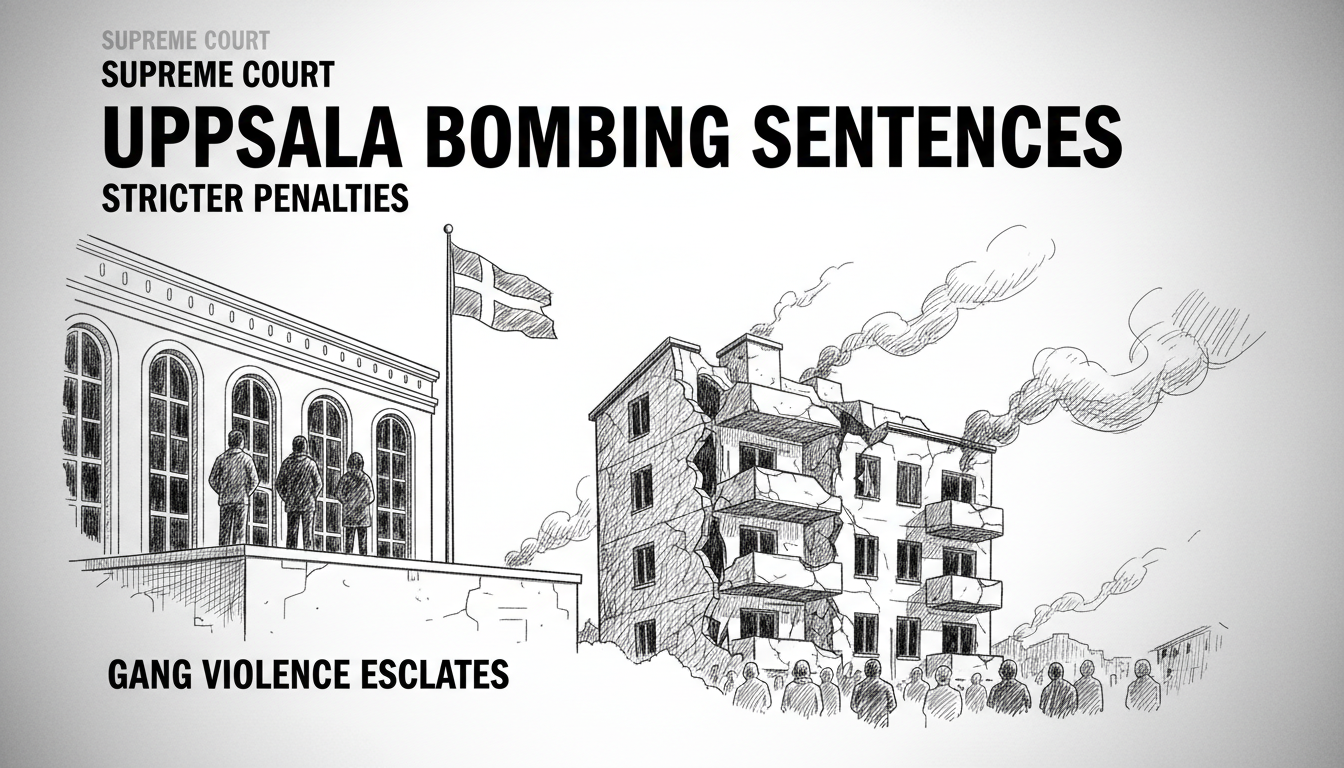
The quiet residential area of Fullerö, just north of Uppsala, is a place where neighbors know each other. It is not where you expect a war zone. Yet one September morning, a powerful bomb shattered that peace forever. The explosion left a scene of devastation, and in the rubble, 24-year-old Soha Saad lost her life.
Her father, Samer, spoke with raw grief after the attack. He said he wanted life sentences for all involved. He stated the person who built the bomb bore the greatest guilt. His words echoed through a long and painful legal process that has now reached a pivotal conclusion.
The Swedish Supreme Court has just issued a decisive ruling, significantly altering the prison terms for several men convicted in connection with this and related bombings in Linköping and Hässelby. The court increased the most severe sentences, delivering a stark message about the gravity of these crimes.
A 20-year-old man from Norrbotten, identified as the bomb-maker, saw his sentence rise sharply. His prison term was increased to 14 years. Prosecutors argued he constructed the 13-kilogram device used in Fullerö, as well as other bombs. In another major change, a man convicted of placing explosives in Linköping and Hässelby had his 18-year sentence upgraded to life imprisonment.
One man, found guilty of acting as a driver, received a minor reduction. His sentence was lowered by four months to seven and a half years. The key figure directly linked to the Fullerö blast, Joshua Dietrich Sjölund, was already serving a life sentence for murder, a verdict upheld by higher courts.
This case is more than a legal update. It strikes at the heart of Swedish society and ongoing concerns about gang-related violence. These explosions, which targeted residential areas, represent an alarming escalation. They move criminal conflicts directly into the spaces where families live and children play.
For the community in Fullerö, and for Swedes following this news, the Supreme Court's decision brings a complex form of closure. It underscores the judicial system's severe stance on lethal explosives. Yet it also leaves a community forever changed. The story connects to broader Swedish society trends, where inter-gang violence increasingly spills into public view, challenging the nation's sense of security.
The human cost remains immeasurable. A young woman's life was ended in a place she called home. While the courts have delivered their verdict, the cultural and social reverberations of that September morning in Uppsala will linger for years. It is a sobering reminder of the challenges facing some Swedish neighborhoods today.