
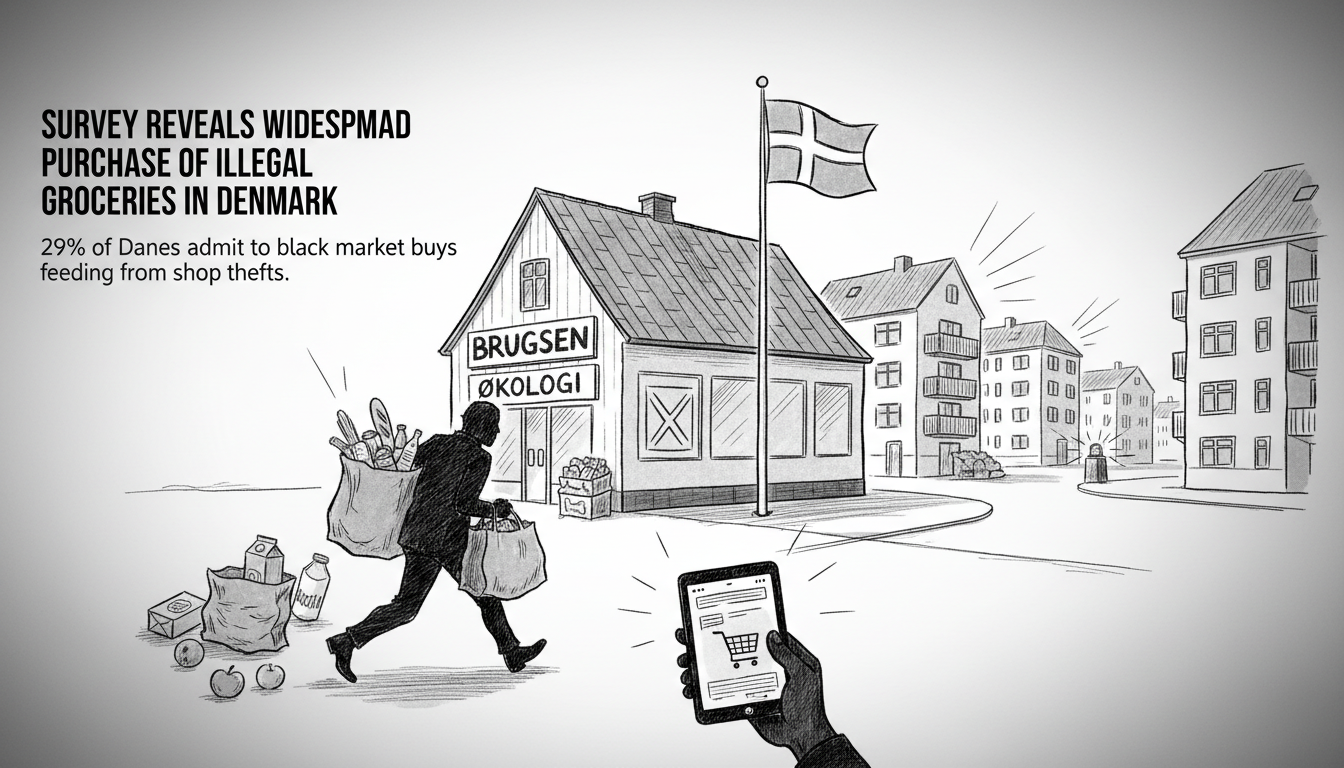
A new survey reveals a startling trend in Danish society. Nearly three in ten Danes admit to buying illegal groceries. These goods range from stolen steaks to untaxed tobacco and chocolate. The findings expose a shadow economy operating on social media. It thrives when household budgets are stretched thin at month's end.
Bent Kristoffersen, a shopkeeper in Hjørring, North Jutland, is deeply concerned. He says the scale is frightening and he never expected it to be so high. His store, like many in the region, faces repeated, large-scale thefts. Thieves steal thousands of kroner worth of goods in single raids. They often return day after day. Kristoffersen suspects these stolen items become 'order-made' fenced goods. They are then sold online at a fraction of legitimate retail prices.
This issue sits at a complex intersection of social policy and criminality. For some, buying cheap, illegal goods is a desperate response to a high cost of living. For others, it is simply a tempting bargain with little thought to the consequences. The practice directly undermines the formal economy and the tax base that funds Denmark's welfare system. It also poses serious food safety risks due to a lack of traceability.
From an integration perspective, such parallel markets can create barriers. They operate outside the regulated, transparent systems that newcomers are encouraged to join. Community social centers often work to connect residents with legitimate, affordable food options. This survey suggests their message is competing with illicit, anonymous online offers.
Kristoffersen has a clear appeal to North Jutland Police. He urges them to target the buyers, not just the thieves. Disrupting the demand, he argues, would cripple the supply chain. His concrete suggestions focus on tracking online sales and following the money. This call highlights a broader challenge for Danish municipalities. They must balance social support with law enforcement to maintain community trust and economic integrity.
The survey data provides a measurable fact for a long-suspected problem. It shows a significant portion of the population engaging in illegal consumption. This is not a victimless crime. It hurts local businesses, risks public health, and erodes the social contract. The solution requires more than police action. It needs a holistic look at economic pressures, social media's role in fencing, and community education. The next steps will test how Danish social policy adapts to this modern, digital form of black-market activity.