
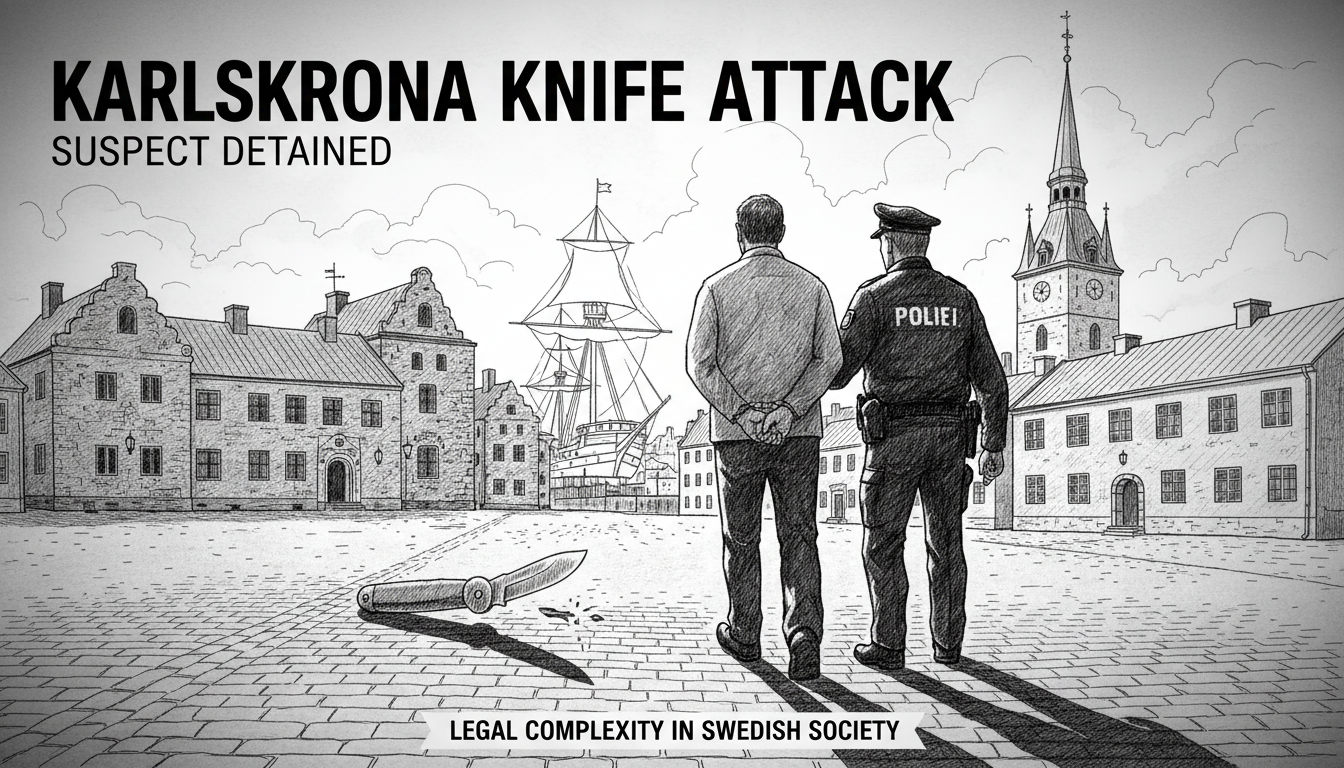
A 37-year-old man remains in custody after last week's violent incident in Karlskrona. Authorities have formally detained him on strong suspicion of murder following the knife attack that shocked this coastal southern Swedish community. The suspect faces full restrictions while maintaining his innocence in the case.
His defense attorney explained the unusual position. "My client denies committing the crime," the legal representative stated. "Yet he accepted the prosecution's request for detention." This legal development raises questions about the strategy behind such a decision.
Karlskrona represents more than just another Swedish city. This UNESCO World Heritage site embodies centuries of naval history and coastal living traditions. The sudden violence here contrasts sharply with the community's usual peaceful atmosphere. Southern Sweden's coastal towns typically experience minimal serious crime.
This case touches on broader Swedish society trends regarding public safety. Sweden maintains relatively low violent crime rates compared to many European nations. Yet isolated incidents like this capture national attention and spark community conversations. The Swedish legal system's careful approach to detention reflects the balance between public safety and individual rights.
Local residents expressed their reactions to the news. "We never expect this in our community," said one longtime Karlskrona resident who preferred anonymity. "Our children play freely in these streets. This changes how we see our own neighborhood."
The Swedish prosecution system operates differently than many international readers might expect. Prosecutors must demonstrate strong evidence before courts approve detention. Full restrictions mean limited communication and supervised visits. This represents the system's most severe pre-trial limitation level.
What happens next in this developing story? The investigation continues while the suspect remains detained. Swedish authorities typically complete initial investigations within weeks for serious cases. The coming days will reveal whether additional charges emerge or if the suspect's position changes.
This incident occurs amid ongoing national discussions about community safety across Sweden. While statistically rare, such events inevitably influence public perception and policy debates. The contrast between Sweden's generally safe communities and sudden violence creates complex social dynamics that merit thoughtful examination.
International observers often view Scandinavian countries through idealized lenses. Reality sometimes presents more nuanced pictures. Sweden continues navigating the challenges of maintaining social cohesion while addressing isolated criminal incidents that capture national attention.