
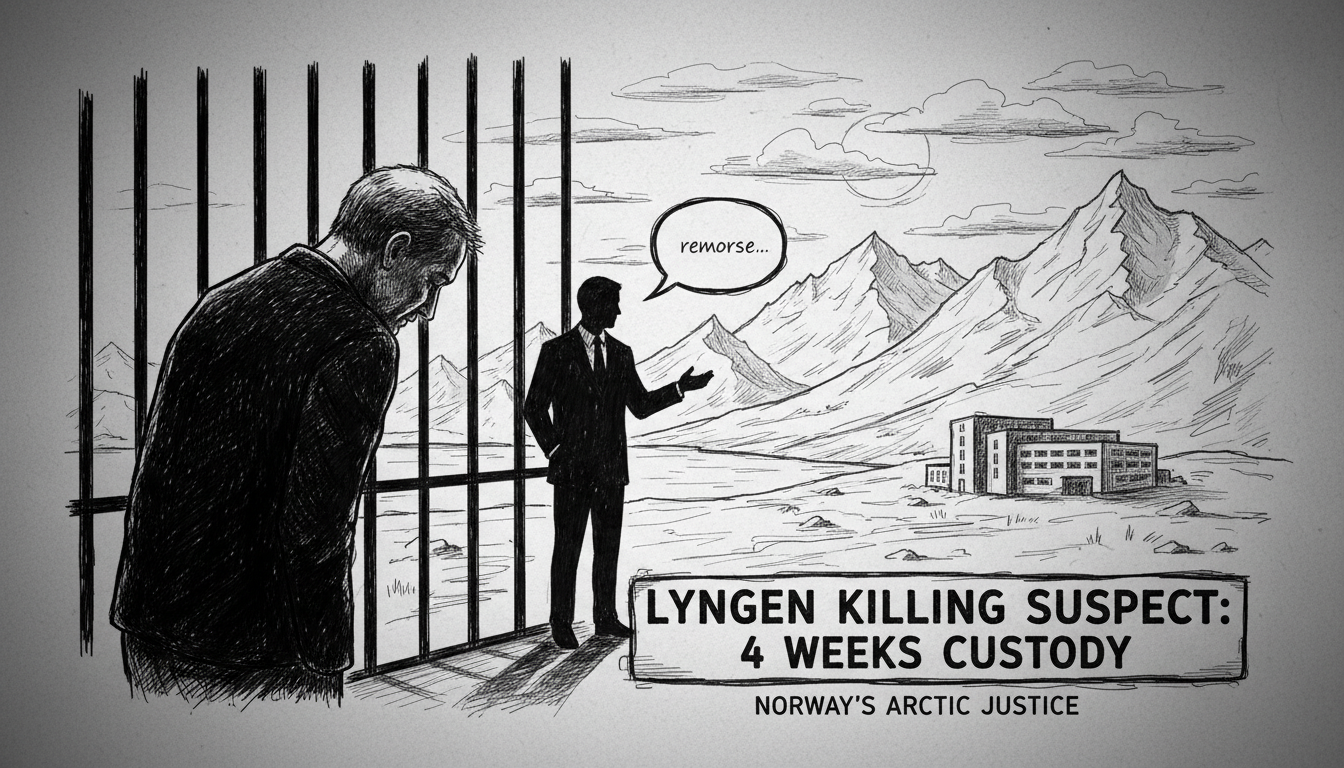
Norwegian authorities have ordered a man in his fifties to remain in custody for four weeks following a fatal incident at a Lyngen healthcare facility. The suspect's defense attorney confirmed the detention order issued by the Nord-Troms and Senja District Court. The accused participated in his initial police interrogation but has not yet been questioned about criminal responsibility. Defense representatives indicate this first session primarily served to establish the suspect's presence at the crime scene.
The legal proceedings follow the death of an 80-year-old resident at a Lyngen healthcare center. Local reports indicate the victim died from injuries sustained with a folding knife. The suspect's attorney describes his client as deeply affected by the events, stating the man understands the seriousness of what occurred. The defense has conveyed the suspect's profound apologies to the deceased's family, healthcare facility staff, and his own relatives.
This case highlights Norway's criminal justice procedures for serious violent crimes. The four-week custody period allows investigators to gather evidence while preventing potential interference with the investigation. Such detention periods are standard in Norwegian homicide cases where prosecutors demonstrate sufficient grounds for suspicion. The suspect reportedly told authorities he cannot imagine anyone else being responsible, yet described experiencing an out-of-body sensation during the incident.
Norwegian legal experts note that custody decisions balance investigative needs against individual rights. The court must find probable cause that the suspect committed a crime punishable by imprisonment for ten years or more. Prosecutors must also demonstrate that release could obstruct the investigation or that detention is necessary for public safety. The case now moves to the evidence-gathering phase while the suspect remains in custody.
The Lyngen municipality, located in Troms county, faces the aftermath of this tragic event. Small Arctic communities like Lyngen typically experience low violent crime rates, making such incidents particularly shocking to local residents. Healthcare facilities throughout Norway are reviewing security protocols in response to this case. The suspect's mental state and his connection to the location remain key factors as the investigation continues.
Norwegian homicide investigations typically proceed through multiple phases before reaching trial. The current custody period allows police to complete forensic analysis and witness interviews. Defense attorneys will have opportunities to challenge the detention as the case develops. The suspect's apparent remorse and cooperation may influence later sentencing considerations if charges are proven.