
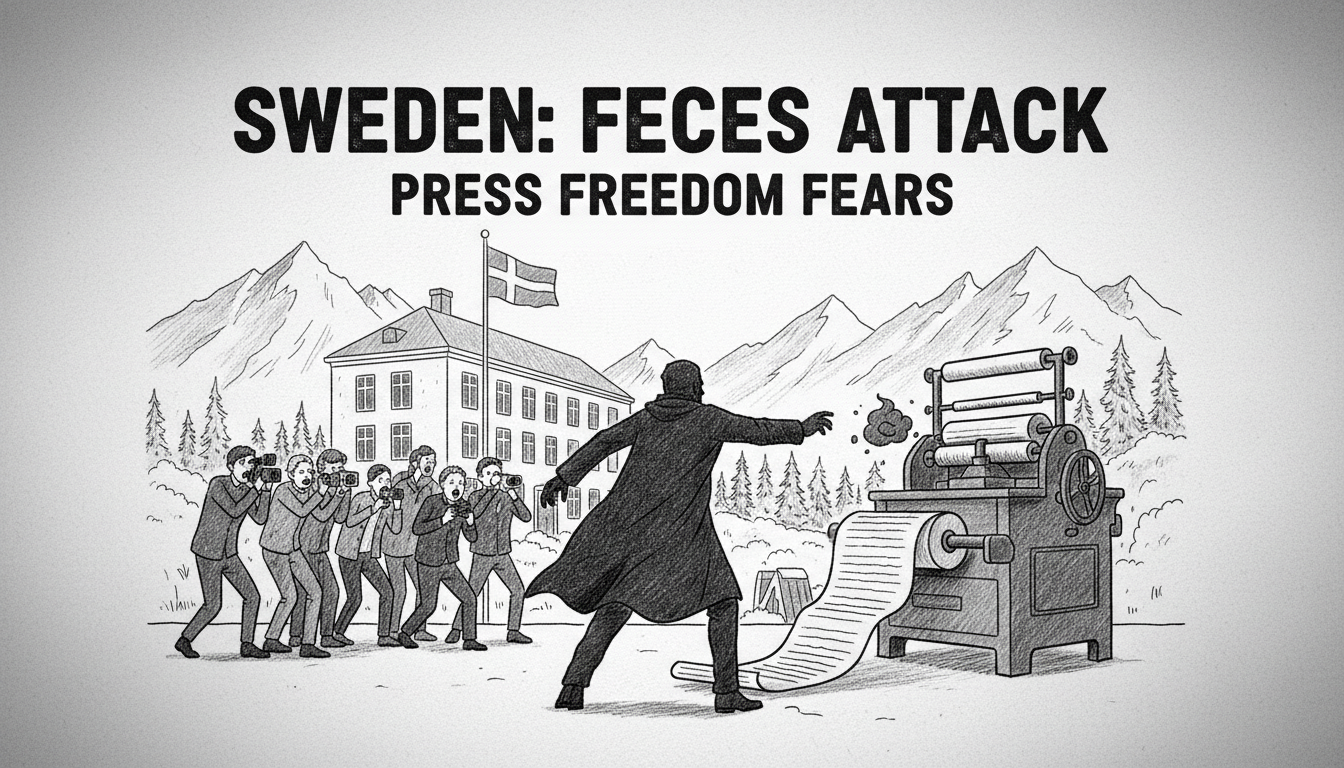
Sweden's press freedom, ranked 4th globally by Reporters Without Borders, was violently challenged last Friday. Feces were smeared across the offices of regional newspaper VLT in Västerås, shocking staff and raising alarms about intimidation. The attack occurred between 2 AM and 6 AM, when morning shift employees discovered the vandalism.
Editor-in-chief Daniel Nordström's door was specifically targeted. "We don't know how the person got in," Nordström said. His team was left bewildered and disgusted by the invasion. "You become both appalled and sickened," he added. "The colleagues who arrived first in the morning were shocked by what happened."
The foul smell had spread throughout the editorial spaces. For a newsroom that typically empties around 2 AM, the early hours brought an unwelcome surprise. This is not just vandalism. It feels like a personal attack on our work, one journalist told me anonymously.
A Foul Morning in Västerås
Västerås, a serene city on Lake Mälaren, is known for its historic cathedral and peaceful streets. Last Friday, that peace was shattered for VLT's team. The newspaper, Vestmanlands Läns Tidning, has served Västmanland County for over a century. Its newsroom, usually buzzing with community-focused reporting, became a crime scene.
Local police have launched an investigation. They are treating it as vandalism, but motives remain unclear. Could it be linked to a specific story? VLT covers local politics, crime, and culture, much like many regional papers across Sweden. Nordström emphasized that they will not be cowed. "We continue our work," he stated firmly.
Attacks on journalists are rare in Sweden. The country prides itself on a strong free press tradition. Yet, this incident echoes worrying trends seen elsewhere in Europe. It’s a stark reminder that even in safe societies, reporters can face threats.
The Cultural Shock of Intimidation
Swedish media culture values openness and accountability. Newsrooms are often accessible, reflecting a trust-based society. This attack violates that trust. In Stockholm, similar values define outlets from Dagens Nyheter to local borough papers in Södermalm or Vasastan.
I spoke to Mia Karlsson, a press freedom researcher at Uppsala University. "Physical attacks like this are extremely uncommon here," she said. "But when they happen, they send a chilling message. It’s not about the material damage. It’s about creating fear and disgust to silence criticism."
Swedes often discuss press freedom during events like the Nobel Prize ceremonies or the annual Almedalen Week political festival. This incident brings the topic home to a provincial city. Västerås residents expressed solidarity on social media. Many called it an attack on democracy itself.
Västerås Responds: Community and Resilience
Västerås, with its mix of industry and culture, is a microcosm of Swedish society. The city hosts the popular Power Big Meet vintage car festival. Its community spirit is strong. Locals have rallied around VLT, offering support and condemnation of the act.
"This is not who we are," said Erik Lundgren, a café owner near the VLT office. "We respect our journalists. They tell our stories." This sentiment is common in Sweden, where regional papers are vital for local identity. They cover everything from school board meetings to midsummer celebrations.
Despite the shock, VLT published its Friday edition as usual. The front page carried news on local issues, not the attack. This business-as-usual approach reflects a Swedish stoicism. It’s reminiscent of how Stockholm’s cultural venues, like the Kulturhuset, operate through challenges.
Press Freedom in the Nordic Context
Sweden consistently scores high on press freedom indices. Its legal framework protects journalists vigorously. However, experts note that psychological intimidation is rising globally. Karlsson points to online harassment as a precursor to physical acts.
In Norway and Denmark, similar incidents have occurred, though rarely. The Nordic model relies on trust and dialogue. An attack like this strikes at the heart of that model. It forces a conversation about security for newsrooms outside major cities.
Swedish lifestyle often balances cosmopolitanism with local engagement. Events like Stockholm’s Film Festival or Malmö’s cultural nights celebrate free expression. This attack in Västerås reminds us that freedom needs constant vigilance.
What This Means for Swedish Society
The feces attack is more than a crime. It’s a symbol of rising hostility towards media. In Sweden, immigration debates and political polarization sometimes fuel such tensions. VLT has reported on these issues, like many outlets.
Society trends show increasing scrutiny of journalists. Yet, Swedish culture traditionally resists intimidation. The concept of "folkhemmet" or the people’s home, emphasizes collective well-being. Attacks on institutions undermine that.
Law enforcement must now determine if this was a hate crime or targeted harassment. The outcome will set a precedent. Will it deter future attacks? Or will it inspire copycats? These questions loom over Västerås.
Moving Forward: Solidarity and Resolve
VLT’s staff are cleaning up and carrying on. They have received support from media unions and national organizations. The Swedish Union of Journalists issued a statement condemning the attack. They emphasized the need for safety without compromising openness.
In Stockholm, newsrooms are reviewing security protocols. While not locking down, they are more aware. As one editor in Kungsholmen told me, "We must not let fear win." This resilience is typical of Swedish journalists.
Cultural venues, from the Göteborg Book Fair to Lund’s student traditions, often champion free speech. This incident reinforces why that matters. Press freedom isn’t abstract. It’s about the right to report without facing filth on your door.
As Sofia Andersson, I see this through a cultural lens. Swedish society values lagom—balance and moderation. This attack is immoderate, a violent exception. But it tests our commitment to principles we hold dear.
The weeks ahead will reveal more about the perpetrator and motives. Until then, VLT’s journalists will keep writing. Their story is now part of a larger narrative about protecting democracy. In Sweden, a country proud of its freedoms, that narrative must have a happy ending.