
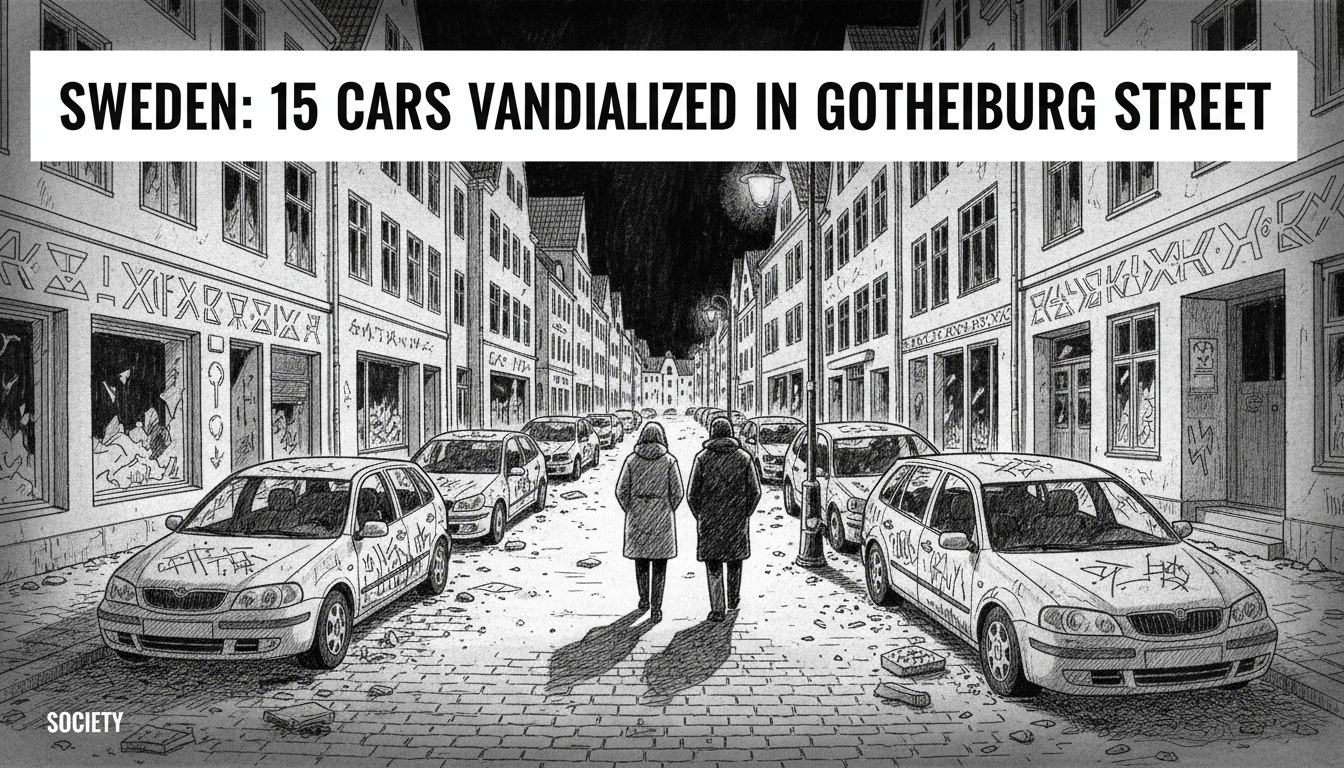
Sweden's second city, Gothenburg, is investigating a case of mass vandalism after 15 parked cars had their tires slashed. The incident occurred on August Barks gata, a residential street in the city. Police have documented the damage and filed a report for vandalism, or 'skadegörelse'. The time of the incident and the identity of the perpetrator remain unknown, according to a police statement.
Residents on August Barks gata woke up to a frustrating and costly sight. Fifteen vehicles, parked legally along the curb, were rendered immobile. Each car had one or more tires deliberately punctured. For the owners, it meant unexpected repair bills, insurance calls, and a major disruption to their day. This kind of petty crime, while not uncommon in urban areas, creates a tangible sense of insecurity. It violates the general Swedish expectation of order and safety in one's own neighborhood.
A Pattern of Petty Crime in Swedish Cities
While Sweden boasts a relatively low rate of violent crime, property damage like this is a persistent urban issue. According to annual reports from the Swedish National Council for Crime Prevention (Brå), vandalism is a category that sees consistent reporting. It fluctuates year to year but never disappears from the statistics. Gothenburg, like Stockholm and Malmö, has neighborhoods that experience higher levels of such petty crime. These incidents are often random, opportunistic, and frustratingly difficult for police to solve without witnesses or clear motives.
“These crimes are often about opportunity and a perceived lack of consequences,” says a criminologist familiar with urban crime patterns in Sweden. “They can be acts of boredom, minor revenge, or simply impulsive destruction. The challenge is their randomness. Without surveillance or community alerts, the perpetrator is often long gone before the damage is discovered.” This expert, who wished to remain anonymous as they were not directly consulted on this specific case, noted that car vandalism is particularly disruptive. It directly impacts people's mobility and finances.
The Morning After on August Barks gata
The street, named after a Swedish actor, is typically quiet. It is lined with classic Swedish apartment buildings, home to families, students, and professionals. The vandalism struck at the heart of this everyday life. One local resident, Anna, who declined to give her full name, described the scene. “It was just absurd. A whole line of cars, all sitting on flat tires. My husband had to take the tram to work, which made him over an hour late. It’s not just the money for the tire, it’s the time, the hassle.”
This human impact is the real cost of vandalism. Beyond the police report number, it’s about missed appointments, strained childcare logistics, and a nagging worry about it happening again. For many Swedes, a car is a necessary tool for commuting from suburban residential areas to work or for weekend trips to a summer cottage, or 'sommarstuga'. Disabling it is a direct attack on their daily rhythm.
Policing and Prevention in the Urban Landscape
Gothenburg police have filed the report, but the investigation faces immediate hurdles. With no known time of the incident—it could have occurred deep in the night—and no witnesses yet coming forward, options are limited. Police patrols in the area may be increased temporarily. Officers will likely check for any available private security camera footage from nearby buildings. However, resources for investigating individual cases of property damage are often stretched thin.
Common strategies to deter such crime include improved street lighting, community watch programs, and more visible security cameras. In some Stockholm neighborhoods, resident associations have organized informal patrols or created social media groups to quickly report suspicious activity. Whether such measures are discussed in this part of Gothenburg remains to be seen. The incident serves as a reminder that the famous Swedish 'trygghet'—a sense of security and safety—can feel fragile when faced with anonymous destruction.
The Bigger Picture: Vandalism in Swedish Society
To understand this event, one must look at the Swedish context. Sweden has a strong social contract and high trust in institutions. A crime like this feels like a tear in the social fabric. It is senseless. There was no theft, as far as reports indicate; nothing was stolen from the vehicles. The act was purely destructive. This randomness can feed anxiety more than a targeted crime might.
Socio-economic factors are often part of the expert analysis when discussing recurring vandalism in specific areas. Boredom, lack of engagement, and social marginalization among some youth can manifest in property damage. While this does not excuse the behavior, it forms part of the backdrop for municipal crime prevention strategies. These strategies often focus on youth outreach, creating activities, and improving the physical environment to foster pride and ownership.
What Happens Next for the Victims?
The immediate next steps are practical and bureaucratic. Car owners must contact their insurance companies. In Sweden, 'helförsäkring' (comprehensive coverage) typically includes vandalism, but it comes with a deductible, or 'självrisk'. This means each victim will pay the first few thousand kronor out of pocket. They must then arrange for tow trucks or mobile tire services, a hassle on a regular weekday morning. The police report number is necessary for the insurance claim, linking the personal inconvenience to the official record of the crime.
For the community, the incident might spark conversations. Will the local housing cooperative, or 'bostadsrättsförening', discuss installing new lights or cameras? Will neighbors start to pay more attention to nighttime sounds? The reaction often determines whether such an event is a one-off shock or a symptom of a longer-term issue needing address. The strength of Swedish civil society often shows in these responses, with neighbors coming together to find solutions.
A Search for Sense in a Senseless Act
As the flatbed tow trucks clear the cars from August Barks gata, the street will return to normal. The physical evidence will be gone. But the irritation and violation felt by the residents will linger. The police case may remain open, unsolved, eventually filed away among thousands of similar reports. The perpetrator, whether a disgruntled individual, a group of bored teenagers, or someone else, may never be known.
This single report of 15 vandalized cars is a small story in the grand scheme of a city's news. It is not a major violent crime or a complex financial scandal. Yet, it perfectly captures a specific modern urban malaise. It is the low-grade, anonymous crime that erodes quality of life. It challenges the notion of a harmonious society. It asks a quiet question: in a country famed for its order and equality, what frustrations still simmer enough to slash the tires of 15 random cars on a quiet street? The answer, like the culprit, remains out of sight for now.