
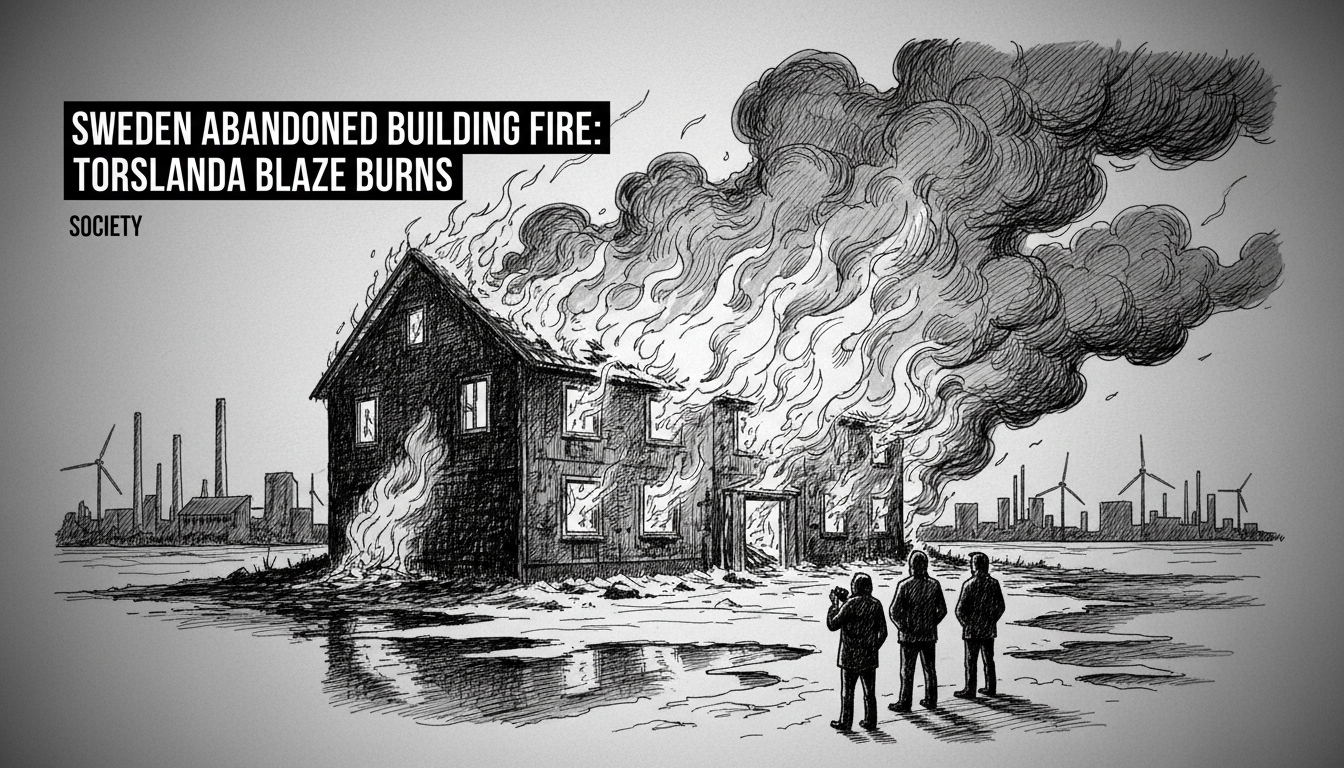
Sweden's Gothenburg fire services are battling a major blaze in Torslanda. A building described as an abandoned house, or 'ödehus', is expected to burn completely to the ground. Rescue services confirmed they will remain on site throughout the day to monitor the situation and prevent the fire from spreading. This incident highlights a growing concern in Swedish suburbs about the safety risks posed by derelict properties.
A Suburban Island's Unwanted Landmark
Torslanda sits on Hisingen, Sweden's fifth-largest island and a key part of Greater Gothenburg. The area is a mix of residential neighborhoods, industrial zones, and patches of nature. An abandoned building here becomes more than an eyesore. It becomes a potential danger. Local resident Anna Karlsson, who lives a few streets away, said she saw the smoke from her kitchen window. "It's frightening," she told me over the phone. "You always worry about sparks flying, especially if the wind picks up. These old wooden structures can go up so fast." Her concern reflects a common anxiety in communities where neglected properties exist.
The Persistent Problem of 'Ödehus'
The Swedish term 'ödehus' carries a specific weight. It means more than just an empty house. It implies abandonment, disrepair, and often a complicated legal status. These buildings can become magnets for vandalism, unauthorized occupation, and, as seen today, catastrophic fires. Fire safety expert Lars Bengtsson, a former chief with the Stockholm rescue services, explained the risks. "An abandoned building is a perfect storm for firefighters," he said. "There's often no secure access, the structural integrity is unknown, and accumulated debris provides excessive fuel. The primary strategy, as in Torslanda, often shifts from saving the structure to protecting the surroundings."
This incident is not isolated. Across Sweden, municipalities grapple with the challenge of derelict buildings. Ownership disputes, inheritance issues, or simple neglect can leave properties in limbo for years. Local authorities have tools to force cleanup or demolition, but the process is often slow and costly. In the meantime, these structures decay. They become safety hazards and drag down the feel of a neighborhood. For families in areas like Torslanda, they represent a failure of upkeep that contrasts sharply with Sweden's reputation for order and safety.
The Human Cost Beyond the Flames
While no injuries have been reported in the Torslanda fire, the impact is not solely physical. There is an emotional and social cost. A burning building, even an abandoned one, creates community trauma. It disrupts the sense of security. It brings the roar of fire engines and the smell of smoke into quiet suburbs. It forces people to confront vulnerability. "It makes you look at every empty lot, every boarded-up window differently," said Magnus Falk, a community organizer in western Gothenburg. "People start asking, 'Who is responsible? Why was this allowed to happen?' It erodes trust."
These events also strain public resources. A major fire requires a significant response from rescue services, potentially diverting them from other emergencies. The monitoring required over an entire day, as stated by Erika Skog of the rescue services, represents a substantial commitment of personnel and equipment. For taxpayers, it underscores how private neglect can become a public expense. The bill for the Torslanda fire response will ultimately be borne by the community, regardless of who owned the crumbling building.
A Cultural Reflection on Space and Responsibility
Sweden's relationship with space and property is unique. The right of public access, 'Allemansrätten', allows people to roam freely in nature. This fosters a deep collective respect for the environment. An abandoned building represents the opposite principle. It is a space closed off, wasted, and left to become a danger. It clashes with the Swedish ideals of functionality and communal well-being. In a society that values 'lagom' – just the right amount – an 'ödehus' is an extreme of neglect. It is profoundly 'olagom'.
Furthermore, in popular Swedish culture, from crime novels to films, abandoned houses often serve as settings for dark events. They are places where society's rules break down. The real-life fire in Torslanda feeds into this narrative, transforming a local news story into a symbol of broader anxieties. It touches on fears about losing control over our surroundings and the fragility of the safe, organized society Sweden is known for.
Looking Ahead: Prevention and Policy
The column of smoke over Torslanda will fade. The ashes will cool. The question is what happens next. Will this plot remain a charred reminder, or will it be cleared and put to safe use? Fire expert Lars Bengtsson argues for proactive policies. "Reactive monitoring is not enough," he states. "Municipalities need stronger mandates and faster processes to deal with derelict buildings before they become emergencies. It's a matter of public safety." This could mean higher fines for negligent owners, streamlined legal processes for compulsory purchase or demolition, and better inter-agency cooperation to identify at-risk properties early.
Community vigilance also plays a role. Neighborhood watch programs in Swedish cities often include reporting signs of decay or unauthorized activity in empty buildings. This community-level awareness is a first line of defense. It represents the Swedish concept of 'samverkan' – collaboration between citizens and authorities to solve common problems.
As the rescue services in Torslanda keep their watch, the story of this fire is still being written. The final chapter won't be about the flames that consumed an old house. It will be about how the community responds. Does it become a catalyst for change, leading to tighter regulations and cleaner, safer suburbs? Or does it become just another forgotten incident, until the next plume of smoke rises somewhere else? The answer will determine if the true cost of the fire was just a building, or something more valuable.