
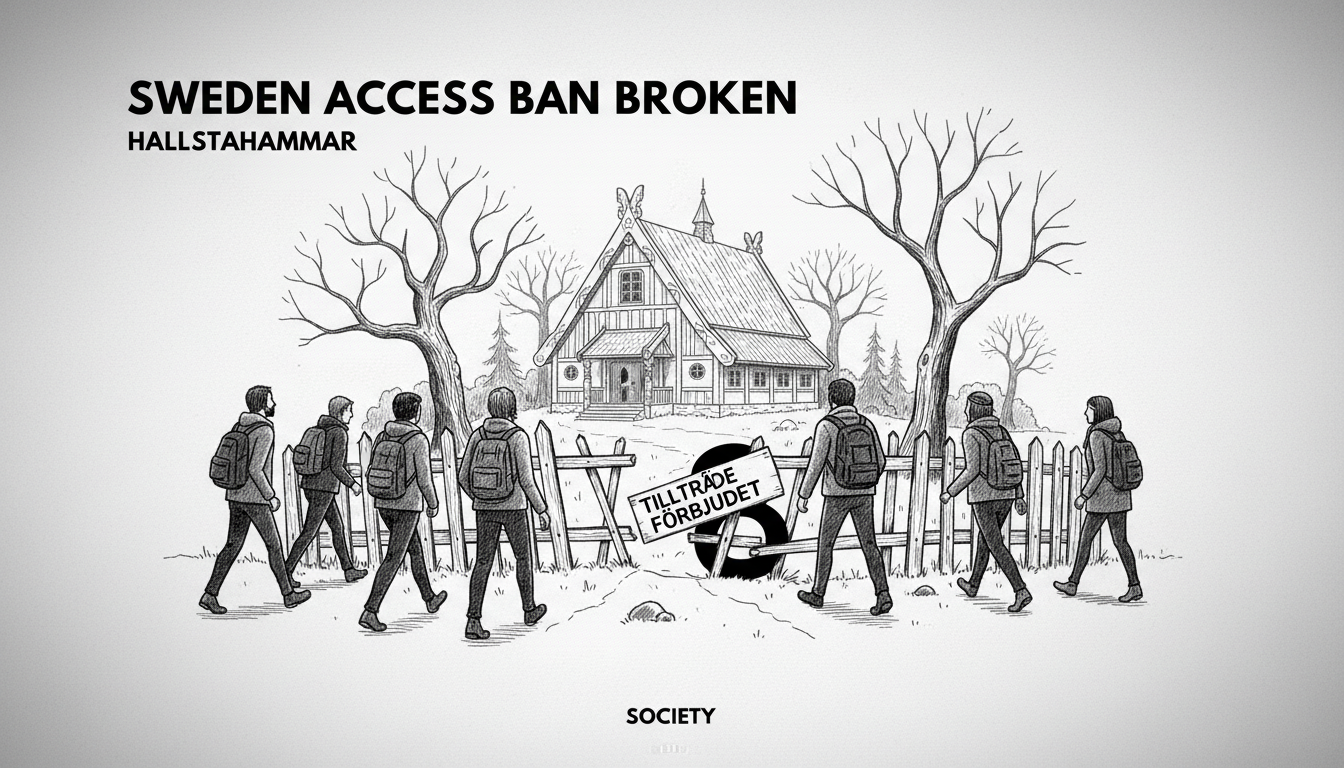
Sweden's legal tool of the tillträdesförbud, or access ban, faces a stark test in the quiet town of Hallstahammar. A man, previously banned from entering the local Ica Matkassen grocery store, now stands accused of violating that ban eight separate times. He is charged with returning to steal candy, soda, and chips, and also faces allegations of carrying axes and knives in public without a valid reason. The case highlights the gap between a court order and its enforcement on the ground.
A Ban Meant to Protect
A tillträdesförbud is a common legal measure in Sweden. Prosecutors or courts issue them to prevent specific criminal activity or harassment. For a small business like Ica Matkassen, it is a shield. The ban is meant to stop a cycle of theft and disruption. The penalty for breaking it is clear: a fine or up to six months in prison. Yet, this case in Hallstahammar shows a ban can be just a piece of paper if not backed by effective monitoring. The man, who denies the crimes, allegedly saw it not as a barrier, but as a minor inconvenience.
The Challenge of Enforcement
This story is not just about stolen snacks. It is about a systemic challenge. An access ban relies on deterrence and the risk of getting caught. But for it to work, there must be consequences. "When someone violates a ban this many times, it points to a failure in the chain," says a legal expert familiar with Swedish retail crime. "The ban itself is a reactive tool. It doesn't address why the person returns, nor does it physically stop them." Store staff are not law enforcement. They can call the police, but response times in smaller towns can vary. Each time the man allegedly walked in, he was forcing employees to confront a situation they were legally protected from, but not practically safe from.
Beyond the Shop Door
The additional allegations of carrying weapons in public add a darker layer. It suggests the behavior extends beyond petty theft. Experts often point to underlying issues in such repetitive offending. "We frequently see patterns of substance abuse or untreated mental health needs," the expert notes. "A ban keeps someone out of a store, but it doesn't connect them to social services or treatment. It protects the location temporarily, but does not solve the person's trajectory." This creates a revolving door: arrest, ban, violation, and arrest again. The community's sense of security is chipped away with each return.
A Town's Frustration
Hallstahammar, a community west of Stockholm, is typical of many Swedish towns. It's a place where people know their neighbors and local shopkeepers. A case like this resonates deeply. It feeds a growing national conversation about the perceived leniency of the justice system and the daily struggles of small businesses. For the owners of Ica Matkassen, the ban was supposed to be a solution. The eight alleged breaches turn it into a symbol of frustration. It raises a difficult question: what more can be done when the legal remedy provided is so easily and repeatedly ignored?
Searching for Solutions
The answer may lie in a more connected approach. Some advocates call for better coordination between police, prosecutors, and social services when a ban is issued. Could a conditional release be tied to mandatory check-ins or support programs? Others point to technological solutions, like shared digital alerts for banned individuals across local businesses. But these require resources and coordination that are often in short supply. The core issue remains: the law can declare a space off-limits, but ensuring that reality matches the decree is a complex, human-intensive task.
The Human Cost
Focusing only on the legal failure misses the human element. Consider the store employees. A tillträdesförbud is meant to give them peace of mind. Instead, this case suggests they lived with the anxiety of his potential return. Each violation was a breach of their workplace safety. The man at the center, meanwhile, remains an anonymous figure cycling through the system. His repeated actions suggest a cry for help or a deep compulsion that the current tools are not equipped to handle. The ban was a boundary he consistently crossed, perhaps because his needs lay far beyond the supermarket's entrance.
This case in Hallstahammar will soon move through the courts. A verdict will be reached. But the sentence, whether a fine or short prison term, may not be the end. Without addressing the roots of the behavior, the cycle is poised to continue. The story of the eight-time broken ban is a microcosm of a larger dilemma. How does a society effectively protect its spaces while dealing compassionately and effectively with the individuals who disrupt them? For now, in one Swedish town, that question remains painfully open.