
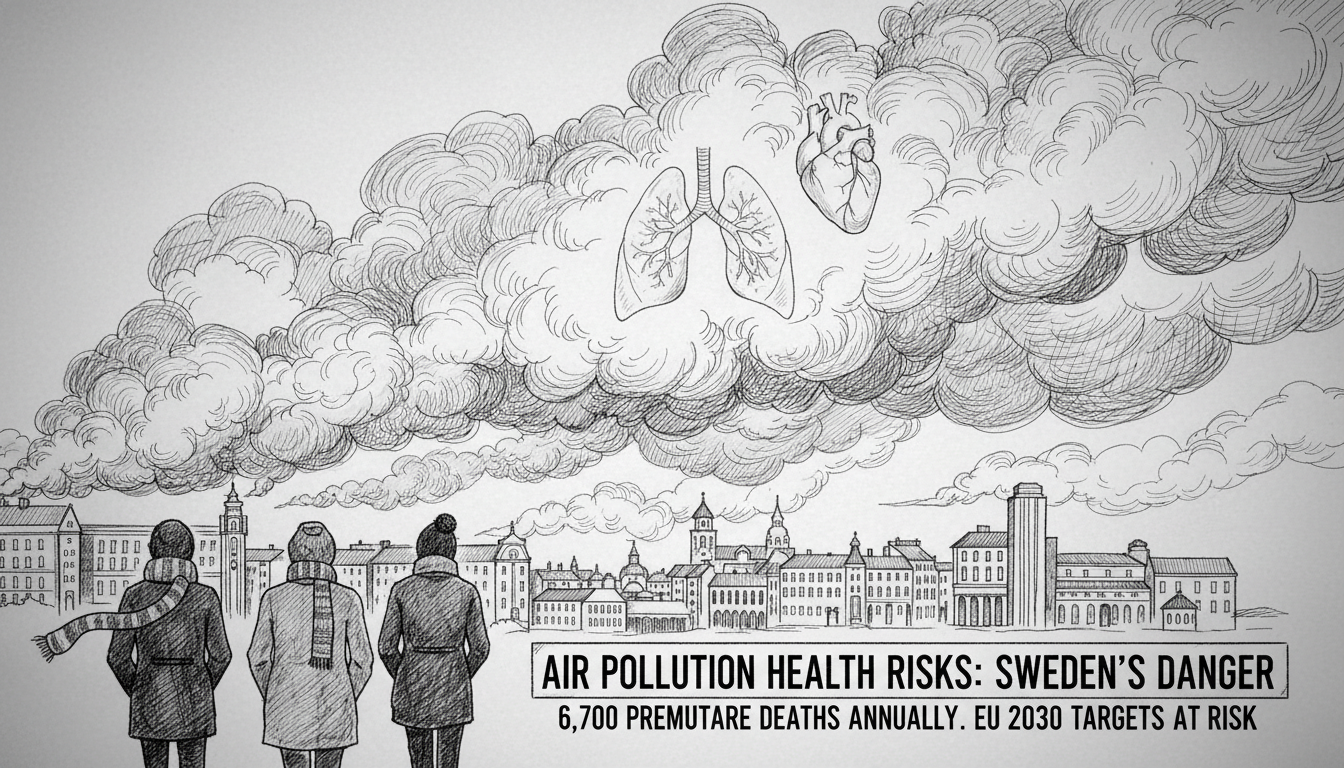
Air pollution remains one of Europe's biggest environmental health threats. Sweden faces similar challenges despite its clean reputation. Approximately 6,700 Swedes die prematurely each year due to air pollution effects, according to a 2022 study.
Swedish cities already work to reduce PM10 levels. These small airborne particles come from studded tires and heavy vehicles. They penetrate deep into our airways and increase heart and lung disease risks.
New EU air quality directives demand substantial pollution reductions by 2030. The goal is minimizing harmful effects on people and environment.
Current EU limits for particulate matter stand at 25 micrograms per cubic meter. This will drop to 10 micrograms by 2030. Nitrogen dioxide limits will also halve from 40 to 20 micrograms.
Sweden still has work to do to meet these targets. Data from the Swedish Meteorological Institute shows 47 municipalities risk exceeding future EU PM10 limits based on current emissions.
The most harmful air pollutants affecting human health include particulate matter (PM2.5 and PM10) and nitrogen dioxide (NO₂). In urban areas, vehicle emissions represent the main nitrogen dioxide source. PM2.5 particles often come from wood burning or cross-border transport, while PM10 particles mainly stem from road tire wear.
Nitrogen dioxide levels decrease as vehicles become cleaner. PM2.5 particle levels also drop, partly thanks to cleaner energy production abroad. Swedish cities implement various measures to reduce PM10 levels, including studded tire bans, dust binding, and improved street cleaning after winter. More action is needed for Sweden to achieve EU's short-term 2030 and long-term 2050 goals.
Sweden's pollution challenge shows even environmentally conscious nations struggle with air quality. The gap between current levels and future targets suggests tougher measures may be needed, particularly regarding transportation and winter road maintenance.