
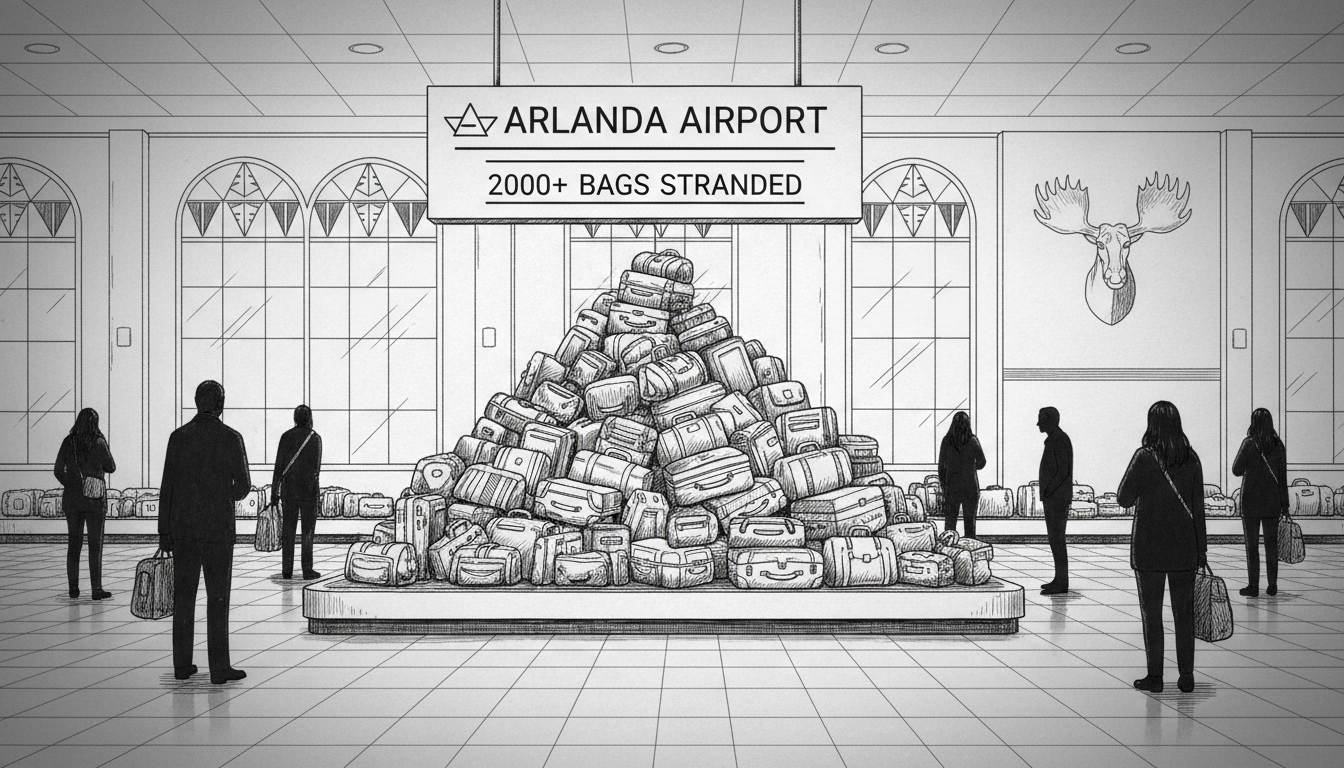
Sweden's largest airport, Arlanda, saw over 2,000 pieces of passenger luggage stranded after a major winter storm disrupted operations. For hours, baggage carousels stood still, terminals filled with frustrated travelers, and a digital baggage tracking system crashed, leaving people in the dark. This scene, unfolding on a chaotic Saturday, highlights the fragile balance between Nordic infrastructure and the region's formidable weather.
Karl Eklund, the airport chief at Arlanda, said in a written statement that safety came first. 'Just now there are delays at Arlanda for both incoming and outgoing flights. An exceptional amount of snow combined with wind means it takes longer than usual to keep runways and surrounding areas clear,' he explained. Swedavia, the state-owned operator, pointed to the severe weather as the primary cause. Yet for the hundreds of passengers waiting, the explanation felt distant compared to the immediate problem of missing essentials, gifts, and gear.
From Flurries to Full Halt
The disruption was not just about snowplows. Aviation analysts note that Nordic airports, while experienced with winter, face compounded challenges. A sudden, intense snowfall coinciding with high winds creates a cascade effect. De-icing takes longer. Ground crew movements slow for safety. Aircraft need extra spacing. The system, optimized for efficiency, has little slack for such extremes. 'It's a perfect storm scenario,' says Lars Pettersson, an independent aviation consultant based in Stockholm. 'You have the weather, peak post-holiday travel volumes, and a baggage system under immense strain. Something often gives.'
That 'something' was the baggage handling infrastructure. With flights delayed or held on the tarmac, the carefully timed logistics of loading and unloading luggage fell apart. Bags destined for one flight missed their connection. Others were taken off planes to balance weight in changing conditions. The sheer volume of misplaced items overwhelmed the tracking and retrieval process.
The Human Cost of Chaos
In Terminal 5, the atmosphere grew tense. Anna Bergström, a Stockholm resident returning from a family visit in Spain, waited three hours for news of her suitcase. 'It has all the children's winter clothes inside,' she said, glancing at her two young kids. 'We're dressed for Malaga, not minus ten. The information screens just said 'processing.' No one could tell us more.' Her story was common. Students returning from semesters abroad, tourists with ski equipment, business travelers with critical samples—all found themselves in the same stressful limbo.
The impact rippled beyond the airport. Hotels near Arlanda, in areas like Märsta and Upplands Väsby, reported a surge in inquiries from passengers unwilling to venture far without their bags. Taxi queues stretched longer than usual. For Swedavia, which reported a net profit of 579 million SEK in 2022 after pandemic losses, such incidents test its recovery and reputation as a reliable hub.
Infrastructure and the Climate Challenge
Arlanda is a critical engine for Sweden, handling 21.9 million passengers in 2022. That's a huge jump from 6.2 million in 2021 but still below the pre-pandemic 29 million of 2019. The system is getting busier. Swedavia has ambitious goals, aiming for net zero emissions from its own operations. But this weekend's events raise older, more practical questions about resilience. Are investments in baggage systems and contingency plans keeping pace with both climate change and rising passenger numbers?
Experts argue for smarter tech and buffer capacity. 'The industry's lean, just-in-time model is vulnerable,' Pettersson notes. 'When a disruption hits, you need physical space to store misplaced bags and digital systems that don't crash under inquiry loads. Redundancy is expensive, but so is the loss of passenger trust.'
By Sunday, Swedavia reported the situation had improved, with only minor delays. They advised passengers missing luggage from Saturday to contact their airline directly—a standard but often slow process. For many, the reunion with their belongings would take days.
A Swedish Stoicism, Tested
The incident is a cultural moment as much as a logistical one. Swedes pride themselves on a society that functions smoothly, where technology and efficiency solve problems. A frozen baggage system challenges that self-image. There's a quiet expectation that public systems should work, especially those as vital as the main international airport. The frustration in the terminals was palpable, mixed with a characteristic, if weary, resignation.
Travelers swapped stories and phone charger tips, a small display of the communal 'folkhem' spirit. Yet, the underlying question lingered: as weather patterns become more unpredictable, is the infrastructure designed for a previous climate era? This winter has already tested railways and roads. Now, it's air travel's turn.
Looking Beyond the Runway
The baggage backlog at Arlanda is a temporary crisis. It will be cleared. But it serves as a stark reminder. Sweden's connectivity depends on systems that must withstand increasingly severe weather. For Swedavia, the challenge is dual: achieving environmental sustainability while ensuring operational robustness. Passengers might forgive one snow-chaos weekend. Repeated failures, however, could steer them toward other hubs or travel modes.
For now, the focus is on reuniting people with their possessions. The experience leaves a mark. It changes how travelers pack, with more essentials in carry-ons. It makes them check weather apps more anxiously. In a country where long, dark winters are a fact of life, the recent chaos at Arlanda asks a difficult question. Are we preparing enough for the winters to come, or merely reacting to them one storm at a time?