
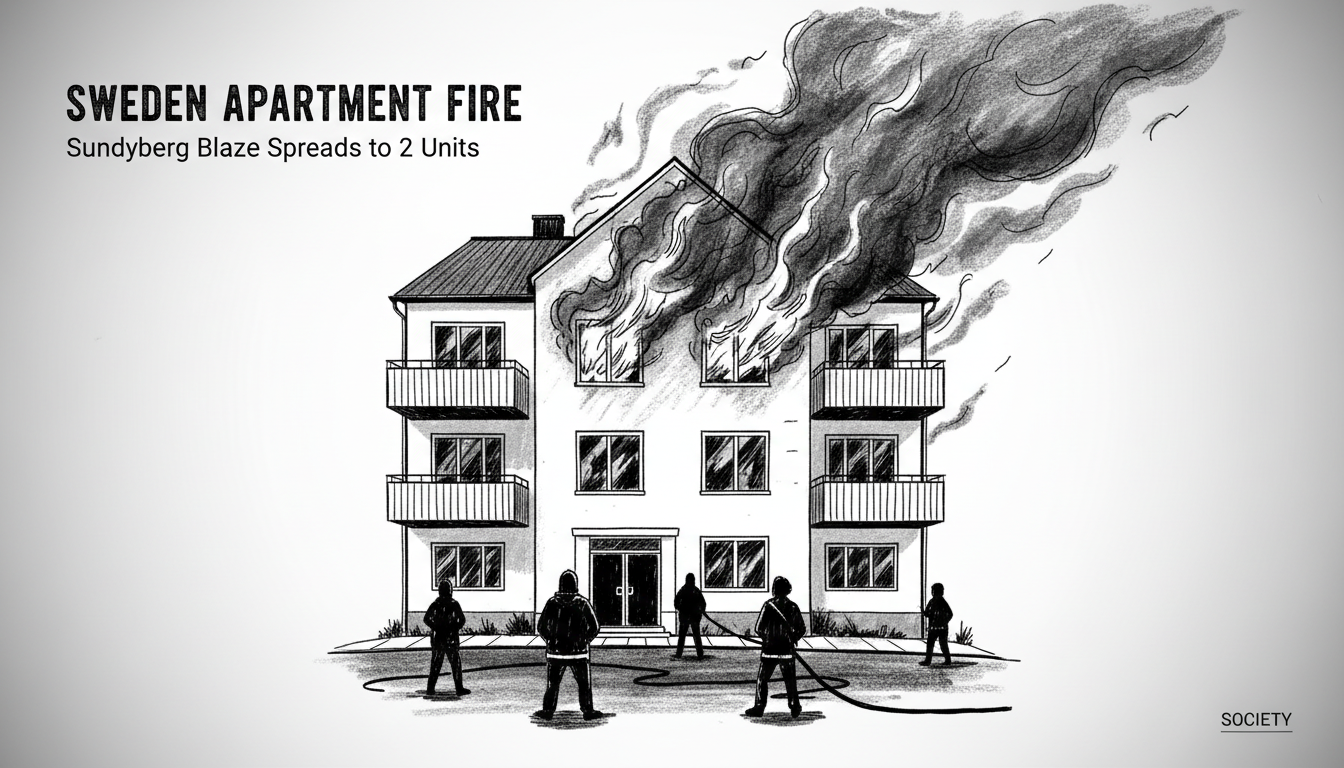
Sweden's most densely populated municipality faced a serious fire emergency as flames tore through a Sundbyberg apartment building on Tuesday. The fire, which began on a balcony, spread to two separate apartments, prompting a major response from the Greater Stockholm Fire Department. Police and medical personnel were also on scene, interviewing residents and checking for injuries, though no one required ambulance transport.
A Tense Afternoon in a Dense Community
The call came in during the afternoon, sending fire engines racing through the streets of Sundbyberg. This small, independent municipality is completely surrounded by the city of Stockholm, creating an urban environment where buildings are close together and populations are packed in. For residents of the affected building, a normal day turned to chaos with the smell of smoke and the sound of sirens. "It started on a balcony and it spread to two apartments," the incident commander for the Greater Stockholm Fire Department confirmed at the scene. The visual of a balcony fire is particularly alarming in a densely built area, where embers can easily travel to neighboring structures.
Witnesses described a rapid response. The fire service deployed what they termed a "large force" to tackle the blaze, focusing on containment and preventing further spread. Police spokesperson Robert Sennerdal provided initial reassurance. "We are interviewing people on site to see how this started," he said. "If anyone is injured, it would perhaps be from smoke inhalation, but we have no information on that. No one has needed to be taken by ambulance, at least." This news was a relief for a community where evacuation in a tight space can be complex.
The Ever-Present Risk in Multi-Family Dwellings
This incident highlights an ongoing concern in Swedish cities: fire safety in flerfamiljshus, or multi-family apartment blocks. Sweden has strict building codes designed to compartmentalize fires, using fire-resistant materials in walls and doors between apartments to slow a blaze's progress. These standards have evolved over time, however. Older buildings, of which there are many in established areas like Sundbyberg, may not fully meet the latest requirements. While major renovations trigger updates to fire safety, the existing stock presents a variable landscape of risk.
"The key is always early detection and prevention," says Lars Bengtsson, a retired fire safety inspector now consulting for housing associations. "A fire on a balcony is often linked to human activity—discarded cigarettes, grilling, or stored flammable materials. Modern codes regulate balcony materials for this reason. But the first line of defense is always the smoke detector. Every apartment must have one, and it must be tested regularly." Bengtsson emphasizes that while the building's structure is crucial, resident behavior is equally important. Knowing your evacuation plan, not propping open fire doors, and being mindful of potential ignition sources are shared responsibilities.
Sundbyberg: A Microcosm of Urban Swedish Life
To understand the context of this fire, one must understand Sundbyberg. Known locally as "Sumpan," it's a vibrant, sought-after area with a mix of historic early 20th-century buildings and modern developments. Its streets are lined with independent shops, cafes, and cultural venues like the Sundbyberg Theatre. This desirability contributes to its status as the most densely populated municipality in the entire country. For residents, community spirit is strong, often centered around local squares and events like the annual Sundbyberg Festival. A fire here doesn't just damage property; it disrupts a tightly-knit urban fabric.
Neighbors quickly gathered, offering support and shelter to those temporarily displaced by the fire and smoke. This community response is a hallmark of Swedish society, even in its busiest urban centers. The incident occurred not in an anonymous tower, but in a neighborhood where people recognize each other's faces. The psychological impact of such an event, the violation of one's hem (home), resonates deeply in a culture that highly values domestic safety and privacy.
Investigation and Cleanup Begin
As the fire was extinguished, the process of investigation and recovery began. Fire investigators will work meticulously to pinpoint the exact cause of the balcony fire. This forensic work is critical, not just for any potential insurance or liability issues, but for preventing future tragedies. The findings contribute to broader public safety data and can inform future fire prevention campaigns.
For the residents of the two affected apartments, the coming days will involve dealing with insurance companies, assessing water and smoke damage, and finding temporary accommodation. The rest of the building's residents will return to homes that likely smell of smoke, a lingering reminder of the danger. The building's homeowners' association (bostadsrättsförening) will now face urgent meetings to discuss immediate repairs, potential upgrades to fire safety systems, and communication with all residents.
A Broader Look at Swedish Fire Safety Trends
While Sweden has an excellent overall fire safety record, each incident prompts reflection. National statistics show that most fatal fires still occur in homes, often during nighttime hours. Campaigns by the Swedish Civil Contingencies Agency (MSB) consistently stress the "three lines of defense": prevent fires from starting, discover fires quickly, and stop fires from spreading. The Sundbyberg fire appears to have been caught before it breached the third line, thanks to the swift fire service response.
However, experts point to new challenges. Modern apartments contain more synthetic materials in furniture and electronics, which can burn hotter and faster than traditional materials. The trend towards energy-efficient, airtight buildings can also affect how smoke and heat move during a fire. These evolving risks mean fire safety is not a static achievement but a continuous effort, requiring updated public education and, where possible, building retrofits.
The Human Element in the Aftermath
Beyond the statistics and building codes, this is a story about people. It's about the family that lost personal treasures to smoke and water. It's about the elderly resident who needed help navigating the stairs during the evacuation. It's about the relief on a neighbor's face when they heard everyone was accounted for. In Stockholm's metropolitan area, where life moves fast, an event like this forces a pause. It makes people check their own smoke detector batteries, review the evacuation plan posted in their stairwell, and have a conversation with their children about what to do if the alarm sounds.
The Sundbyberg fire, while thankfully not resulting in serious injuries, serves as a stark reminder. In a country famed for its safety and order, the element of risk is never fully absent. It underscores a shared vulnerability and, consequently, a shared responsibility. The response—from professional firefighters to helping neighbors—also showcases the resilience woven into Swedish community life. As the investigation continues and repairs begin, the people of this dense municipality will do what they always do: clean up, rebuild, and look out for one another. The ultimate question remains: in our increasingly urbanized world, are we doing enough to make our dense living spaces not just efficient, but fundamentally safe?