
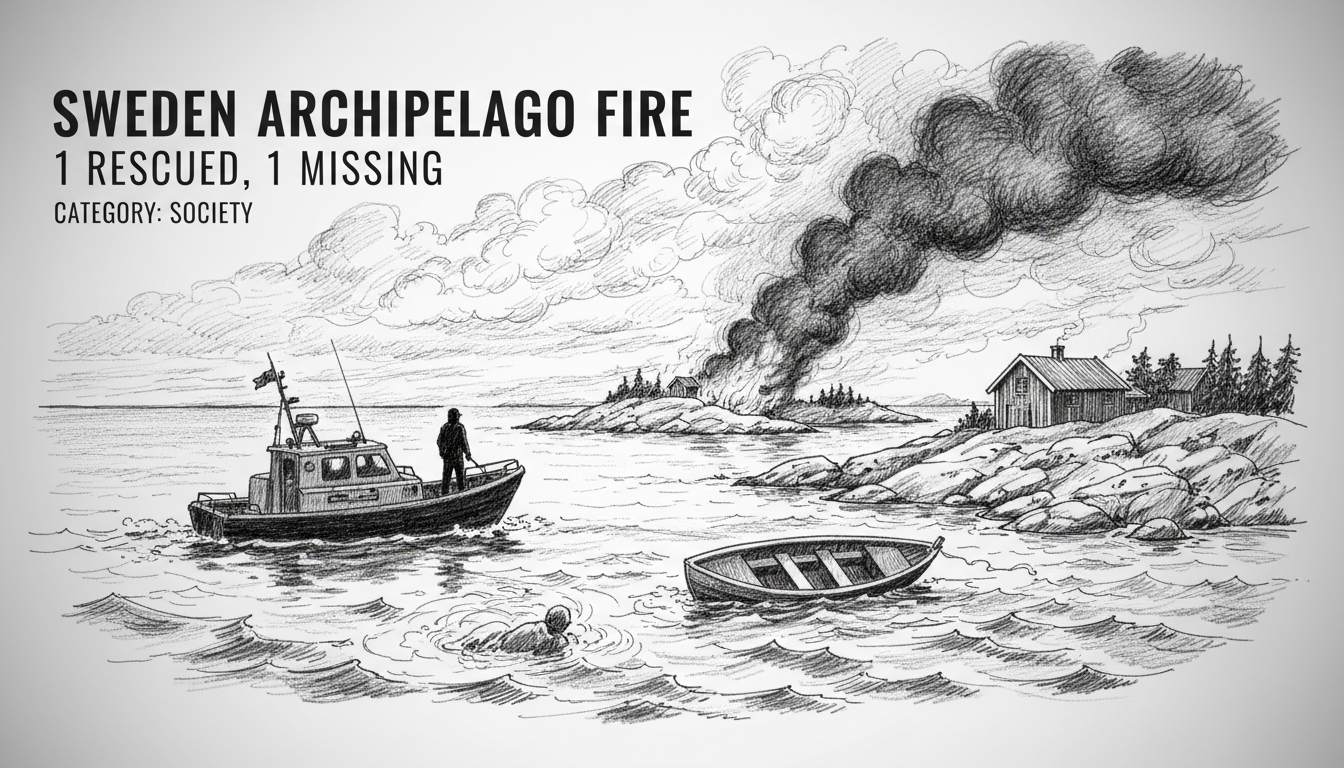
Sweden's Stockholm archipelago faced a dramatic emergency response as a villa fire on Blidö island sent one person to hospital and left another potentially missing. The alarm came just before 5 PM, with firefighters describing a fully developed blaze at the remote property. Smoke divers entered the burning building to rescue one individual, who was taken into medical care, while the search continued for a possible second person inside. The incident highlights the unique dangers of fires in Sweden's cherished summer home regions, where accessibility and wooden construction pose significant challenges for rescue services.
A Race Against Time in Island Isolation
The call to emergency services triggered a complex multi-agency response. Firefighters, police, and ambulance crews rushed to the scene on Blidö, a popular island destination north of Stockholm. Lead operator Oscar Davila confirmed the severity of the situation to local media, stating the fire was "fully developed." The use of smoke divers—specially trained firefighters equipped for zero-visibility conditions—underscored the immediate life-saving mission. Their successful extraction of one person from the villa was a critical first step. Yet, with reports of a possible second individual inside, the operation shifted to a tense search amid ongoing flames. For residents and summer visitors across the archipelago, this fire is a stark reminder of vulnerability. These idyllic settings, filled with traditional wooden cottages and villas, can become traps when disaster strikes far from mainland infrastructure.
The Archipelago's Inherent Fire Risk
Fighting a fire on an island like Blidö is fundamentally different from an urban response. Experts point to a combination of factors that escalate risk. "Access is the primary concern," says Lars Pettersson, a former Stockholm fire chief and now a safety consultant. "Response times are longer when you rely on boats or limited road networks. Every minute counts in a fire, and in the archipelago, those minutes are often stretched." Many older properties are built with wood, a classic Swedish architectural material that burns quickly and intensely. Narrow, winding roads can hinder larger fire trucks, and water supply may depend on limited local reservoirs or even the sea itself, requiring specialized pumping equipment. These challenges are well-known to Swedish rescue services, who conduct regular training for archipelago scenarios. Yet, each real incident tests their preparedness against the unpredictable nature of fire.
A Community Built for Summer, Facing Year-Round Danger
The Stockholm archipelago, with its roughly 30,000 islands and islets, is the summer heart of Swedish culture. For generations, Stockholmers have escaped to red-painted cottages for tranquil holidays filled with swimming, berries, and midnight sun. In recent years, however, the trend of converting summer homes into year-round residences has grown. This shift, driven by remote work and a desire for nature, introduces new safety dynamics. A summer cottage might have simpler electrical systems and be empty for months. A year-round home has more complex wiring, heating systems, and is occupied during the harsh, dark winter. "We see a different risk profile now," Pettersson explains. "Winter fires with people inside, potentially in isolated locations with icy roads or frozen seas, are a nightmare scenario. The human element of permanent residence changes everything."
The Human Cost of a Scenic Lifestyle
Beyond the structural challenges lies the profound human impact. A fire in a primary residence is devastating anywhere. In the archipelago, it can mean the total loss of a family's heritage—a cabin passed down for decades, filled with irreplaceable memories. For the individual rescued from the Blidö villa and their family, the trauma is immediate and physical. For the community, it's a collective shudder. News travels fast in these tight-knit island networks. Neighbors on adjacent islands likely watched the plume of smoke with dread, knowing it could just as easily have been their home. This shared vulnerability fosters a strong culture of mutual aid, but also anxiety. Many island residents are elderly, and the thought of a rapid evacuation with limited transport options is a constant, low-level worry.
Balancing Safety with Serenity
The response to the Blidö fire will inevitably renew discussions about safety regulations for archipelago properties. Swedish building codes are strict, but older structures are often exempt from newer requirements. Retrofitting historic wooden villas with modern sprinkler systems or extensive firebreaks can be costly and aesthetically disruptive. There's a delicate balance between preserving the charming character of these areas and implementing life-saving measures. Some communities have invested in shared emergency equipment, like small fireboats or ATV-mounted pump units. Others focus on community preparedness, ensuring everyone knows evacuation routes and rally points. The Swedish Civil Contingencies Agency (MSB) regularly campaigns for fire safety, emphasizing working smoke alarms and clear escape plans—advice that is doubly important an hour's boat ride from the nearest full-time fire station.
A Search Under the Smoke
As of this reporting, the operation on Blidö remains active. Firefighters continue their grueling work to extinguish the blaze and search the premises. The condition of the rescued person has not been disclosed, and the uncertainty surrounding the potentially missing individual casts a pall over the island. Each such event forces a reckoning. The archipelago represents a quintessential Swedish dream: a peaceful retreat in nature's embrace. Yet, the Blidö fire exposes the dream's fragile underpinnings. It asks difficult questions about how Sweden protects its citizens in the places they feel most free, and what responsibility falls on homeowners, communities, and the state to mitigate the inherent risks of island living. The coming days will reveal the full human toll of this fire. For now, the focus is on the smoke divers moving through the ruins, the paramedics providing care, and a community waiting for answers. The archipelago's beauty is timeless, but its safety demands constant, modern vigilance.