
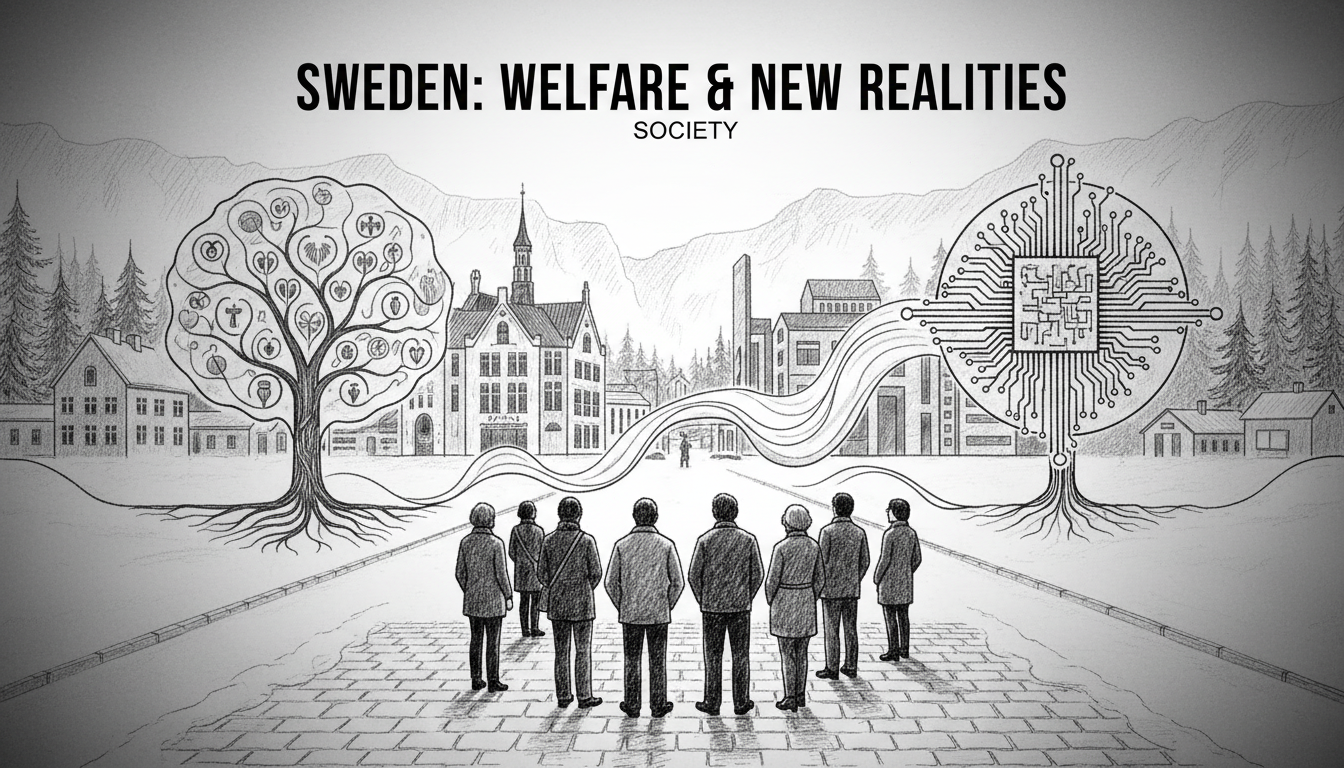
Sweden’s political landscape is navigating its most significant transformation in decades, balancing a renowned social welfare model against new economic pressures and a shifting demographic profile. With a population of 10.5 million and a GDP per capita of $58,000, the country faces a complex national conversation. The coalition government led by Moderate Prime Minister Ulf Kristersson, in power since October 2022, is at the center of this change. The question on everyone’s mind is how the nation will adapt its foundational values to contemporary challenges.
A Model Under Pressure
For generations, the Swedish social contract was clear. High taxes funded extensive welfare, from childcare to healthcare, creating a famously equal society. This system thrived on consensus and a strong, export-driven economy. Today, that model feels the strain. Global competition, an aging population, and integration challenges for new arrivals test its resilience. "We are in a period of recalibration," says political analyst Lena Strömberg. "The debate is no longer about whether to change, but how fast and how far. The core values of equality and security remain, but their application must evolve." This evolution is most visible in budget discussions and political coalitions that would have been unthinkable twenty years ago.
The tension plays out in Stockholm neighborhoods like Husby and Rinkeby. Here, decades of immigration have created vibrant, diverse communities. They also face socio-economic gaps that challenge Sweden’s self-image. Local community leader Amir Hassan notes the duality. "My children have opportunities here I never dreamed of. But we also see parallel societies forming," he says, sipping coffee in a bustling square. "The system is generous, but accessing it, and being reached by it, is not always simple." This reality fuels a persistent political debate on immigration and integration, a key factor in the rise of the Sweden Democrats and their influence on government policy.
The Economic Engine Adapts
Sweden's economic strength provides crucial ballast. Its tech sector, from Spotify to Klarna, is world-leading. Traditional industries like manufacturing and forestry remain robust, pivoting toward sustainability. Notably, over 50% of the country's energy consumption now comes from renewable sources. This green transition is both an economic strategy and a point of national pride. Business analyst Erik Lundgren points to this innovative spirit as the key to funding the future. "The welfare state needs a powerful engine. Our challenge is to ensure that engine—our competitive businesses—continues to thrive within a high-tax, high-regulation environment that also prioritizes sustainability," he explains.
This balancing act defines current government policy. The Kristersson coalition aims to stimulate growth through tax cuts and deregulation while managing high inflation and a slumping housing market. Their approach marks a distinct shift from previous Social Democrat-led administrations. The government argues that a stronger economy is the only way to preserve the welfare system long-term. Critics worry this path will erode the very equality that defines Sweden. The political discourse is heated, reflecting a society actively renegotiating its priorities.
The Nuances of Neutrality and EU Membership
Sweden’s international posture adds another layer. Its historic neutrality was profoundly altered by the decision to join NATO. Domestically, this move received broad support, viewed as a necessary adaptation to European security realities. Relations with the European Union also reflect a careful balance. Sweden joined the EU in 1995 but kept its own currency, the krona. This decision symbolizes a pragmatic engagement with Europe while guarding national sovereignty. EU policies on everything from migration to fiscal rules directly impact domestic Swedish politics, creating constant dialogue between Stockholm and Brussels.
This international engagement is a double-edged sword. It opens markets and fosters cooperation but also exposes Sweden to external shocks, like energy crises or migration flows. "We are a small, open economy and a values-driven state," notes foreign policy expert Karin Möller. "Our influence comes from being a model and a partner. That requires compromise without losing our core identity." The nation’s ability to lead on issues like climate change, while managing internal divisions, is being closely watched.
The Cultural Backdrop of Change
Understanding Sweden’s path requires looking beyond politics. Cultural touchstones, from the widespread respect for allemansrätten (the right of public access to nature) to the coffee-and-cake ritual of fika, reinforce a communal ethos. The annual Lucia celebrations in December, with their processions of light in the darkness, speak to a culture that values togetherness. These traditions persist even as the society around them changes. In a Stockholm concert hall, a performance might blend traditional folk music with influences from across the globe, mirroring the national evolution.
The test for Sweden is whether its famous consensus can hold. Can it integrate new perspectives while maintaining social cohesion? The answer lies in everyday interactions: in schools, workplaces, and public spaces. It lies in whether the system feels fair and functional for all its residents, old and new. The world has long looked to Sweden as a laboratory for progressive society. Now, the experiment enters a new, more complex phase. The nation’s next chapter will depend on its ability to rewrite its social contract without tearing out the foundational pages of security, equality, and trust that made it unique. Will Sweden's famous model bend, or will it break under the weight of new realities?