
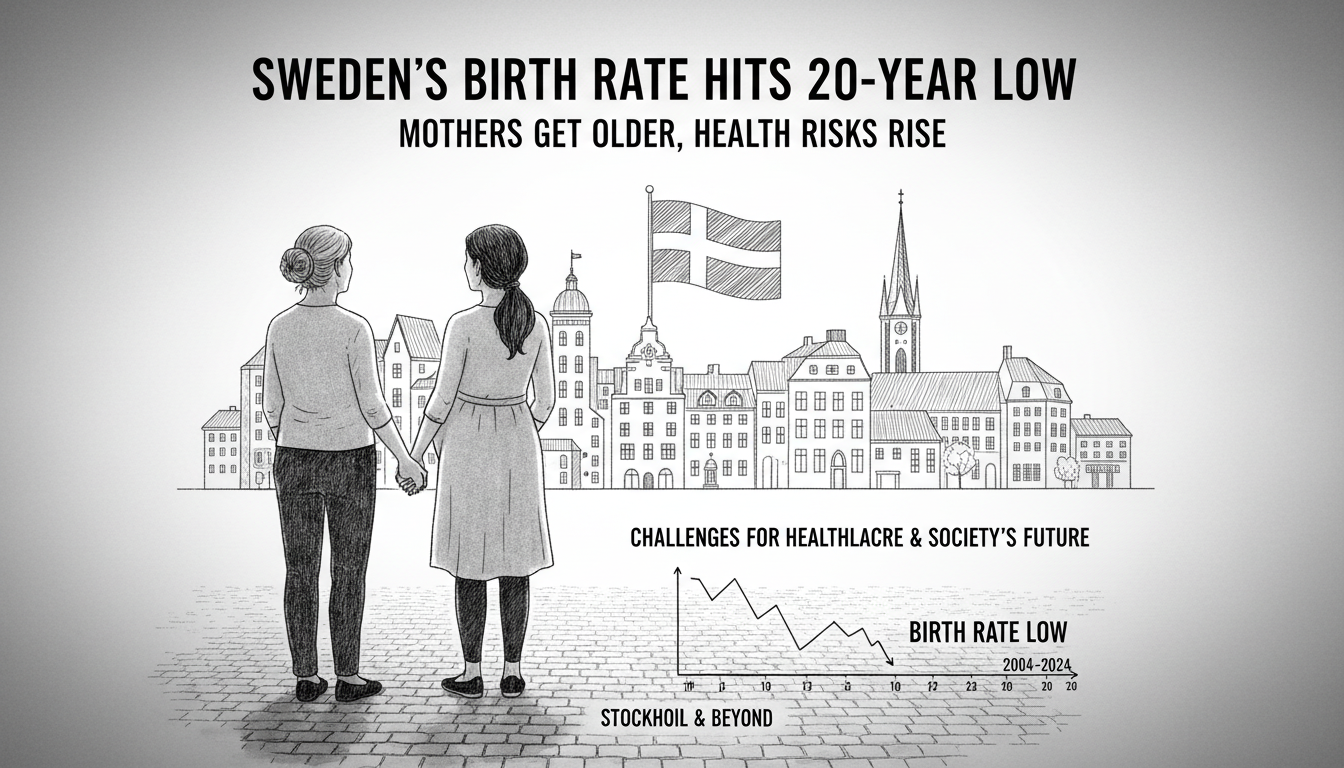
Stockholm is quieter. The familiar sound of strollers rattling over cobblestones in Södermalm or Vasastan feels less frequent. New statistics reveal a profound shift in Swedish society. The number of babies born in Sweden has reached its lowest point in two decades. This is not a sudden drop but the continuation of a long-term trend that is reshaping communities and putting new pressure on the healthcare system.
In the third quarter, roughly 99,000 children were born nationwide. That is the smallest number of newborns since 2003. The decline is a bit smaller than the sharp drops seen in the two previous years, but the direction is clear. Fewer Swedish families are having children, and those who do are having them later in life.
Doctor and researcher Ängla Mantel explained the dual challenge in a statement. 'We see a double shift. Fewer children are being born, and at the same time, more pregnant women have some risk factor. This places increased demands on both maternal healthcare and delivery care,' Mantel said.
The most prominent risk factor is age. The average age for first-time mothers has, for the first time, crossed the 30-year threshold, reaching 30.1 years. In Stockholm County, that average is even higher at 31.5 years. Compare that to Gävleborg County, where the average age for a first-time mother is 28.5 years. Across the country, the total average age for all women giving birth is 31.6 years, with over 5 percent being over 40.
'Advanced maternal age increases the risk for several pregnancy and delivery complications,' Mantel noted. 'These include gestational diabetes, preeclampsia, and the need for a cesarean section. This is a crucial factor when analyzing this development.'
Another growing concern is weight. The share of expectant mothers classified as overweight or obese has nearly doubled since the 1990s. Today, 47 percent of all expecting mothers fall into this category based on BMI. Regional differences are stark. Region Stockholm has the lowest proportion at 39 percent, while Region Blekinge has the highest at 54 percent.
'The increased proportion of pregnant women with a high BMI is one of the bigger risk changes we see,' Mantel stated. 'It affects risks during pregnancy, delivery, and also the child's health.'
This changing demographic profile is reflected in delivery rooms. Cesarean sections are becoming more common, accounting for 20 percent of all deliveries in the latest data. The largest share of these were emergency C-sections. Mantel suggests the rise is likely linked to the increased risk factors in the pregnant population, including higher BMI and age, but also to changing practices in delivery care.
So what does this mean for Sweden? The implications stretch far beyond hospital corridors. A sustained low birth rate challenges the long-term sustainability of the welfare model, which relies on a steady working-age population. It affects everything from future school planning in suburbs like Älvsjö to housing demand. For international readers and expats in Sweden, this trend underscores a society grappling with modern pressures—career focus, economic uncertainty, and changing family ideals—that are familiar across the developed world. The Swedish dream of a spacious home and multiple children is colliding with the reality of urban life and personal choice. The state's famed support for families, from generous parental leave to affordable childcare, may need to evolve to address why, even with these supports, Swedes are choosing to have fewer children.