
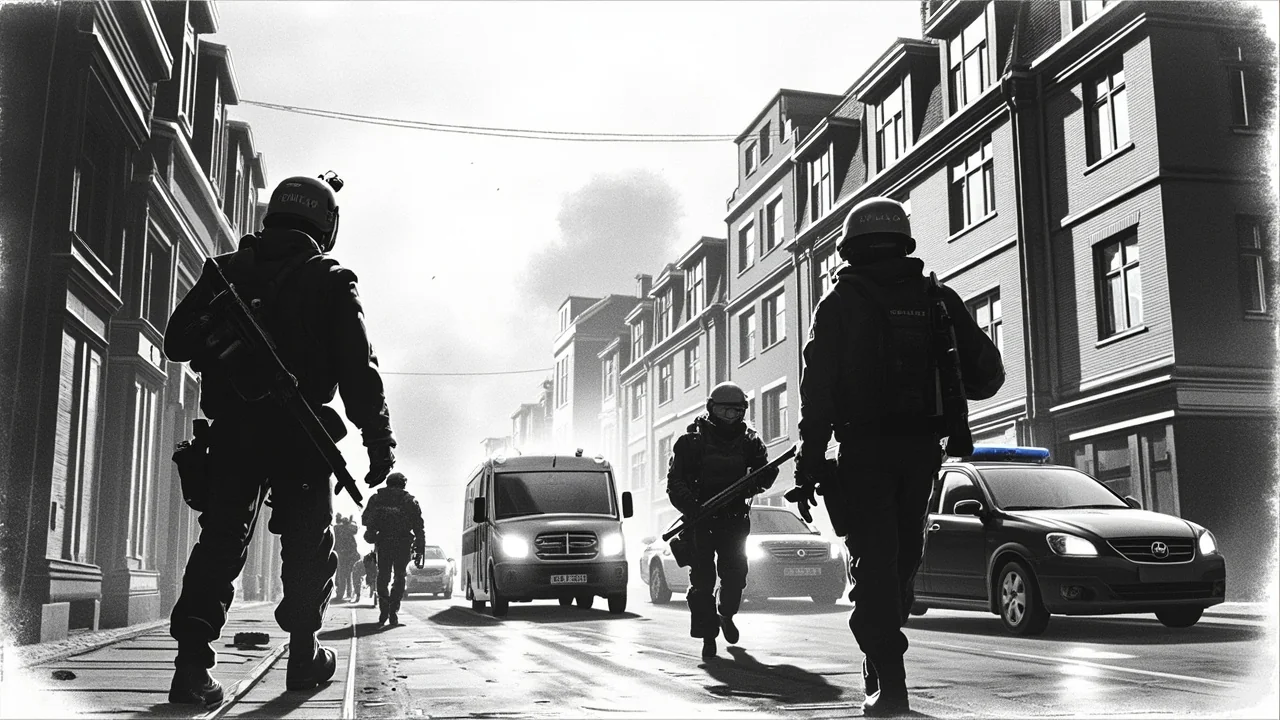
Sweden's national bomb squad was deployed to a quiet Malmö suburb on Thursday after police discovered a suspicious object in Bunkeflostrand. Officers established a security perimeter around Vagnmakarebyn, ordering residents to stay indoors and away from windows. The incident disrupted a sunny afternoon in the coastal community, located just southwest of Malmö city center.
“We have begun moving nearby residents to safety,” said police spokesperson Filip Annas in a statement. The operation focused on securing the immediate area while experts assessed the potential threat. For locals, the sudden appearance of police tape and official vehicles transformed a routine day into one of uncertainty.
Bunkeflostrand is known for its long beach promenade and family-friendly atmosphere. The neighborhood represents a quieter side of Malmö, Sweden's third-largest city. Events like this feel particularly jarring in such settings. They challenge the common perception of where danger can appear.
A Community on Hold
The police response was swift and visible. Authorities cordoned off access to Vagnmakarebyn, a residential area with a mix of apartment buildings and houses. The instruction to stay indoors created an eerie stillness. Normally active streets were empty as people waited for updates.
“You don't expect this here,” said Lena, a local resident who asked to be identified only by her first name. She watched the scene unfold from her balcony. “It's usually so peaceful. You hear about these things in news reports from other places.” Her sentiment reflects a broader Swedish discussion about safety and how it's changing.
Sweden has faced increased scrutiny over gang-related violence in recent years. Explosions and shootings have become more frequent in certain urban areas. This context makes any bomb squad deployment a sensitive event. It immediately raises questions about possible connections to wider criminal activity.
The Mechanics of a Threat Response
The deployment of the Nationella bombskyddet (National Bomb Protection unit) signifies the seriousness with which police treated the find. This specialist unit is called only for credible threats. Their involvement means local police lacked the expertise to handle the object safely.
Standard protocol in such situations prioritizes containment and evacuation. Establishing a wide perimeter minimizes risk to life. Moving residents to a secure location, often a community center or school, is standard. The goal is to create a buffer zone while experts work.
“The first priority is always public safety,” explains a former security analyst familiar with Swedish procedures. “These units are trained for worst-case scenarios. Their presence is a precaution, not necessarily a confirmation of extreme danger.” The analyst noted that many call-outs end with the object being deemed harmless or historical, like old military ordnance.
Nevertheless, the disruption is real. Schools in the vicinity likely held students indoors. Public transport may have been rerouted. The local rhythm of life pauses, dictated by the unknown nature of a single suspicious item.
The Ripple Effect in a Digital Age
News of the incident spread quickly through social media and local chat groups. This instant communication can be both a blessing and a curse. It allows authorities to disseminate safety information rapidly. It also fuels anxiety and sometimes misinformation before official channels can provide facts.
In neighborhoods like Bunkeflostrand, community cohesion is often strong. Word-of-mouth networks activate alongside digital ones. People check on elderly neighbors. Parents coordinate pick-ups for children. This informal social fabric becomes part of the emergency response.
The psychological impact of such events lingers. Even after an all-clear is given, residents report feeling uneasy. Trust in the immediate environment can be temporarily shaken. For a community proud of its safe, seaside character, the intrusion of a potential threat leaves a mark.
Sweden's Evolving Security Landscape
This incident occurs against a backdrop of national debate. Swedish police and security services have repeatedly highlighted challenges posed by organized crime. Gang conflicts have increasingly involved explosives, a worrying trend for a country with historically low levels of such violence.
Just last year, Sweden's National Council for Crime Prevention reported a rise in bombings and explosions. Most are linked to criminal score-settling. However, their occurrence in public spaces increases general risk. It also stretches police resources, requiring specialized units like the bomb squad to respond across the country.
“Every suspicious object report is now treated with heightened caution,” the former analyst said. “The threshold for calling in the experts is lower than it was a decade ago. That's a reflection of the new reality, not just police being overly careful.”
This reality influences community policing. Officers must balance public reassurance with necessary vigilance. Events in Bunkeflostrand show how a single report can trigger a large-scale operation, affecting hundreds of people.
Life After the All-Clear
As the bomb squad conducted its investigation, life in the sealed-off area stood still. Businesses within the cordon were inaccessible. Residents waited for permission to return to normalcy. The resolution of such events is often anti-climactic but welcome.
When the object is declared safe or removed, the process of unwinding begins. Police methodically remove tape and barriers. Officers might go door-to-door to give the all-clear. The official statement typically thanks the public for their patience and cooperation.
Yet, questions remain. What was the object? Where did it come from? Authorities do not always provide detailed answers, especially if an investigation is ongoing. This lack of closure can be frustrating for those directly affected.
For the wider Swedish public, news of this deployment adds another data point. It feeds into ongoing conversations about societal safety, police capacity, and the roots of violence. A sunny day in a Malmö suburb becomes a national news story, reminding everyone that security is fragile.
Looking to the Shoreline
As the situation in Bunkeflostrand developed, the nearby coastline offered a stark contrast. The Öresund strait glittered under the spring sun, indifferent to the human concerns just inland. This juxtaposition is uniquely Swedish—natural tranquility alongside modern urban challenges.
The response to this suspicious object demonstrates a system functioning as designed. Protocols were followed. Specialists were mobilized. The public was protected first and informed second. In an era of complex threats, this procedural efficiency is what communities rely on.
But efficiency doesn't erase unease. As Sweden continues to grapple with the causes of violent crime, days like this in places like Bunkeflostrand become more significant. They are not just police bulletins. They are moments where abstract statistics about explosions become concrete experiences of disruption and fear.
The true test comes after the bomb squad packs up and leaves. Can the sense of community safety be fully restored? For residents of Vagnmakarebyn, the answer will unfold in the coming days, as they look out their windows again, not with fear, but with the hope of reclaiming their peaceful view.