
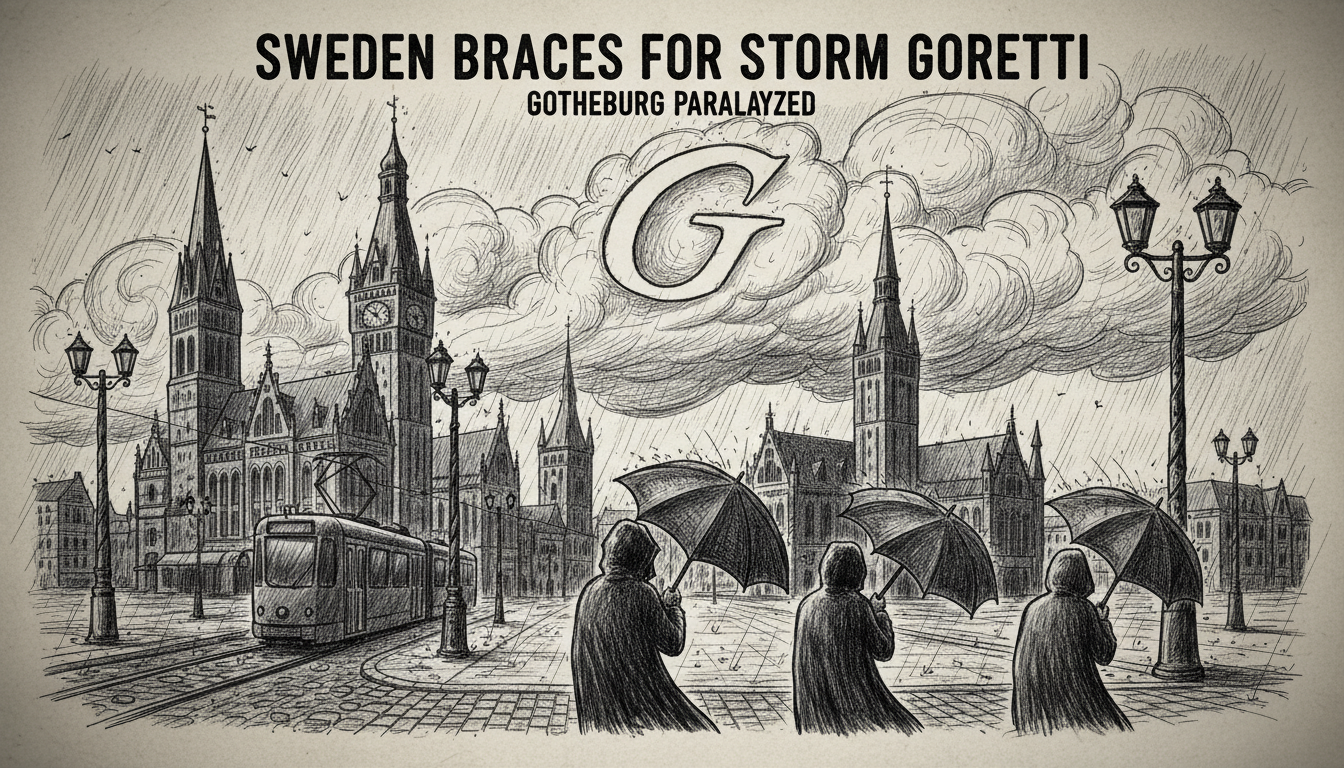
Sweden's second city, Gothenburg, is at a standstill. A sudden, heavy snowfall of up to 20 centimeters (8 inches) paralyzed public transport and blanketed the city on Wednesday morning. Now, residents are bracing for the next blow: Storm Goretti is expected to sweep in from the west by late afternoon. The Swedish Meteorological and Hydrological Institute (SMHI) has issued an urgent orange warning for the region, signaling a high risk of severe disruption and danger.
"It's simply too dangerous to drive. It's a difficult situation right now," said Frida Antonsson, a press spokesperson for the public transport operator Västtrafik. Her statement came as buses, trams, and ferries across the city were largely suspended. For a city that prides itself on efficient, year-round transit, the shutdown was a stark reminder of nature's power. In neighborhoods like Haga and Linnéstaden, normally bustling with commuters, the streets were unusually quiet, filled only with the soft crunch of snow underfoot.
A City Grinds to a Halt
The morning's snowfall was intense and localized, catching many off guard. While winter storms are not uncommon in Sweden, the rapid accumulation in a major urban center creates unique challenges. Sidewalks became treacherous, and roads turned into slippery tracks. The decision by Västtrafik to halt services wasn't taken lightly. It reflects a core Swedish principle of trygghet – safety and security. When risk outweighs reliability, the system stops. This left thousands of Gothenburg residents working from home, taking a vab day to care for children whose schools were affected, or simply waiting it out.
Local businesses felt the immediate impact. Cafés in the historic Haga district, usually full of patrons enjoying fika, saw a trickle of customers. Delivery services warned of long delays. The scene was a classic Swedish winter tableau, but with a tense undercurrent. People stocked up on essentials, a practice Swedens call stormfika preparation, ensuring they had coffee, candles, and food to ride out the worst. "We've seen this before, but the speed of it this morning was something else," noted Erik Lundgren, a shop owner on Andra Långgatan. "Now we're just waiting for this Goretti."
The Science Behind the Storm
Storm Goretti, named by the UK Met Office, has traveled a long path. It developed over the Atlantic, swept across Great Britain and Denmark, and is now poised to hit Sweden's west coast. Meteorologist Kjell Lund at SMHI provided a characteristically understated yet grave assessment. "It will bring some fresh winds," he said. In Swedish meteorological terms, this often means gusts strong enough to cause damage, compound existing snowdrifts, and create blizzard conditions.
An orange warning from SMHI is a serious alert. It sits just below the most severe red level and advises the public that dangerous weather is highly probable. It prompts authorities to activate contingency plans and urges citizens to avoid unnecessary travel. The warning for Goretti specifically highlights the risk of combined hazards: high winds following fresh, loose snow. This can lead to near-zero visibility, downed trees and power lines, and significant wind chill, increasing the risk of frostbite for anyone caught outside.
Life in a Storm-Prepared Nation
How does a society like Sweden respond? The approach is systematic, rooted in both technology and social trust. SMHI's forecasts are disseminated rapidly through apps, websites, and media. Municipalities have detailed snow-clearing plans, prioritizing main arteries and public transport routes. There's a shared cultural understanding: when authorities issue a warning, people generally heed it. This social contract minimizes panic and allows emergency services to focus on the most critical tasks.
Yet, even the best preparations can be tested. The consecutive nature of this event—snowfall followed immediately by a storm—creates a compounding effect. Snowplows working to clear the morning's fall might be obstructed by high winds and new drifts. Restoring public transport becomes a game of cat and mouse with the weather. "The challenge is the sequence," explains transportation analyst Lena Forsberg. "We can handle snow. We can handle wind. But handling both, in quick succession, strains every part of the system from the logistics centers to the person driving the bus."
The Human Stories in the Snow
Beyond the infrastructure and warnings, the storm is a series of personal stories. For parents, it meant improvised childcare and remote work. For the elderly, particularly those living alone, it underscored the importance of community check-ins, a practice strongly encouraged by Swedish municipalities. For new arrivals to Sweden, experiencing their first major Swedish storm, it was a rapid immersion in Nordic winter resilience.
At Gothenburg's Central Station, a quiet tension replaced the normal rush. Travelers stared at departure boards filled with cancellations. Some debated the risk of trying to drive, while others settled in with a book, embracing the lagom principle of accepting the situation calmly. The storm, in a way, forces a collective pause, a sudden shift from the rhythm of modern life to a more basic focus on shelter and safety.
Looking Ahead: An Unpredictable Season
Storm Goretti arrives as part of a variable winter season. While Sweden is no stranger to harsh weather, meteorologists note that the intensity and tracking of North Atlantic storms can be influenced by broader climate patterns. This doesn't mean every storm is directly linked to climate change, but a warming atmosphere can hold more moisture, potentially leading to heavier precipitation events, whether rain or snow.
The immediate future for Gothenburg involves a careful dance with the elements. As Goretti arrives Wednesday evening, emergency services will be on high alert. Power companies are prepared for outages. The true test will come overnight and into Thursday morning, as the city assesses the damage and begins the massive cleanup operation. The goal is not just to clear the streets, but to restore the vardags—the everyday rhythm—as quickly as possible.
For now, the advice from officials remains clear: stay indoors if you can, avoid travel, and follow updates from SMHI and local authorities. The storm will pass, as they always do. The snow will eventually be plowed into neat mounds along the streets of Majorna and Örgryte. The trams will resume their familiar rumble through the city center. But for one long day and night, Gothenburg is reminded of its place in a larger, wilder system. The community's response, a blend of advanced planning, social responsibility, and quiet patience, is perhaps the most Swedish thing of all. As the wind picks up and the lights flicker, the city hunkers down, waits, and proves that even when paralyzed, it is far from powerless.