
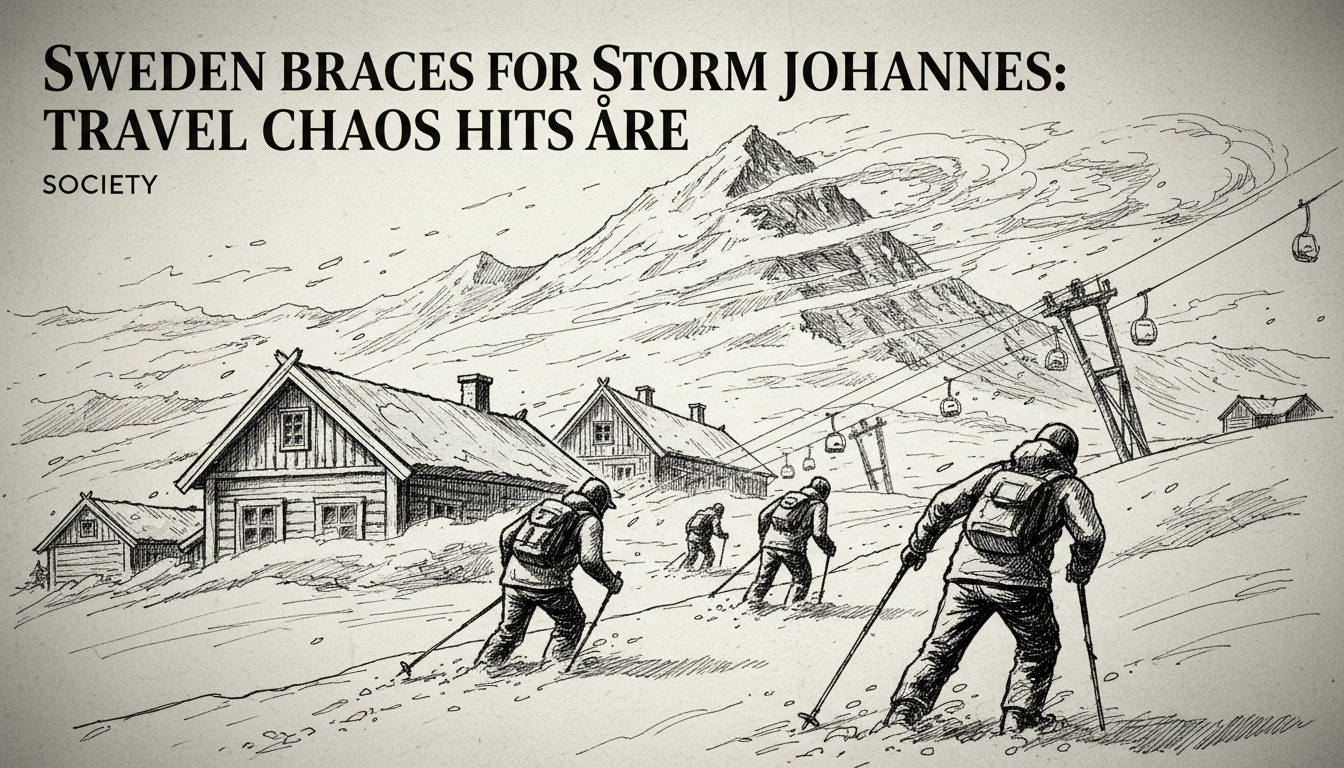
Sweden's western mountains are bracing for a direct hit from Storm Johannes this Saturday. The Swedish Transport Administration, Trafikverket, has issued urgent warnings for major travel disruptions. Heavy snowfall and powerful winds are forecast for the Åre-Östersund region, threatening to fell trees and create treacherous roads. In a significant preemptive move, all train traffic between Bräcke and Storlien has been halted, severing a crucial link for travelers heading to the famed Åre ski resort.
The tension is palpable in Åre's bustling town center. Hotel lobbies are filled with guests anxiously checking weather apps. Rental shops see a steady stream of skiers collecting equipment a day early. "We came for a perfect weekend of spring skiing," says Elias Berg, a visitor from Stockholm. "Now we're watching the sky and hoping the roads stay open long enough for us to get here safely. It’s a different kind of adventure." This sentiment echoes across the region, where a planned holiday quickly turns into a waiting game against nature's force.
A Proactive Shield Against the Snow
Trafikverket isn't waiting for the storm to strike. The agency has mobilized its resources, strategically positioning three heavy-duty snow blowers in the Åre-Östersund area. This equipment is essential for keeping mountain passes clear. Their warning is stark: expect significant impacts on road accessibility. The combination of dense, wet snow and gusts of wind creates a perfect recipe for white-out conditions and icy surfaces. For a country adept at handling winter, the specific intensity of this storm requires extra caution.
This preparedness is baked into Swedish crisis management. "We have a system of early warnings and predefined action plans for a reason," explains Dr. Lena Falk, a climatologist at Uppsala University. "The goal is never to be surprised. For storms like Johannes, the key is communicating clearly to the public and positioning resources where the models show the greatest need. It's a logistical ballet performed well before the first snowflake falls." This approach minimizes last-minute chaos and helps prevent drivers from becoming stranded on remote highways.
The Lifeline to Åre is Severed
The decision to stop train traffic on the Mittbanan line between Bräcke and Storlien is a major blow. This railway is the backbone of transportation for the popular Jämtland region, especially for tourists traveling sustainably to Åre. Cancellations cause a ripple effect, forcing hundreds to seek alternative transport or postpone their trips entirely. For locals, it disrupts commuting and the flow of goods.
The station in Åre, typically alive with arriving visitors, is quiet. Announcements about the suspension play on a loop. "The safety of passengers and staff is paramount," a Trafikverket spokesperson said in a statement. "When we face predictions of this magnitude, preemptive cancellation is the responsible choice. It allows everyone to make new plans safely." The line will remain closed until engineers can inspect the tracks and clear any snowdrifts or debris after the storm passes.
Beyond Logistics: A Cultural Pause
There's a unique cultural dimension to Swedish weather events. They force a collective pause, a moment of gemytlighet or cozy solidarity, often against a backdrop of dramatic nature. In mountain villages, neighbors check on one another. Families stock up on candles and fika supplies. The storm, while disruptive, underscores a deep-seated resilience and respect for the environment. It's a reminder that despite advanced infrastructure, nature holds the final card.
This event also highlights the economic tightrope walked by seasonal towns. Åre's economy thrives on winter tourism. A major storm during a weekend can mean significant lost revenue for hotels, restaurants, and ski lifts. Many businesses adopt flexible cancellation policies during such warnings, prioritizing customer goodwill over short-term profit. "It's part of operating in the mountains," says Karin Lindström, who runs a lodge in Duved, near Åre. "We help guests rearrange their stays and hope they return. The mountains will still be here, and so will we, once Johannes moves on."
The Larger Pattern in a Changing Climate
Experts are keen to place Storm Johannes in a broader context. While Sweden is no stranger to harsh winter weather, the character of these events is shifting. "What we are observing is not necessarily more storms, but storms with greater intensity," Dr. Falk notes. "Warmer air holds more moisture, which can lead to heavier precipitation, whether as rain or snow. When that meets cold Arctic air, you get powerful dynamics." This pattern challenges existing infrastructure and demands continuous adaptation from agencies like Trafikverket.
Preparedness today must account for tomorrow's climate. This means reviewing the resilience of power grids, assessing road drainage, and reinforcing communication towers. The proactive steps taken for Johannes are a snapshot of this ongoing adaptation. It's a practical response to a global trend, played out on a local scale with real consequences for travel and safety.
Waiting for the Calm
As Saturday approaches, the focus remains on safety. Social media groups for the Åre region are filled with practical advice and updates. The Swedish Meteorological and Hydrological Institute provides constant updates. The atmosphere is one of watchful readiness, not panic. In a sense, the storm has already achieved one thing: it has united a dispersed community of residents, travelers, and officials in a common purpose.
Back in his Åre hotel, Elias Berg looks out at the still-calm slopes. His ski weekend has transformed. "Maybe we'll have a story to tell instead of just ski runs logged," he muses. "That's Sweden in the winter, right? Beautiful, but always on its own terms." The true test will come as the winds pick up and the snow begins to fall in earnest. For now, the country watches, waits, and prepares for whatever Storm Johannes brings.