
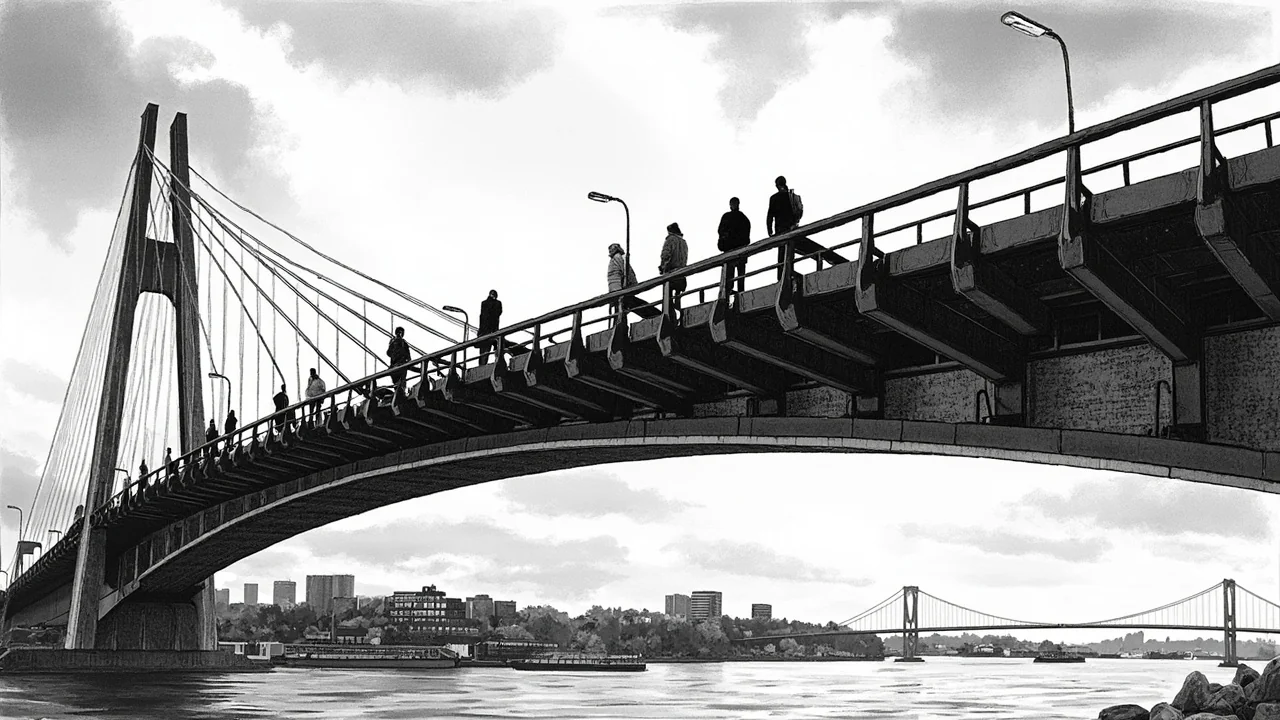
Sweden's Hisings Bridge suffered two critical traffic stoppages in a single day due to contracting steel and a sensor failure. The shutdowns on Sunday, February 18th, halted thousands of vehicles on the crucial link between Gothenburg and the island of Hisingen. The immediate technical cause was a safety sensor blinded by accumulated snow and ice, triggered by steel components physically contracting in sub-zero temperatures. This event exposes vulnerabilities in Sweden's critical national infrastructure amid increasing climate volatility.
A Critical Chokepoint Frozen
Hisingsbron is a vital traffic artery in Sweden's second-largest city, carrying an average of 70,000 vehicles daily. The dual bridge system includes one of Europe's longest cable-stayed bridges. Its sudden closure creates immediate gridlock across Gothenburg's road network. Sunday's first stoppage lasted approximately 30 minutes during the morning, with a second, longer closure occurring in the afternoon. Traffic management centers were forced to reroute flows through the heavily congested Tingstad and Älvsborg tunnels. The Swedish Transport Administration (Trafikverket) issued urgent alerts through national systems, advising drivers to avoid the area entirely.
Local authorities expressed frustration over the recurring nature of such disruptions. "When a main artery like this fails, the entire circulatory system of the city seizes up," said a Gothenburg city traffic planner who requested anonymity. The economic impact of these stoppages is significant, affecting logistics, public transport, and emergency service response times. Each hour of closure for a structure of this importance costs the regional economy millions of Swedish kronor in lost productivity and fuel.
The Technical Failure Explained
Preliminary findings point to a direct chain of causality. Exceptionally cold weather caused the steel in the bridge's expansion joints to contract more than standard operational parameters anticipated. This physical movement itself was within safe engineering limits. However, a key optical sensor designed to monitor this movement became covered in snow and ice, rendering it "blind." This sensor failure caused the bridge's automated safety system to default to its safest possible state: a full traffic halt.
"The system is designed to fail safely, and that is precisely what happened," stated a Trafikverket engineer in a technical briefing. "When the sensor cannot confirm safe operating conditions, the protocol is to stop traffic until a manual verification can be made." Engineers were dispatched to physically inspect the bridge joints and clear the sensor after each alarm. This process, from alarm to inspection to clearance, dictated the duration of each closure. The incident highlights a potential flaw in sensor placement or protection on critical infrastructure in harsh Nordic climates.
Infrastructure Policy Under Scrutiny
The incident immediately triggered scrutiny at the national policy level. The Swedish government has prioritized infrastructure maintenance, but focus often leans toward new construction. Opposition politicians in the Riksdag are likely to question the adequacy of operational maintenance budgets. "This is not just a local traffic issue," said Erik Lindqvist, Senior Political Correspondent. "It is a microcosm of the national debate on maintaining our existing infrastructure base against climate change and wear."
Policy documents from the Ministry of Infrastructure emphasize resilience, yet implementation relies on Trafikverket's allocated funding. Recurrent faults at key chokepoints like Hisingsbron suggest a possible gap between policy goals and practical, weatherized engineering. The government's upcoming spring budget amendment could face calls for earmarked funds for climate-adaptation retrofits on existing bridges. Such decisions in the Riksdag building directly impact the reliability of daily life for millions of Swedes.
A Recurring Problem Demands Systemic Solutions
This was not an isolated incident. Hisingsbron has experienced similar weather-related stoppages in previous winters. Each event follows a near-identical pattern: extreme cold, sensor malfunction, and systemic shutdown. This repetition points to a diagnosed but unsolved problem. Engineers note that simply hardening the sensors against ice buildup is a technically straightforward solution. The delay in implementing such a fix raises questions about bureaucratic procurement processes or budget prioritization within the state's infrastructure agency.
"We need to move from reactive to proactive maintenance," argued an infrastructure analyst from the Swedish National Road and Transport Research Institute (VTI). "Climate data shows winters are becoming more volatile, not less. Our systems must be engineered for the new reality, not the historical averages." This requires investing in newer monitoring technologies, such as self-heating sensors or redundant measurement systems, which may have higher upfront costs but prevent far more costly closures.
The Road Ahead for Swedish Resilience
The Hisingsbron failure serves as a stark reminder. Sweden's sophisticated infrastructure remains vulnerable to basic environmental forces. For the Swedish government and Trafikverket, the path forward involves a technical fix for this specific sensor and a strategic review of similar vulnerabilities nationwide. The political dimension will play out in Stockholm, where Riksdag decisions on infrastructure funding are made. Will policymakers allocate resources to unglamorous but vital sensor upgrades, or wait for the next crisis?
Ultimately, the measure of a nation's infrastructure is not how it performs on a clear day, but how it withstands predictable stress. Two stoppages on a Sunday in Gothenburg are a warning signal. The response from Rosenbad and the Riksdag will determine whether this signal is heeded or ignored. The reliability of Sweden's transport network depends on learning these cold-weather lessons before the next deep freeze arrives.