
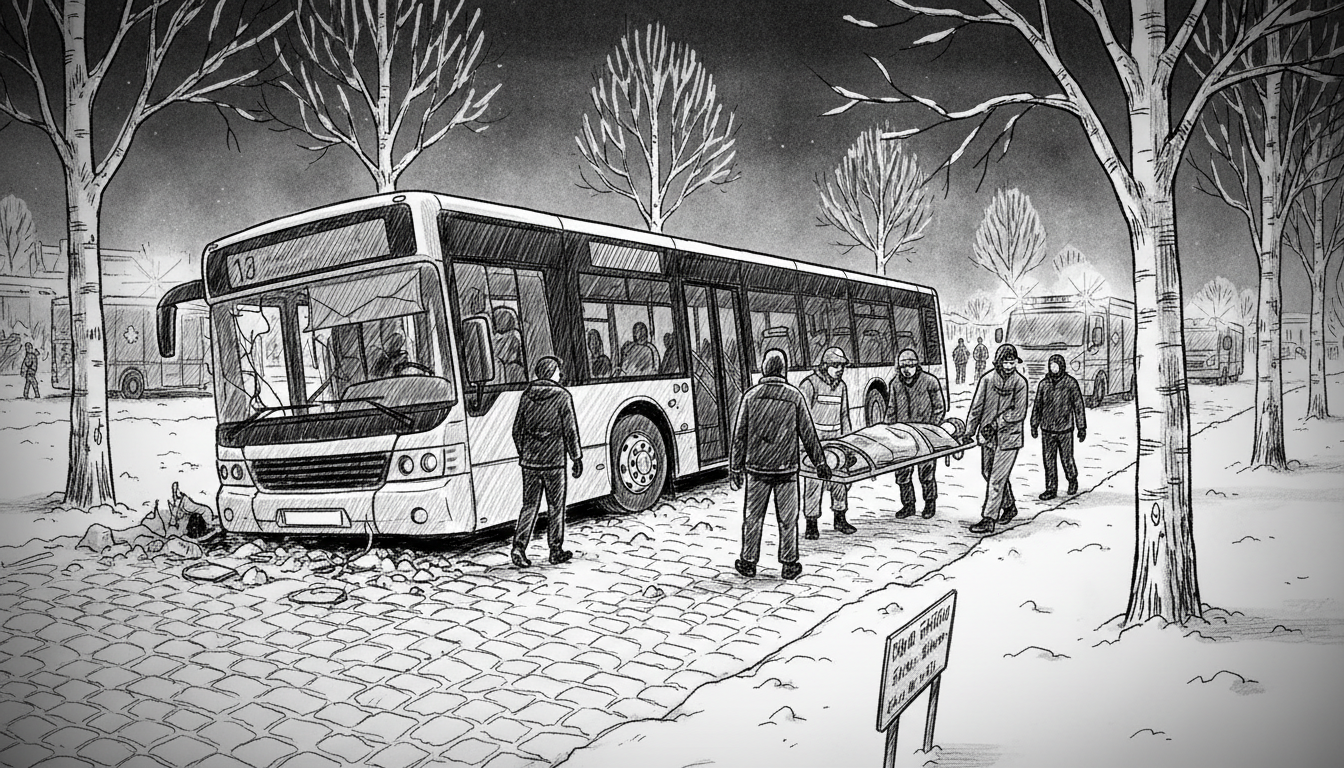
Sweden's capital was shaken by a serious bus accident on Tuesday. A public bus veered off the road and crashed into a building in the Liljeholmen district of southern Stockholm. The incident left 16 people injured, two of them seriously, according to initial reports from Region Stockholm. The bus driver was airlifted to a hospital by helicopter ambulance, marking a dramatic escalation in the emergency response.
Police spokesperson Ola Österling described the scene to reporters. “The road curves and the bus went straight ahead,” he said. Authorities have launched a criminal investigation to determine the exact cause of the crash. The extent of injuries among passengers varies, officials confirmed, while the sequence of events leading to the collision remains unclear.
A Sudden Impact in a Busy Hub
The crash occurred in Liljeholmen, a densely populated district known as a major transportation nexus. The area blends residential apartment blocks with shopping centers and key bus and metro connections. It is typically bustling with commuters and families. Witnesses described a scene of sudden chaos, with the bus leaving the roadway and striking a building structure. The sound of the impact and the immediate activation of emergency services disrupted the ordinary afternoon flow.
First responders, including police and rescue services, mounted what police called an “extensive” operation. Their priority was to secure the area, treat the injured, and extract those who needed urgent care. The decision to dispatch a helicopter ambulance, or ‘ambulanshelikopter’, underscores the severity of the driver's condition. In Sweden, this resource is reserved for critical, time-sensitive medical emergencies, often involving long-distance transport to specialized trauma centers.
The Unanswered Questions
Why did the bus fail to navigate the curve? This is the central question for the ongoing police investigation. A criminal probe, rather than a simple traffic accident review, suggests authorities are examining potential factors beyond driver error. These could include technical failure, a medical incident involving the driver, or external interference.
Transportation safety experts point to a standard checklist investigators will follow. “In an incident like this, every element is scrutinized,” says Lars Bengtsson, a former traffic accident investigator with the Swedish Transport Agency. “The investigation will look at the vehicle's maintenance records, data from its onboard systems similar to a black box, road conditions at the time, and of course, the driver's hours and health status. In an urban area like Liljeholmen, witness statements and traffic camera footage are also invaluable.”
The road where the accident occurred is part of a well-traveled network. Initial weather reports did not indicate extreme conditions, but investigators will analyze the specific pavement quality and any potential obstructions on the day.
The Human Toll and Community Response
Behind the numbers—16 injured, two serious—are individual stories of a routine journey turned traumatic. Passengers on Stockholm's public buses are a cross-section of the city: students heading home, workers commuting, seniors running errands. An accident of this nature sends shockwaves through the local community, raising concerns about daily safety.
Public transportation is the lifeblood of Stockholm, a city built across islands. Residents place immense trust in the system's safety and reliability. Incidents like the Liljeholmen crash, while rare, challenge that trust and prompt urgent public questions. Social media channels in Stockholm were quickly filled with concern and shared information as news of the crash spread.
Local politicians and transport officials are likely to face calls for transparency as the investigation proceeds. The bus operator, part of Stockholm's complex web of public transit contracts, will be under scrutiny. The company is expected to cooperate fully with police and transport authorities.
Safety Under the Microscope
Sweden prides itself on its ‘Vision Zero’ approach to traffic safety, aiming to eliminate all road fatalities and serious injuries. This philosophy extends to public transport. Bus safety involves rigorous driver training, strict regulations on working hours to prevent fatigue, and regular vehicle inspections.
“The Swedish system is designed to be preventative,” explains Anna Karlsson, a researcher in transport safety. “When a serious incident occurs, it triggers not just an investigation into the ‘what’, but a deeper analysis of the ‘why’. The goal is to see if there is a systemic flaw that needs addressing, whether in training protocols, vehicle design, or route planning.”
The criminal investigation led by police will run parallel to a safety review by transport authorities. Their findings could lead to new recommendations or immediate safety directives for bus operators across the Stockholm region and beyond.
Looking Ahead: Recovery and Answers
For the injured, the path ahead involves physical and potentially psychological recovery. The two seriously injured passengers and the helicoptered driver will require significant medical care. The others will be dealing with the shock and aftermath of a violent collision.
For Stockholm's residents, the coming days will be about seeking answers. The police investigation may take weeks or months to conclude, depending on its complexity. Key pieces of evidence, like the bus's technical data, need careful analysis. Witness interviews must be conducted thoroughly.
The Liljeholmen crash is a stark reminder of how fragile daily safety can be. It happened on an ordinary street, on an ordinary bus route, during an ordinary afternoon. As the blue and yellow buses continue to traverse Stockholm's streets, carrying thousands of people, the demand for a clear explanation and reinforced safety will only grow louder. The ultimate test of Sweden's safety culture is not just in preventing accidents, but in how it responds, learns, and adapts when the unthinkable happens on a curved road in Liljeholmen.