
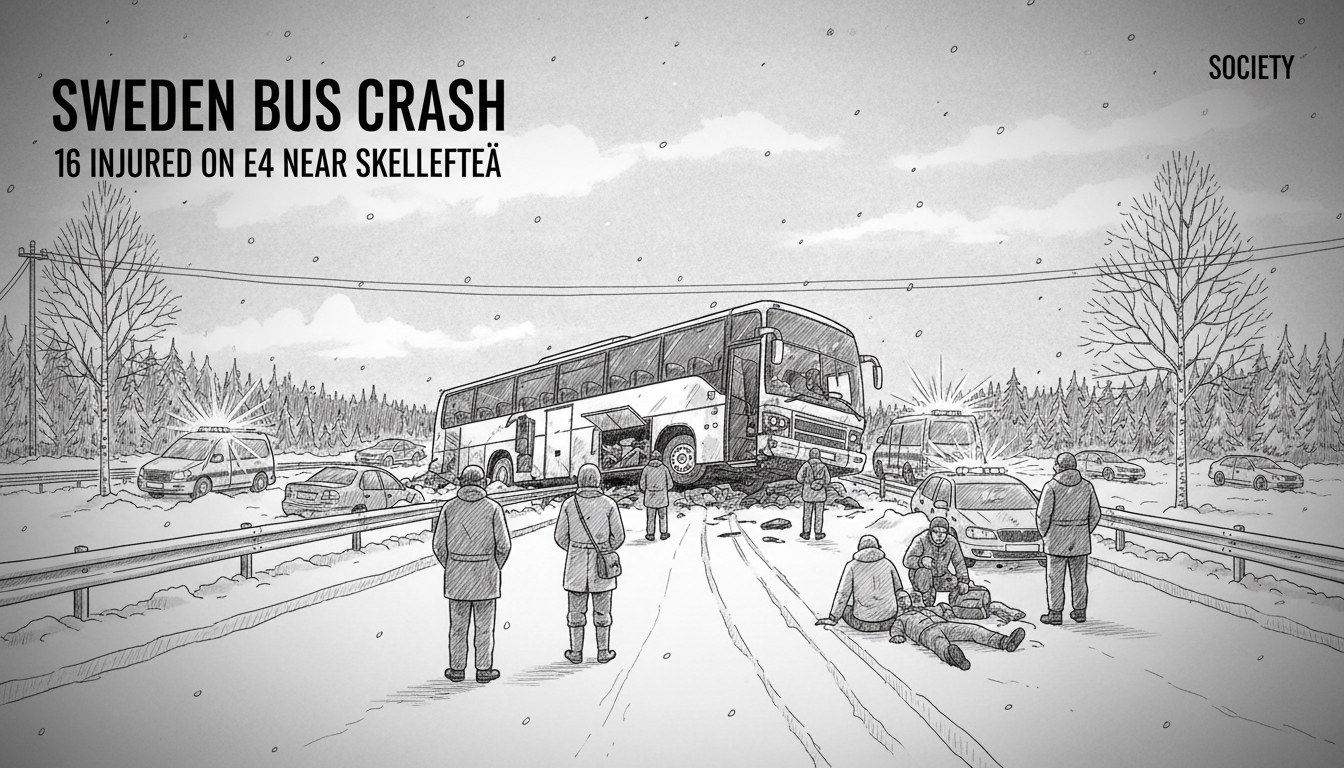
Sweden's E4 highway was the scene of a major accident today when a double-decker bus overturned south of Skellefteå. The crash, which occurred around lunchtime, sent 16 people to the hospital and triggered a major emergency response. The bus, carrying 48 people, veered into a ditch before two passenger cars crashed into it from behind. The incident has put a spotlight on road safety along this crucial northern artery.
A Chaotic Scene on a Major Highway
Emergency services rushed to the E4, a road familiar to anyone traveling Sweden's vast northern landscapes. The bus, identified as coming from Germany, lay on its side. Two cars were found in a ditch on the opposite side of the road. The scene was one of controlled chaos as first responders worked to extract and treat the injured. "Our primary focus was on securing the scene and providing immediate medical care," a police spokesperson said. The exact sequence of events leading to the bus leaving the road is now under investigation.
Local hospitals sprang into action. Region Västerbotten confirmed that Skellefteå Hospital activated its reinforcement protocol. This standard procedure in Sweden mobilizes extra staff and resources to handle a sudden influx of patients. It reflects the country's preparedness for mass-casualty events, even in more remote regions. The 16 injured individuals were transported for treatment. Their conditions were not immediately specified, but the activation of the hospital's emergency plan indicates the seriousness of the situation.
The E4: Sweden's Spine Faces Scrutiny
The E4 is more than just a road; it's the backbone of eastern Sweden. Stretching from Helsingborg in the south to Haparanda on the Finnish border, it connects cities, industries, and communities. For freight and travelers heading north to areas like Swedish Lapland, it is often the only major route. This makes any disruption significant, and any accident a major concern for authorities.
Road safety in Sweden is globally renowned, built on the Vision Zero policy that aims to eliminate traffic fatalities and serious injuries. The country has some of the lowest traffic death rates in Europe. Yet, northern highways like the E4 present unique challenges. Long, straight stretches can lead to driver fatigue. Weather in Västerbotten can change rapidly, with ice, snow, and strong winds appearing with little warning. Wildlife, especially moose, are a constant hazard.
"Accidents involving coaches, while rare, are complex due to the number of people involved," says Lars Åström, a retired traffic safety analyst based in Umeå. "The investigation will look at multiple factors: the driver's hours and condition, the vehicle's mechanical state, road conditions at that exact time, and potential external factors like an animal on the road or a sudden avoidance maneuver." He emphasizes that Swedish accident investigations are thorough, often taking months to conclude.
Community Response and Cultural Context
In a region like Västerbotten, community spirit runs deep. News of the accident spread quickly through local networks. The response embodies the Swedish principle of "dugnad"—a collective, voluntary effort to help in a crisis. While formal emergency services led the operation, the cultural instinct to pull together is always present. Local residents often provide initial assistance or support before official help arrives in remote areas.
Skellefteå itself is a city experiencing transformation, known for its Northvolt battery gigafactory and a surge in green technology investment. This has increased traffic on the E4, with more commercial and passenger vehicles moving through the region. The city balances its industrial future with a strong sense of local identity, where news of an accident affecting dozens resonates powerfully.
For the passengers, most likely tourists given the German bus, the experience is undoubtedly traumatic. Sweden's north is a popular destination for European visitors seeking the northern lights, wilderness, and the Midnight Sun. A journey that should have been filled with anticipation turned suddenly into a crisis. The Swedish healthcare system, known for its high quality, is now tasked with their care, while consular services likely assist with communication and support.
Looking Ahead: The Investigation and Safety
The immediate aftermath is about care and logistics. The next phase is about understanding. The Swedish Accident Investigation Authority may join the police probe, especially given the severity and vehicle type. They will examine the wreckage, download data from the bus's onboard systems, interview witnesses and the driver, and analyze road markings and weather reports.
This accident serves as a stark reminder. Even on the world's safest roads, danger exists. It raises questions for discussion: Are safety standards for international coach travel consistent across Europe? Are rest stop intervals adequate for long-haul drivers on Nordic roads? How does increased commercial traffic impact safety on two-lane highways in the north?
For now, the community's thoughts are with the injured. The highway will be cleared, traffic will resume its flow, and the investigation will continue quietly. But the image of the overturned bus on the E4 will linger, a sobering snapshot of how quickly a routine journey can change. It underscores the fragile human element behind every statistic on road safety, a reminder that the goal of zero casualties is not just policy, but a deeply human endeavor.