
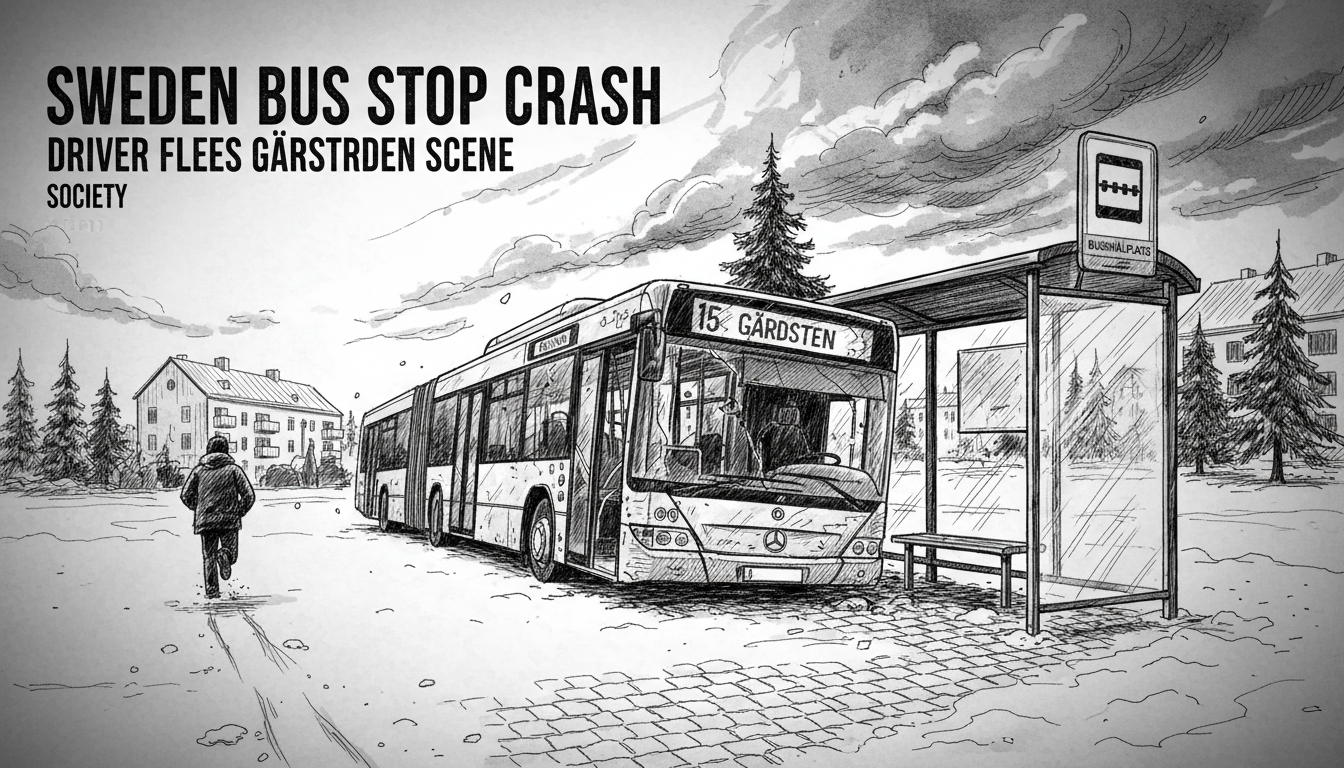
Sweden bus stop crash in Gothenburg's Gårdsten district left a 35-year-old man injured by glass shards on Monday afternoon. The driver who plowed a car into the shelter on Salviagatan initially fled, turning a simple traffic incident into a police pursuit. For the man waiting for his bus, the mundane act of commuting became a moment of sudden violence.
"There was a person sitting and waiting in the shelter when the car came speeding," said police spokesperson Jennifer Last. The incident was reported just before 1:30 PM. The waiting man sustained a foot injury from shattered glass but did not require hospital treatment. By 3:15 PM, police confirmed the driver had been apprehended. This brief event opens a window into larger questions of traffic safety, urban design, and life in Sweden's suburban neighborhoods.
A Neighborhood Built on a Grand Vision
Gårdsten is not just any suburb. It is a product of Sweden's ambitious Million Programme, a nationwide effort from 1965 to 1974 to build one million new homes. The goal was to solve a housing shortage with modern, affordable apartments for a growing population. The large concrete housing complexes in Gårdsten, built in the late 1960s and early 1970s, were symbols of a progressive, egalitarian society. Today, Angered—the larger district containing Gårdsten—is known for its vibrant multicultural community. It's a place where the ideals of the past meet the complex realities of modern Swedish society. A bus shelter here is more than a place to wait; it's a microcosm of the community where people from all walks of life cross paths.
The Fragile Safety of Everyday Spaces
A bus stop is supposed to be a place of refuge. It offers shelter from rain, wind, and snow. Monday's crash violated that basic expectation. "You think you're safe just standing there," says Elias, a local resident who uses the Salviagatan stop regularly. "It makes you look at every car that passes a little differently." Traffic safety experts point to this as a critical issue. "The design of our public spaces must account for human error and failure," says traffic safety analyst Markus Lindgren. "This includes considering the placement of shelters, the use of protective barriers, and traffic calming measures on adjacent roads." While the exact cause of this crash is under investigation, it highlights a universal vulnerability. Similar incidents, though rare, have occurred in other Swedish cities, prompting reviews of how infrastructure protects pedestrians.
Flight and Accountability
The driver's decision to leave the scene changed the narrative. What might have been recorded as a simple accident became a case of failing to stop after a traffic accident. This shift is significant in the Swedish legal context. "Staying at the scene is a fundamental responsibility," explains legal commentator Anna Pettersson. "Fleeing escalates the seriousness and can lead to charges of reckless driving or even aggravated traffic offense, depending on the circumstances." For the victim and witnesses, the flight likely compounded the trauma. It transforms an accident into an act of abandonment. The swift work by Gothenburg police to secure the driver within two hours is a standard but crucial procedure, aiming to restore a sense of order and accountability.
Life in the Suburbs: Beyond the Headlines
When news breaks from areas like Gårdsten, it can sometimes be filtered through outdated stereotypes. The reality is a community of over 10,000 people with schools, businesses, and strong social ties. "There is a narrative that is quick to attach itself to certain postcodes," says community organizer Fatima Hassan. "An accident happens, and suddenly it's a story about a 'problem area.' But this is about a driver, a road, and a bus stop. It could happen in Östermalm or in Gårdsten. The people here are just as shocked and concerned as anyone would be." The incident on Salviagatan is, first and foremost, a traffic safety event. Its location in a Million Programme area invites broader discussion, but the primary facts remain universal: a vehicle, a pedestrian space, and a failure of safety.
The Unseen Impact on Community Trust
The psychological impact of such an event ripples outward. Trust in the safety of public infrastructure is quietly damaged. Parents might think twice about letting older children wait alone for the bus. Elderly residents could feel a new sense of vulnerability. "It's these small, everyday spaces that make a city function," says urban sociologist David Berg. "When their safety is compromised, it doesn't just cause physical injury. It can create a low-level anxiety that affects how people use their own neighborhood." Restoring that trust requires transparency from authorities and perhaps a visible review of safety at similar spots. For the 35-year-old victim, the physical injury may heal quickly. The memory of the car coming "speeding" toward him, as police described it, may linger far longer.
Looking Ahead: Safety in the Details
What happens next? The police investigation will determine the cause—whether it was a medical episode, distraction, speeding, or something else. The municipality's traffic office will likely assess the site. The broader question for Gothenburg and other Swedish cities is how to proactively protect these vulnerable nodes in the transit network. This might involve more robust shelter designs, better lighting, or strategic placement further from the curb. It also involves continuous work on driver behavior. As Sweden pushes its Vision Zero goal to eliminate traffic fatalities and serious injuries, it's the safety of the person on foot, waiting for a bus, that truly tests the commitment. The Gårdsten crash is a stark reminder that progress is measured not only on highways but on quiet suburban streets.
Ultimately, this story is about a split-second event that disrupted a Monday afternoon. It connects to Sweden's history of urban planning, its ongoing challenges with traffic safety, and the daily rhythms of life in its diverse suburbs. The repaired bus shelter on Salviagatan will once again fill with people waiting, watching the traffic go by. They will hope that this was a bizarre exception, not a sign of things to come. The true measure of the response will be how safe they feel when the next rain begins to fall.