
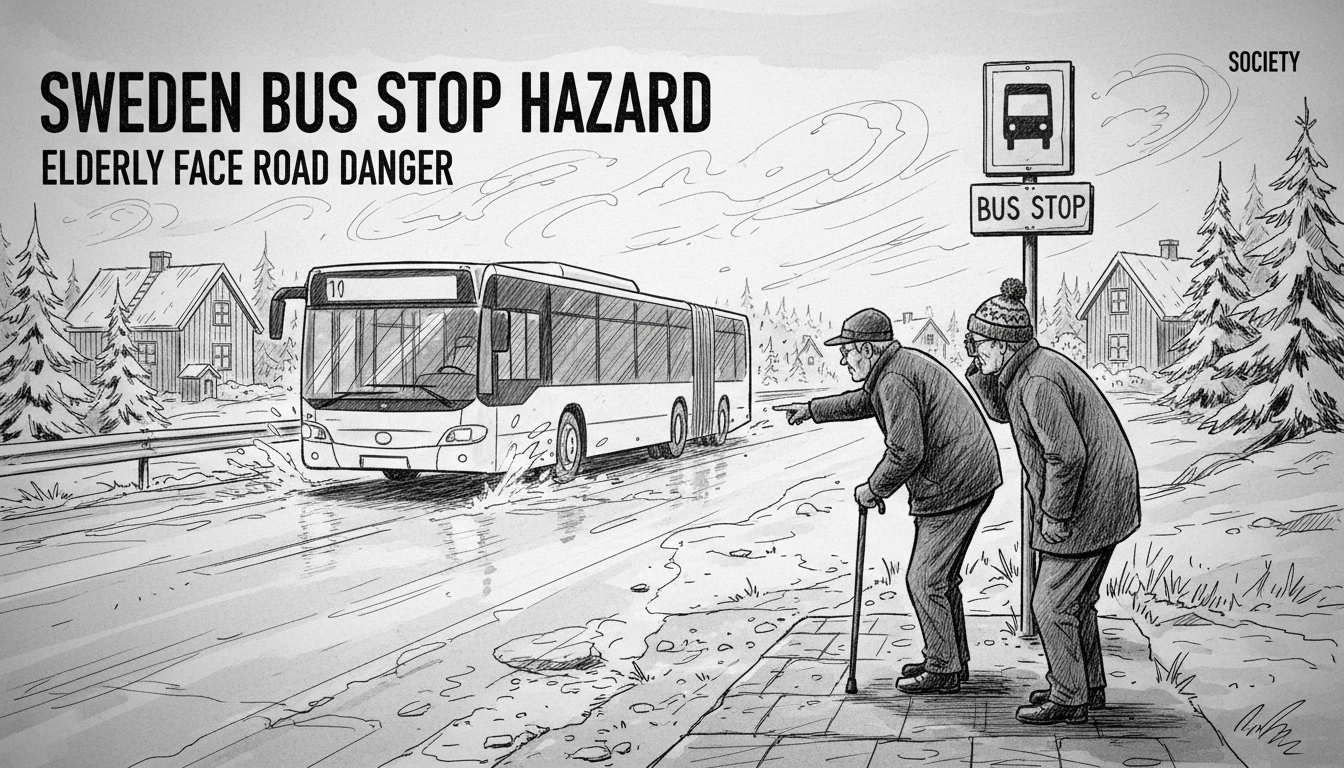
Sweden public transport safety is facing a winter reckoning. Maud Söderberg, 80, knows this all too well. She recently stepped off her bus in a Stockholm suburb and plunged directly into a thick, brownish blanket of snow covering the road. Cars slid past in both directions. Snow sprayed from their wheels. 'I fell straight down,' she says. 'Then I couldn't get up. I wasn't hurt, thankfully, but I had to crawl to the bus shelter.'
Her experience is not an isolated incident. It highlights a critical seasonal failure in a nation that prides itself on efficiency and social welfare. Each winter, the simple act of catching a bus becomes a risky endeavor for many, especially the elderly and those with mobility aids. Maud, who has lived in her area for 52 years, says nothing has changed despite her complaints.
A Routine Trip Turned Risky
The bus stop in question sits along a road partially cleared of snow. A dense layer of compacted snow and ice remains, with little gravel for grip. When buses pull over, passengers like Maud must step directly into the traffic lane. There is no cleared path to the sidewalk. For someone with a walker or in a wheelchair, this scenario is impossible. 'I think of those who have difficulty getting around and those with rollators,' Maud notes. Her quiet suburb, once a symbol of accessible living, now feels neglected.
This problem taps into a core Swedish value: 'trygghet,' or security. The social contract feels broken when daily routines become dangerous. In Stockholm, where winter darkness amplifies risks, safe public transport is not a luxury. It is a necessity for community connection and independence.
Who Is Responsible for the Snow?
The responsibility for winter road maintenance in Sweden is split. Municipalities typically handle local streets and sidewalks. The Swedish Transport Administration manages state-owned roads. Public transport operator SL is responsible for buses and trains, but not always for the infrastructure around stops. This division often creates gaps. No single agency takes full ownership for the safety zone where the bus meets the road.
Maud has contacted both her municipality and SL. The response, she says, has been slow. 'It still hasn't gotten better,' she states. This bureaucratic passing of the buck is a common frustration in Swedish society. As populations age, the demand for seamless, accessible services grows. The system is struggling to keep up.
The Chilling Statistics Behind the Slip
National data underscores the urgency. In 2022, 244 people died in traffic accidents across Sweden. While not all are linked to winter conditions, a 2018 report from the Swedish National Road and Transport Research Institute (VTI) pinpointed winter maintenance as a key challenge for vulnerable road users. Icy surfaces significantly increase fall risks for pedestrians. For the elderly, a fall can mean a loss of confidence, serious injury, or a forced end to living independently.
These numbers are not just cold facts. They represent real people facing preventable dangers. In a country with a national strategy for 'vision zero' traffic fatalities, the hazards at bus stops present a clear blind spot.
Experts Call for Universal Design
Transportation safety experts stress the need for a collaborative, proactive approach. 'Universal design principles are essential,' says one Stockholm-based urban planner I spoke with. 'We must plan environments for everyone, from children to the elderly. This means assessing bus stops for winter risks long before the first snow falls.'
The ideal solution involves SL and municipalities working together to identify high-risk locations. These are often stops frequented by older residents or near care homes. Measures can include better placement of shelters, immediate snow clearance protocols, and anti-slip surfaces. The cost of prevention is far lower than the human and healthcare costs of accidents.
A Community's Growing Anxiety
Maud's story has resonated locally. Other residents in her neighborhood share similar concerns. They talk of missed medical appointments and growing isolation during winter months. The bus is a lifeline. When it becomes a source of fear, community well-being suffers. This trend echoes across Swedish cities and towns. It reflects a broader societal test: adapting urban spaces for an aging demographic while maintaining the famed Swedish quality of life.
Cultural events like the Stockholm Winter Festival or the cozy tradition of 'fika' mean little if people cannot safely travel to enjoy them. Accessibility is the foundation of an inclusive society.
Looking for a Thaw in Accountability
What happens next? Maud continues to hope for change. She represents a persistent, polite demand for better service—a very Swedish form of advocacy. Authorities have the tools and knowledge to fix this. The question is one of priority and budget. Will municipalities and SL invest in making every bus stop safe year-round?
The coming weeks will be telling. As winter persists, so will the risks. Sweden's reputation for functional infrastructure is on the line. For Maud and thousands like her, the solution is simple: a clear path from the bus door to the sidewalk. It’s a basic expectation in a modern society. Until it is met, the snow-covered wait at the bus stop remains a stark symbol of a promise unfulfilled. How many more must fall before we see action?