
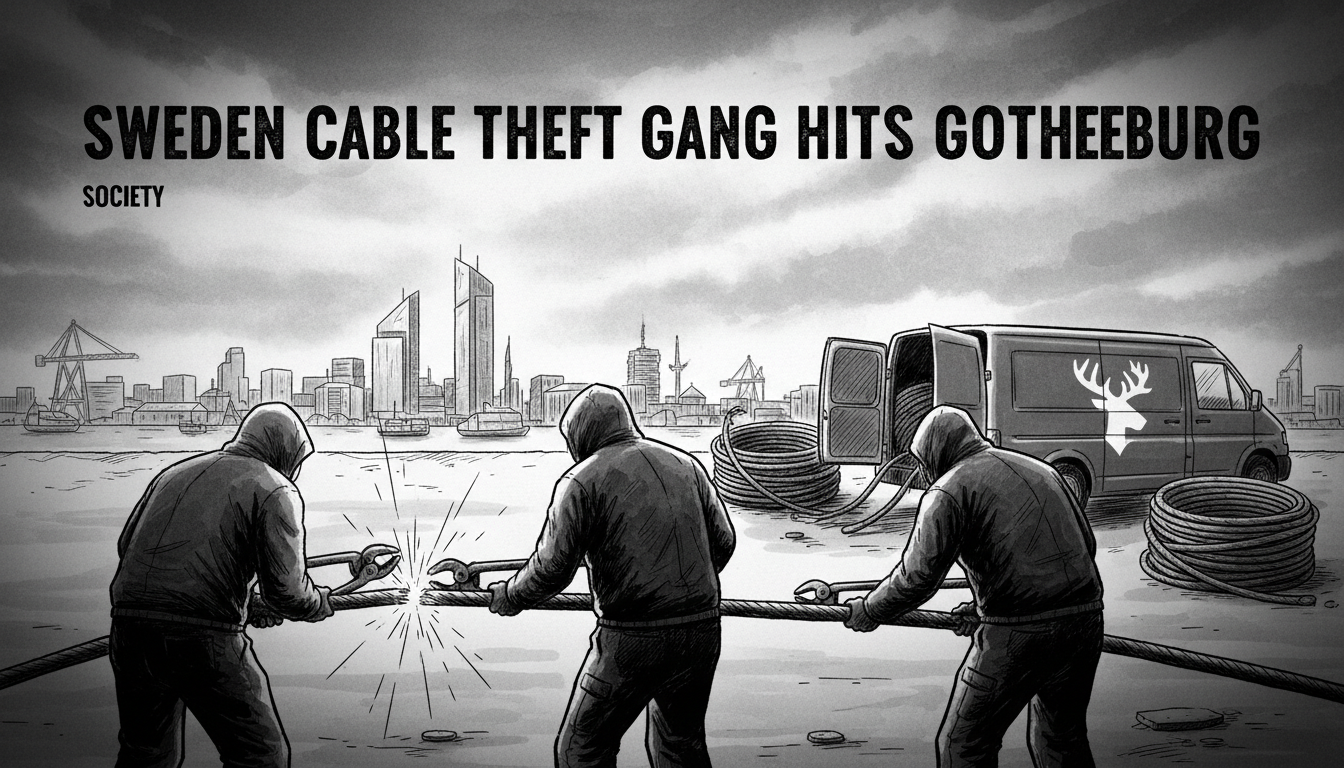
Swedish police are investigating a brazen cable theft operation where criminals, disguised as municipal road workers, blocked streets and stole valuable infrastructure cables in broad daylight across Gothenburg. The coordinated thefts, described by authorities as a matter of national security, targeted critical underground systems, causing significant disruption and financial loss.
The incident unfolded not in shadowy back alleys, but on public streets in several Gothenburg districts. Residents and commuters saw what appeared to be a standard road maintenance crew. The workers wore high-visibility vests. They set up legitimate-looking traffic cones and signs. They operated in plain sight during daytime hours. This audacious disguise provided perfect cover for accessing underground cable ducts and cutting out lengths of valuable metal cabling.
Senior police officer Ulf Andreasson stated the thefts directly impact national security. 'This has to do with the security of the realm,' Andreasson said in a statement. His stark wording underscores the severity. The stolen cables are not mere scrap metal. They are part of the lifelines for telecommunications, data networks, and possibly power distribution. Their loss can cripple services for thousands of people and businesses.
A Costly and Disruptive Crime Trend
Cable theft for copper and other metals is a persistent plague in Sweden. It causes millions in damages annually. The true cost far exceeds the metal's scrap value. Repair crews must locate the damage, excavate, and install new infrastructure. Businesses lose productivity during outages. Emergency services can face communication hurdles. For residents, it means sudden loss of internet, phone, or television.
The Gothenburg thefts represent an escalation in boldness and organization. Previous thefts often targeted isolated, rural areas or poorly guarded construction sites. This operation moved into urban zones. It employed sophisticated social engineering by mimicking official work. This method defeats casual observation and delays reporting, giving thieves more time to operate.
Exploiting Public Trust in Broad Daylight
The choice of disguise is culturally significant. In Sweden, high-visibility vests symbolize official authority and public service. People trust individuals wearing them. They represent the municipal system working as it should. Criminals exploited this inherent trust. They turned a symbol of order into a tool for chaos.
Local reactions in areas like Gamlestaden and the city's industrial harborside districts mix anger and unease. 'It's frightening they could be so brazen,' said one local shop owner who asked not to be named. 'You see road work all the time. You never think it might be fake. It makes you doubt everything you see.' This erosion of trust is a secondary, insidious effect of the crime.
Expert Analysis: A Sophisticated Network
Security analysts point to this event as a sign of highly organized criminal networks. 'This is not a couple of individuals with bolt cutters,' says Erik Lundström, a security consultant familiar with infrastructure protection. 'The planning, resources, and audacity suggest a professional group. They likely have a clear distribution chain for the stolen goods, often exporting metal quickly out of the country.'
Lundström highlights the vulnerability. 'Our critical infrastructure is widespread and often only protected by a simple manhole cover. Monitoring is sporadic. The business model for these thieves is very effective. Low risk of immediate interception and high reward from global metal prices.' He argues for smarter monitoring, including sensors on access points and faster response protocols for unauthorized work.
Law enforcement experts emphasize the cross-border nature of such thefts. Stolen cables are often processed quickly. The metal may be shipped abroad within hours. This requires coordination between Swedish police, customs authorities, and international agencies like Europol. The national security label from police elevates the priority for these cross-agency efforts.
The Broader Impact on Swedish Society
Beyond the immediate outage, these thefts hit at Sweden's self-image as a stable, orderly society. They reveal a vulnerability in the physical backbone of the digital nation. Many aspects of Swedish life, from remote work in suburbs to digital banking services, depend on reliable data cables. An attack on this infrastructure feels deeply personal and disruptive.
The event also puts a spotlight on the market driving the thefts. Global demand for copper and other metals remains high. As long as there are buyers who ask few questions, the thefts will continue. Some experts call for stricter controls on scrap metal dealers and tighter regulations on metal exports. This is a challenge that extends far beyond law enforcement into the realms of global trade and regulation.
Looking Ahead: Securing the Foundations
In response to this incident, infrastructure owners like Telia and Ellevio are likely to review physical security. Solutions may include more tamper-evident seals on access points, increased patrols, and community awareness campaigns. Police have likely increased surveillance on known scrap yards and export channels.
The ultimate solution is complex. It requires hardening physical targets, disrupting criminal networks, and dampening the illegal market for metals. For the average Swede, the advice is simple but unsettling: a degree of healthy skepticism. If you see road work that seems unusual, it is now considered a civic duty to call and verify its legitimacy.
The thefts in Gothenburg are a wake-up call. They prove that critical infrastructure is only as strong as its most vulnerable point. In this case, it was the public's trust in a high-visibility vest. As Sweden continues to digitize, protecting the physical layers of that system becomes ever more crucial to national security and daily life. How Sweden responds will test its ability to protect its societal foundations in an increasingly uncertain world.