
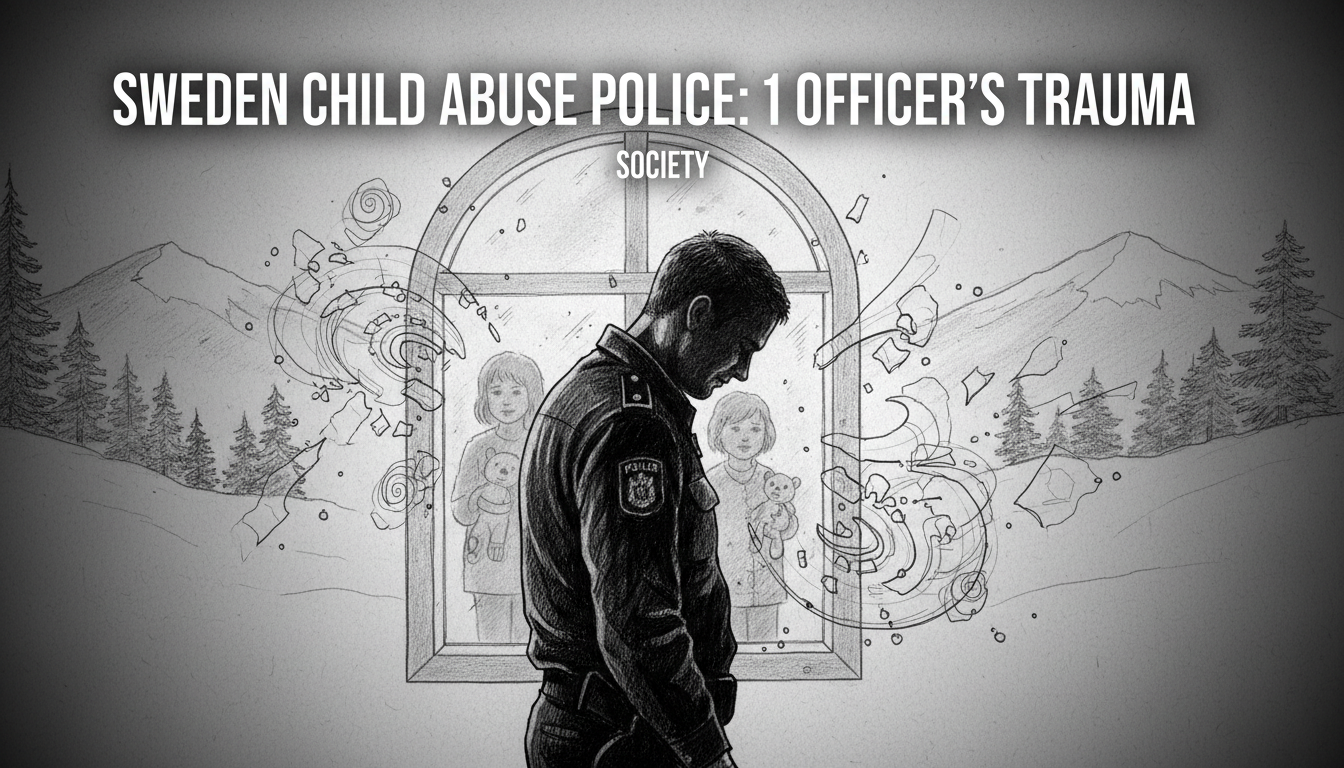
Sweden's police officers investigating child pornography face severe psychological risks, with a 2018 study showing that 89% report secondary traumatic stress. For Lars Uggla, a dedicated officer in Stockholm, this statistic is a daily reality. His work involves viewing horrific child abuse material to identify victims and perpetrators. 'It affects me incredibly much emotionally,' he says quietly, reflecting on the toll. His story highlights a hidden crisis within Swedish law enforcement, where the fight against online crime comes at a profound personal cost. This human impact is central to understanding the broader societal challenge.
A Day in the Life: The Weight of Evidence
Lars Uggla's shift might start in a nondescript office in Stockholm's police headquarters. His task is systematic and grim. He reviews videos and images, documenting details for investigations. Each file represents a real child's suffering. The emotional drain is immediate and cumulative. Officers like Uggla develop coping mechanisms, but the imagery lingers. 'You carry it home,' he admits. This isn't just police work; it's an ongoing confrontation with human depravity. Swedish culture often emphasizes lagom—balance and moderation. Yet here, there is no balance, only exposure to extreme harm. The unit operates quietly, its members bound by shared, unspoken trauma.
The Rising Tide: Sweden's Online Crime Surge
Reports of child pornography offenses in Sweden have increased significantly. According to the Swedish National Council for Crime Prevention (Brå), cases have risen by over 60% in the past five years. This spike reflects both greater online activity and improved law enforcement efforts. More material means more viewing for investigators. The digital age has globalized this crime, with Swedish police collaborating across borders. In Stockholm, tech hubs in Södermalm contrast sharply with the dark web activities they help combat. Society's push for digital innovation inadvertently fuels this shadow economy. Every new app or platform can be exploited, making the police's job ever more critical and overwhelming.
The Psychological Price: Data Behind the Trauma
Research underscores the severe impact. A 2018 study in the Journal of Police and Criminal Psychology found that officers exposed to child sexual abuse imagery report higher levels of secondary traumatic stress, anxiety, and depression. Symptoms include insomnia, intrusive thoughts, and emotional numbness. For Swedish police, this adds to the general stresses of law enforcement. The data is clear: prolonged exposure harms mental health. Officers may feel isolated, as discussing such content is difficult even with loved ones. This silent suffering can affect their personal lives, leading to relationship strains or burnout. It's a professional hazard that receives too little public attention.
Support Systems: How Sweden Copes
Swedish police management recognizes the need for mental health support. Resources include psychological debriefings, counseling services, and peer support groups. Experts from the International Association of Chiefs of Police (IACP) recommend regular rotations and mandatory therapy sessions. In Sweden, there's a growing cultural shift towards discussing mental health openly, akin to the popular fika coffee break tradition fostering connection. However, implementation varies. Some officers hesitate to seek help, fearing stigma. 'We need to normalize talking about this,' says a police psychologist based in Gothenburg. The Swedish model of strong social welfare is being tested within its own institutions.
Beyond Borders: International Collaboration
Swedish police units work closely with Europol and other international agencies. Child pornography is a global issue, and cross-border cooperation is essential. Swedish officers often assist in operations that span continents, from identifying victims in Asia to tracking distributors in Europe. This collaboration brings successes but also exposes officers to more material. The shared burden among nations highlights the universal challenge of protecting investigators' well-being. Sweden's approach, focusing on victim identification and perpetrator prosecution, is respected worldwide. Yet, the human cost of this work remains a common, underaddressed thread.
A Personal Toll: Lars Uggla's Emotional Journey
For Lars Uggla, the job is a calling. He believes his work saves children, providing a sense of purpose. But the emotional weight is ever-present. He describes moments of sadness and anger, balanced by small victories when a victim is rescued. His family in a Stockholm suburb offers solace, yet he shields them from details. This duality is common among investigators. Swedish society values privacy and resilience, but Uggla's story urges a reevaluation. How do we support those who confront evil to keep us safe? His experience mirrors trends in Swedish society where mental health is increasingly prioritized, yet professional silos persist.
Looking Ahead: Solutions and Cultural Shifts
The path forward requires systemic change. Increased funding for mental health resources within police departments is crucial. Training programs on vicarious trauma, informed by experts, should be standard. Sweden could lead by integrating these supports into its renowned welfare framework. Public awareness campaigns might help, similar to how Swedish culture openly discusses lifestyle and societal trends. Events like the Stockholm Mental Health Week could include segments on first responders' struggles. Ultimately, protecting officers like Lars Uggla isn't just about policy; it's about valuing human dignity in the fight for justice. As online crimes evolve, so must our care for those on the front lines. Will Sweden's progressive values extend fully to its protectors?