
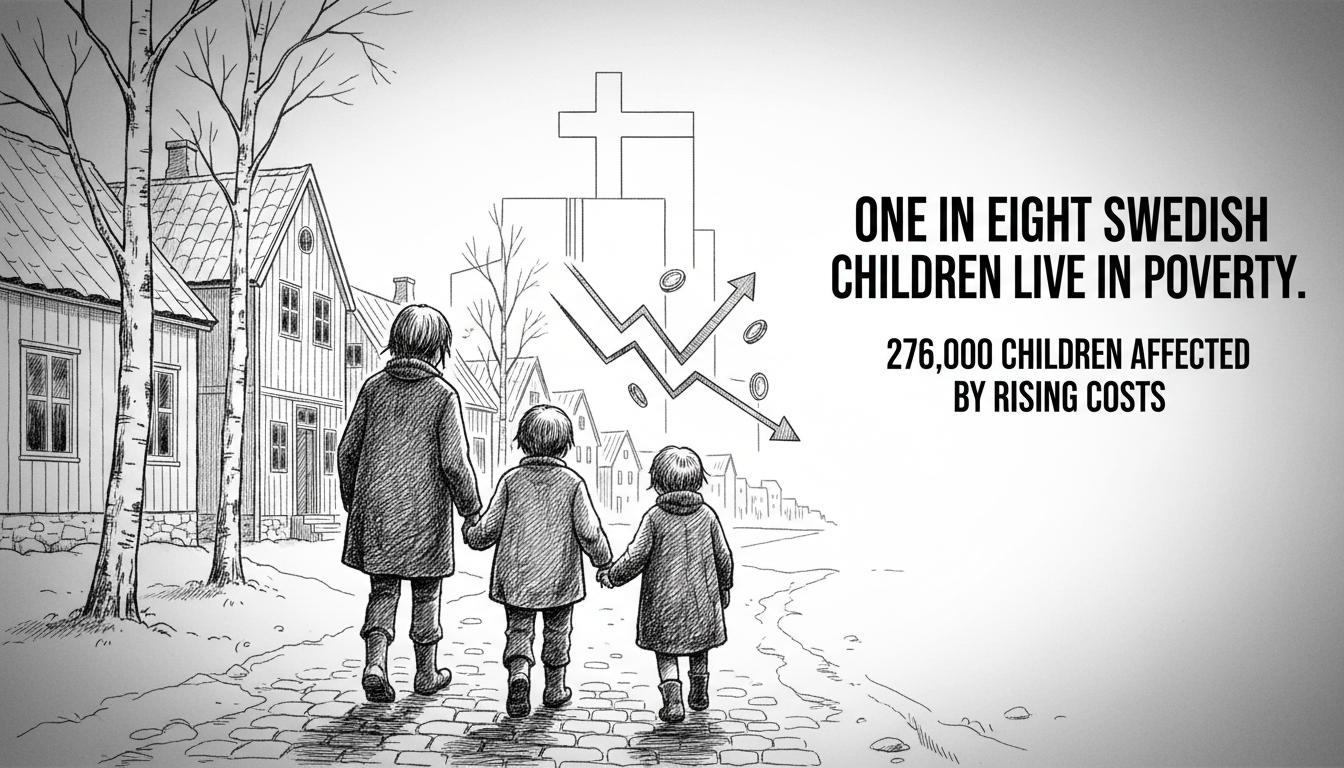
A new report reveals that one in eight children in Sweden now lives in poverty. This affects approximately 276,000 vulnerable children across the country.
The study points to several years of economic challenges as the primary cause. The pandemic was followed by rising inflation across Sweden. Families also face increased food and housing costs, unemployment, and real wage reductions.
"Recent developments have made life difficult for families with children who already lacked financial buffers," said Save the Children Sweden's Secretary General Åsa Regnér in a statement. "We see increased vulnerability among the families we meet in our programs."
The poverty measurement uses the Swedish Consumer Agency's calculations for basic household consumption. Researchers analyzed households with children aged 0-17 years using income statistics and welfare support data.
This situation reflects Sweden's struggle to maintain its traditional social safety net during economic turbulence. The numbers show even developed welfare states face challenges protecting their youngest citizens from economic hardship.
What does child poverty mean in a wealthy country like Sweden? It means families cannot afford basic necessities despite living in one of Europe's most prosperous nations.