
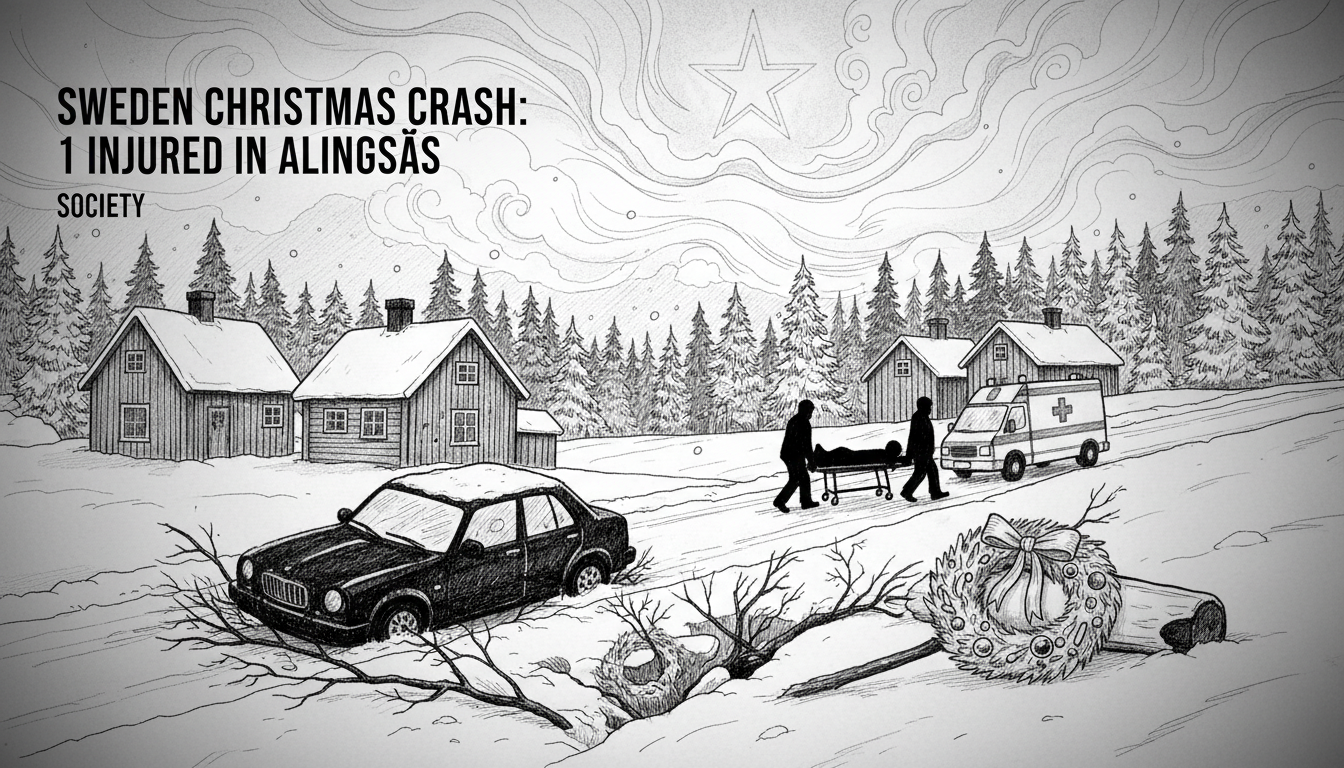
Sweden Christmas Day traffic turned tragic on the E20 highway in Alingsås. A single-vehicle accident just after 3 AM left one man injured and a car completely destroyed. The driver managed to exit the wreckage on his own but now faces suspicion of gross negligence in traffic. This early morning crash casts a shadow over a day meant for family and celebration, raising urgent questions about road safety during Sweden's most cherished holiday.
A Silent Highway and a Shattered Morning
The scene on the E20 near Alingsås in the early hours of December 25th was one of violent contrast. While most of Sweden slept, anticipating a day of julbord feasts and gift-giving, emergency services raced to the highway. The vehicle involved was, in the stark words of police officer Morten Gunneng, "totalförstörd" – a total wreck. The fact the driver could extricate himself from such devastation is notable. Yet, the immediate shift from rescue to investigation underscores the seriousness of the incident. Police suspicion of 'grov vårdslöshet i trafik' points to a potential severe lapse in judgment, turning a personal tragedy into a potential legal reckoning.
This accident disrupts the common Swedish Christmas narrative. The day is typically defined by calmness, the soft glow of advent stars in windows, and families traveling carefully to reunite. The E20, a major artery connecting Gothenburg to central Sweden, would soon see a rise in responsible, festive traffic. This pre-dawn crash represents a dangerous outlier. It highlights the hidden risks of the holidays, when nighttime travel, possibly influenced by fatigue or impairment, clashes with Sweden's otherwise exemplary safety culture.
Sweden's Safety Success Meets a Human Failure
To understand this crash, one must first appreciate Sweden's global standing in road safety. The country's 'Vision Zero' policy, aiming for no fatalities or serious injuries on the roads, is world-renowned. The statistics are compelling. In 2022, preliminary figures show 266 traffic fatalities in Sweden. Given the population, this consistently places Sweden among the safest countries in the world for road travel. This success is built on superior infrastructure, strict enforcement of drink-driving laws, and a deep cultural emphasis on collective safety.
Yet, statistics are a backdrop to individual choice. This Alingsås incident, occurring at 3 AM on a holiday, fits a pattern experts know too well. "The holiday period presents a specific set of challenges," explains a traffic safety analyst familiar with Swedish data. "We see a confluence of factors: longer journeys to visit family, night driving leading to fatigue, and social gatherings where alcohol may be consumed. The legal and safety norms that protect us during the day can be dangerously ignored during the quiet, dark hours of a holiday morning." The suspicion of gross negligence suggests authorities believe basic rules of caution were profoundly disregarded.
The Ripple Effect of a Single Crash
The immediate consequence is a man injured and facing serious legal allegations. But the impact of such a crash ripples outward. It consumed the resources of police, ambulance, and possibly fire services on Christmas morning. It likely caused delays and detours for other early travelers. Most profoundly, it introduces a note of trauma and loss into a day reserved for joy. For the driver's family, their Christmas is now irrevocably changed. This human cost is the core of Sweden's safety mission—preventing the moment where a single decision leads to lifelong consequences.
In communities like Alingsås, a picturesque town known for its coffee culture and historic buildings, news of such an event travels fast. It serves as a grim, local reminder for residents embarking on their own holiday travels. It reinforces the social contract of Swedish driving: your safety is intertwined with mine. The cultural expectation is one of responsibility, not just to oneself but to every other person on the road. A suspected case of gross negligence is a breach of that contract, felt more acutely on a day of shared celebration.
A Sobering Reminder During the Festive Season
As Sweden continues its Christmas celebrations, the Alingsås crash stands as a sobering counterpoint. It underscores that safety is not just about engineering and laws, but about constant, personal vigilance. The Swedish Transport Administration plans for holiday traffic, promoting messages about rest and sobriety. But this crash happened in the gap between public messaging and private action.
The coming investigation will determine the precise causes. Was it speed? Fatigue? Impairment? The answer will define the legal outcome. For the public, however, the lesson is broader. It's a call to uphold the very principles that make Swedish roads safe, especially when routine is broken by holiday cheer. It's a reminder that the dark, empty road in the middle of the night demands more attention, not less.
Sweden's journey toward Vision Zero is marked by learning from every tragedy. This Christmas Day crash on the E20 is not just a news brief. It is a stark, human story set against a backdrop of national safety success. It asks every driver a simple, critical question as they travel during this festive season: are you protecting the peace of this holiday, or risking it? The goal remains a Christmas where families gather safely, and the only lights on the road are those leading home.