
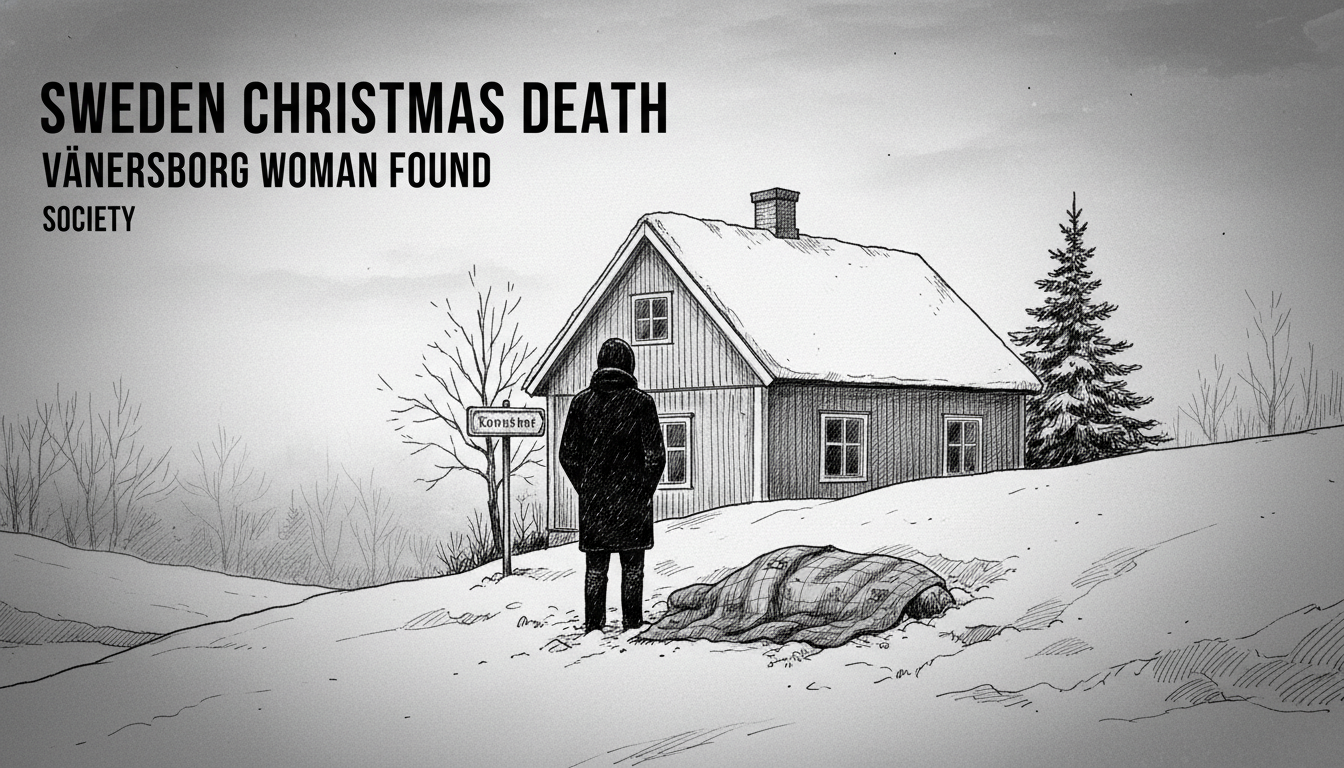
Vänersborg Sweden news reports a woman found dead on Christmas Eve, a stark incident in a nation with a generally low crime rate. The call came at 9:56 AM, breaking the quiet of a holiday morning. A man reported that a woman had died in a residential apartment. Police arrived swiftly to the scene in this town on Lake Vänern's shores. They found the woman deceased and arrested the man present. By 10:50 AM, however, the situation shifted dramatically. After a preliminary technical investigation of the home, police said suspicions against the man had weakened. He was released from custody. The woman's relatives have been notified, leaving a community in shock during what should be a festive season.
A Holiday Tragedy Unfolds
Christmas Eve, or julafton, is the pinnacle of Swedish holiday celebrations. Families gather for the julbord feast and exchange gifts. In Vänersborg, a town of about 25,000, the atmosphere was meant to be one of warmth and mys. The police alarm cut through that peace. The initial report and arrest point to a potential domestic setting, though details remain scarce. Such personal tragedies feel profoundly dissonant against Sweden's cultural backdrop of fred och ro—peace and quiet. Local residents I spoke to expressed a subdued horror. "It's unimaginable on this day," said Anna, a neighbor who wished to only give her first name. "We all hear about crime statistics, but this is someone's mother, someone's friend, right here."
The Investigation's Rapid Turn
The quick change in the suspect's status underscores the methodical nature of Swedish police work. A technical investigation, likely involving forensic evidence collection, was key. Criminologists emphasize that initial arrests are just that—initial. "In cases with unclear circumstances, especially in private homes, a thorough forensic investigation is crucial," explains Lars Hällberg, a criminology researcher based in Gothenburg. He notes that determining intent and cause of death can be particularly challenging in domestic settings. Evidence must be meticulously reviewed before any firm conclusions are drawn. This careful process, while sometimes frustrating to the public seeking quick answers, is a cornerstone of the justice system. It prevents wrongful accusations and ensures that investigations are solidly based on fact, not presumption.
Vänersborg and Sweden's Crime Landscape
Vänersborg is known for its picturesque setting by Lake Vänern and its historic canal. It's not a place that makes national headlines for crime often. This incident, however, taps into a broader conversation in Swedish society. While Sweden's crime rate is lower than in many other countries, there has been sustained public debate in recent years regarding an increase in certain types of violent crime, including gang-related violence. This case in a smaller town reminds us that serious incidents occur across the country, not just in major urban centers like Stockholm or Malmö. The national crime prevention council, Brå, consistently reports that the majority of violent crimes occur between people who know each other. This context is essential for understanding the dynamics at play in Vänersborg.
The Human Cost and Cultural Resonance
Beyond the statistics and police procedures, there is a profound human story. A life lost, a family grieving during the holidays. Swedish culture places high value on trygghet—security and safety. An event like this rattles that sense of security in a very intimate way. It also intersects with ongoing discussions about societal resources, support for victims of domestic violence, and the efficiency of social services. In nearby Gothenburg, civil society organizations like Kvinnojouren (Women's Shelter) work tirelessly to support women in crisis. Their work highlights a critical need for awareness and intervention, even in communities perceived as tranquil. The timing on Christmas Eve adds a layer of cultural poignancy, forcing a reflection on the shadows that can exist behind closed doors, even on the brightest of holidays.
Expert Perspective on Forensic Challenges
I reached out to additional experts for context. "The rapid de-escalation of suspicion in this case is not uncommon after initial forensics," said Karin Edström, a legal scholar focusing on criminal procedure. "Police must balance swift action with evidential certainty. In deaths at home, the scene itself can provide ambiguous signals. Was it a crime, an accident, or a natural death? The technical team's work is to answer that." She emphasized that Sweden's investigative methods are highly systematic, often involving pathologists, fingerprint analysts, and digital forensics. This multi-disciplinary approach aims to build a clear picture from often fragmentary evidence. For the public, patience is required, even when the narrative seems to shift overnight.
Community Reflection and Moving Forward
In the days following, the mood in Vänersborg is likely one of somber reflection. The local church, perhaps preparing for julottan (Christmas morning service), now also holds a community in need of solace. Such events ripple through small towns, where anonymity is scarce. They also feed into the national discourse on safety. As Sweden continues to grapple with perceptions of crime, each case becomes a data point and a human tragedy. The question many are asking is not just about what happened in that apartment, but what it says about the health of our society. Are support systems strong enough? Are interventions early enough? The answers are complex and multifaceted.
As the investigation continues, possibly awaiting autopsy results and further analysis, we are left with more questions than answers. But the memory of a woman lost on Christmas Eve in Vänersborg will linger. It challenges the idyllic image of Swedish holiday peace and reminds us that behind every crime statistic is a personal story of rupture. For now, a community mourns, and a nation is prompted to look closer at the fabric of its society, seeking both justice and understanding.