
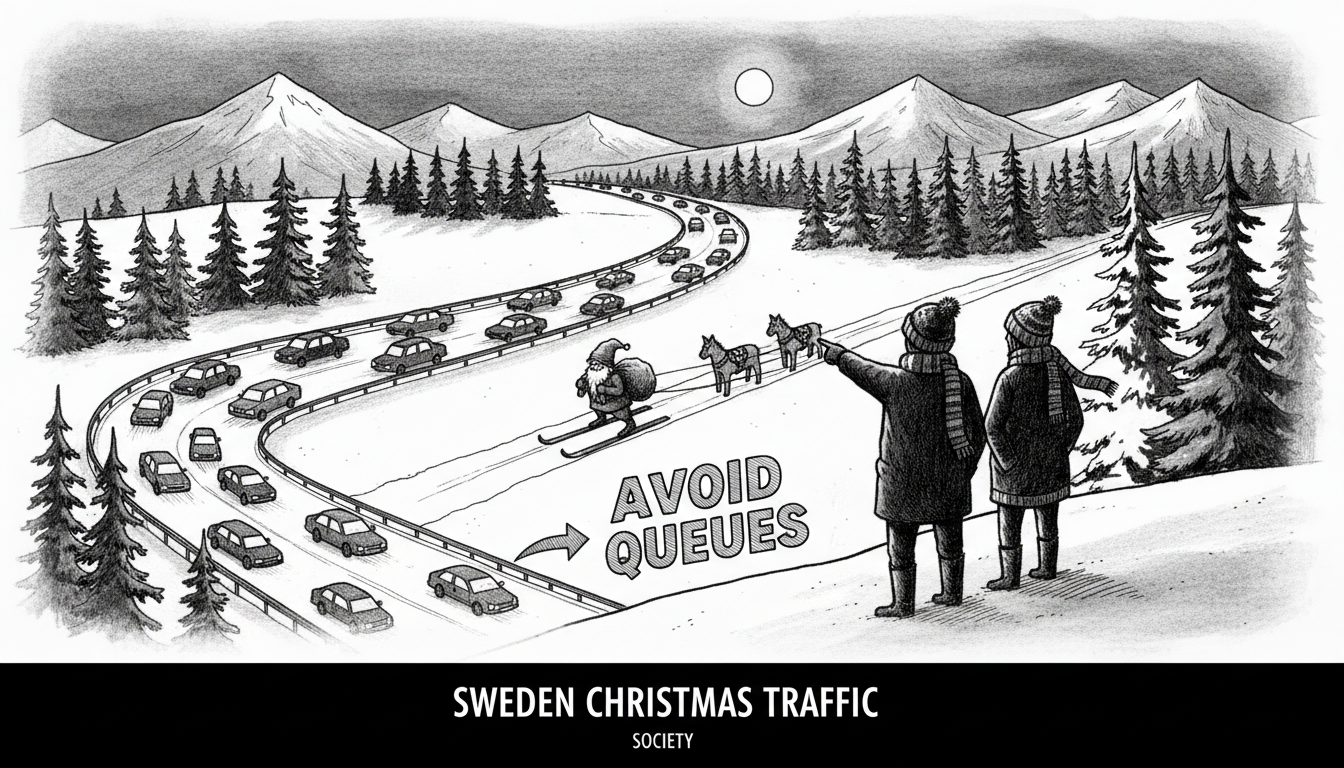
Sweden Christmas travel hits its annual peak this weekend. Families across the country are loading cars with gifts and gingerbread, heading out for holiday reunions. For many, the journey is a cherished tradition. For others, it's a source of stress amidst snow and tail lights.
I remember my own childhood trips from Stockholm to Dalarna. The excitement was palpable. Yet, my father's tense grip on the wheel in crawling traffic on the E4 is equally vivid. This blend of joy and frustration defines the Swedish 'Jultrafik'. It's a cultural event as predictable as glögg and Lucia processions.
The Annual Holiday Gridlock
Trafikverket, the Swedish Transport Administration, has officially flagged the start of the Christmas traffic period. Volumes on major arteries can surge by 50% above normal. This isn't just a minor inconvenience. It's a coordinated mass migration fueled by Sweden's strong tradition of spending Christmas Eve with family, often in ancestral homes far from cities.
"When many people head out simultaneously, often in darkness and winter road conditions, it's vital to take it easy and plan your trip in good time," a Trafikverket spokesperson said in a statement. The agency points to classic choke points around Stockholm. These include the intersections leading onto the E4 northbound, the approach to the Södra Länken tunnel, and routes toward Arlanda Airport.
Winter conditions magnify every delay. A single slide-off or sudden snowfall can paralyze a route for hours. This reality transforms a simple drive into a calculated expedition.
Navigating the Rush: Practical Advice
So, how do you avoid becoming part of a stationary holiday display? Trafikverket's primary tool is its digital road map. It aggregates live traffic data, weather alerts, accident reports, and even tips on rest stops. Checking this map before and during your trip is the modern equivalent of consulting a seasoned traveler.
Their key advice is straightforward. First, choose routes with divided lanes where possible. Highways like the E4 and E18 offer safer, more flowing travel than smaller secondary roads. Second, prioritize stretches equipped with traffic safety cameras. These sections are generally better maintained and monitored.
Planning is everything. Leaving Stockholm at 3 PM on December 23rd is a recipe for a long night. Consider an early morning departure or traveling on a less conventional day, like the morning of Christmas Eve. Pack extra blankets, food, and water. Your 'vinterdäck' (winter tires) are non-negotiable.
Beyond the App: The Human Element of Travel
Technology helps, but Swedish Christmas travel is deeply human. It's about the anticipation of seeing grandparents in Småland or friends in Gothenburg. The traffic jam itself becomes a shared experience. You'll see families playing games in their cars and sharing coffee from thermoses.
Local traditions influence the flow. In Stockholm, the last shopping days before Christmas see congestion around retail areas like Mall of Scandinavia and Skrapan. Meanwhile, train stations like Centralstationen are hubs for those opting for public transport, a wise choice for shorter regional trips.
Cultural venues quiet down during this period. The streets of Södermalm grow still as residents depart. The real action is on the highways, a moving tapestry of Swedish society.
Expert Analysis: Why This Happens Every Year
I spoke with traffic analyst Erik Lundström, who has studied holiday patterns for years. "The Jultrafik is a perfect storm of social tradition and logistical limitation," Lundström explained. "We have a concentrated exodus from urban centers to rural areas. Our infrastructure, while good, has bottlenecks that are exposed under this pressure."
He notes that investment in infrastructure, like expanding the divided highway network, directly reduces congestion and crash risks. "Routes with traffic cameras see a measurable improvement in driver behavior, especially in poor weather," he added. The statistics support this. Winter months in Sweden see a marked increase in accidents due to ice, darkness, and higher speeds on unexpectedly clear patches.
Lundström's perspective extends beyond roads. "This annual event reflects a core Swedish value: the importance of family and 'hem' (home). People will endure significant discomfort to uphold that. The challenge for authorities is to make that pilgrimage as safe as possible."
The implications are clear. Public information campaigns, like Trafikverket's, are crucial. But long-term, urban planning and alternative travel incentives matter. Could better train schedules or ride-sharing initiatives ease the pressure? Lundström believes so.
A Safe Arrival is the Best Gift
The goal is not just to avoid queues. It's to arrive safely, with your holiday spirit intact. The glow of a Christmas tree in a cottage window is worth the journey. Yet, that journey demands respect for the conditions.
Swedes are generally adept winter drivers. However, the holiday rush mixes experienced locals with infrequent travelers. Patience becomes the most valuable currency on the road. Let faster drivers pass. Take breaks at designated 'rastplatser' like those along Lake Mälaren. The extra 30 minutes you spend resting could prevent a fatigue-related mistake.
As the holidays approach, remember that the Jultrafik is a temporary state. The queues will dissipate. The memories you're traveling to create will last. So plan well, drive calmly, and may your 'Jul' be filled with more light than brake lights. Is this annual trial by traffic a price we're willing to pay for our cherished traditions? For most Swedes, the answer, seen in the determined faces on every highway, remains a resounding yes.