
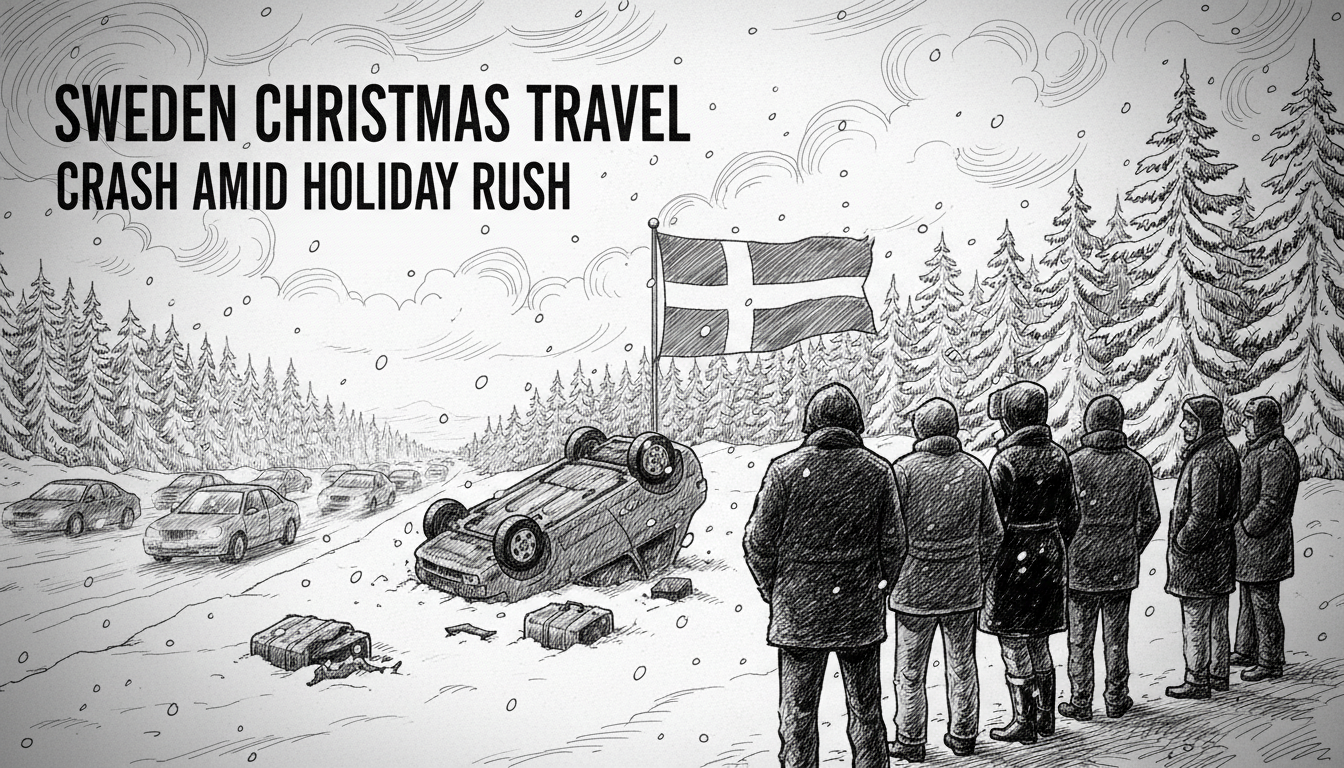
Sweden's Christmas travel rush has intensified with a serious accident on the E18 highway near Stockholm, highlighting the risks of winter driving during the holidays. As families across the country embark on their 'julresor' or Christmas trips to reunite with loved ones, roads are busier than ever. The incident occurred at the Stäket interchange between Kallhäll and Kungsängen, where a single car overturned. The driver, a 25-year-old man, was hospitalized with injuries. Police suspect him of gross negligence in traffic, causing bodily harm, and violating laws on transporting dangerous goods. This event casts a shadow over the festive season, reminding travelers of the perils that come with Sweden's dark, icy December roads.
The Stäket Accident: A Swift Response
Emergency services quickly arrived at the scene on the E18, a major artery heading northwest from Stockholm toward Enköping. According to rescue officials, the car had 'rolled back' after overturning. The driver was taken to hospital by ambulance, and the highway experienced delays during cleanup. This accident is under investigation, but early reports suggest speed or loss of control on winter-slick roads may be factors. For many Swedes, hearing such news triggers a familiar dread. Winter driving here demands respect, with black ice and sudden snow squalls common. The incident serves as a stark warning during peak travel days, when traffic volume on major highways can surge by 20-30% compared to normal days, as estimated by transport authorities.
Nationwide Gridlock and Weather Woes
Beyond this crash, Sweden's transport network is straining under the holiday exodus. From Gothenburg's ring roads to the E4 north toward Sundsvall, cars are packed with gifts and groceries for the traditional 'julbord' feast. In Stockholm, neighborhoods like Södermalm and Östermalm empty out as residents head to countryside cottages or family homes in smaller towns. The Swedish Transport Administration provides constant updates, urging caution. Winter conditions contribute to roughly 20% of all traffic accidents annually in Sweden, a statistic that looms large this time of year. Meteorologists are tracking a low-pressure system moving in from the Atlantic, which could bring snow to central and southern regions just before Christmas Eve. The big question on everyone's mind: will it be a white Christmas? Forecasts are mixed, with northern areas like Lappland almost guaranteed snow, while Stockholm might see rain or slush.
Expert Advice for Navigating the Cold
Traffic safety experts emphasize adapting driving behavior to winter conditions. 'Reduce your speed, increase following distances, and ensure your winter tires are adequate,' says Lars Bengtsson, a veteran driving instructor in Uppsala. He notes that many accidents occur when drivers fail to adjust to reduced visibility and slippery surfaces. Proper tires are legally required in Sweden from December 1st to March 31st, but compliance isn't universal. The transport administration also recommends checking vehicle lights and keeping an emergency kit with blankets, a shovel, and snacks. For those using public transport, trains and buses are running extra services, but delays are common due to weather. In cities, Christmas markets and events, like the Stortorget market in Gamla Stan, add to local congestion, prompting many to use the subway or walk.
Cultural Context: The Sacred Julresa
Christmas travel in Sweden is more than a logistical challenge; it's a cherished ritual. Known as 'julresan,' this trip often involves crossing regions to gather for 'julafton' on December 24th. Families might travel from Malmö to Dalarna, or from Stockholm to the archipelagos, carrying traditions like 'lussekatter' saffron buns. 'For us, the drive to my parents' summer house in Småland is part of the Christmas magic,' says Anna Karlsson, a teacher from Vasastan. 'We play Christmas songs, and the kids watch for elk on the roadside.' But this year, with fuel prices high and weather unpredictable, some are reconsidering. There's a growing trend toward staying local or using video calls, especially among younger Swedes and immigrant communities who blend traditions. Still, the pull of family remains strong, rooted in Sweden's culture of 'mysig' coziness during the dark winter.
Local Stories from the Road
At a rest stop near Södertälje, I met the Eriksson family, en route from Stockholm to Gotland. 'We left extra early to avoid traffic, but it's still slow,' says Johan Eriksson, father of two. 'The kids are excited, but we're stressed about the ferry timing.' Others share similar tales. In Gothenburg, Mariana Flores, who moved from Spain a decade ago, is preparing for her first Christmas drive to Kiruna. 'In Spain, we don't have this ice,' she laughs. 'My Swedish friends told me to pack warm clothes and patience.' These personal stories underscore the human dimension of the travel chaos. For newcomers, navigating Swedish winter roads is a rite of passage. Community groups often share tips on social media, from which routes are clearest to where to find the best 'glögg' mulled wine along the way.
Looking Ahead: Safety and Celebration
As Christmas Eve approaches, authorities remain vigilant. Police have increased patrols on key highways, focusing on drunk driving and speeding. The accident at Stäket is a somber reminder that holiday joy shouldn't come at the cost of safety. Weather updates will be crucial in the coming days; a white Christmas would delight many but could worsen travel conditions. From a cultural perspective, this period reflects Sweden's resilience and community spirit. Neighbors help shovel snow, and businesses close early to allow employees to travel. The blend of modern logistics and ancient traditions defines the Swedish Christmas experience. So, as you hit the road or board a train, remember: the destination is family warmth, but the trip requires caution. Will this year's julresa be smooth or stormy? Stay informed, drive carefully, and may your holiday be filled with light.